United States ➝ Uniforms
פתיחה: $75
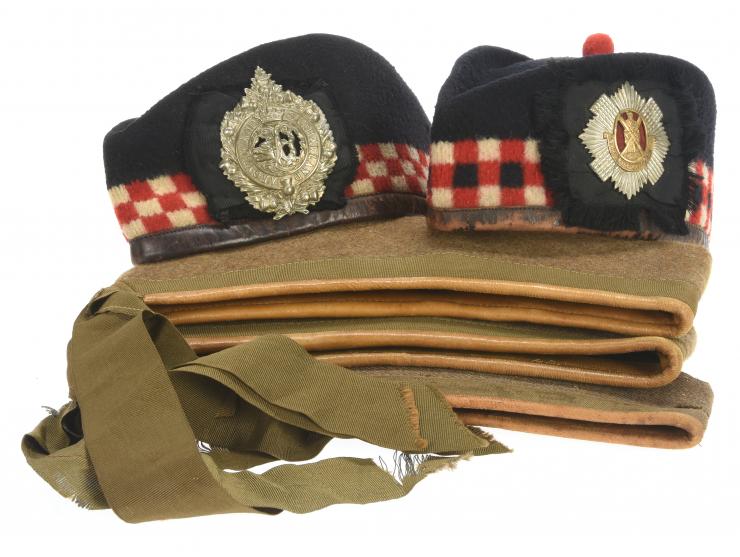
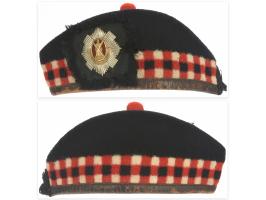
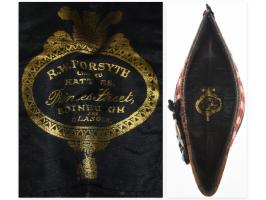
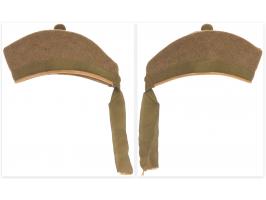
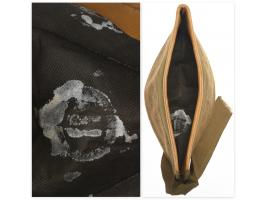
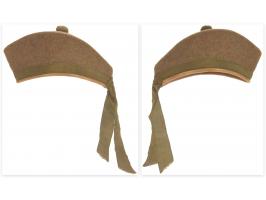
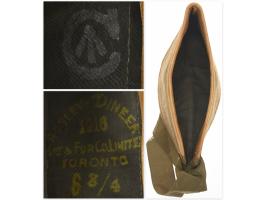
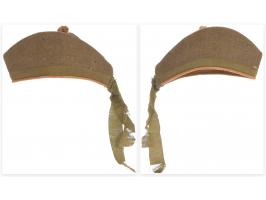
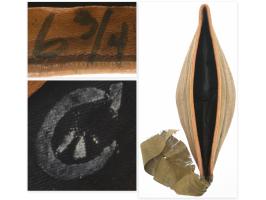
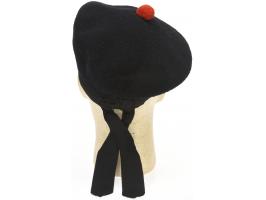
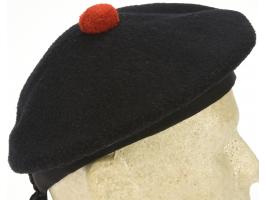
First example has a Royal Scots badge, red, white and blue diced band, nice black silk lining with gold embossed tailor label. Has wear along the edges and lacks the ribbon tail. Second has Argyll And Sutherland Highlanders badge, red and white diced band, black silk lining with no visible markings. The other three examples are khaki wool with drab ribbons, leather edge binding and interior sweatbands. Two have Toronto 1916 dated maker marks on the black linings; these show signs of having once had badges attached (which are no longer present), but are in overall very nice condition. The third has a Canadian BroadArrow marking and is a bit rough with some scattered mothing and heavy wear on the ribbon tails. $150-$200
מתי יימכר הפריט במכירה?
Memorabilia
United States ➝ Headgear Helmets and Hats
פתיחה: $100
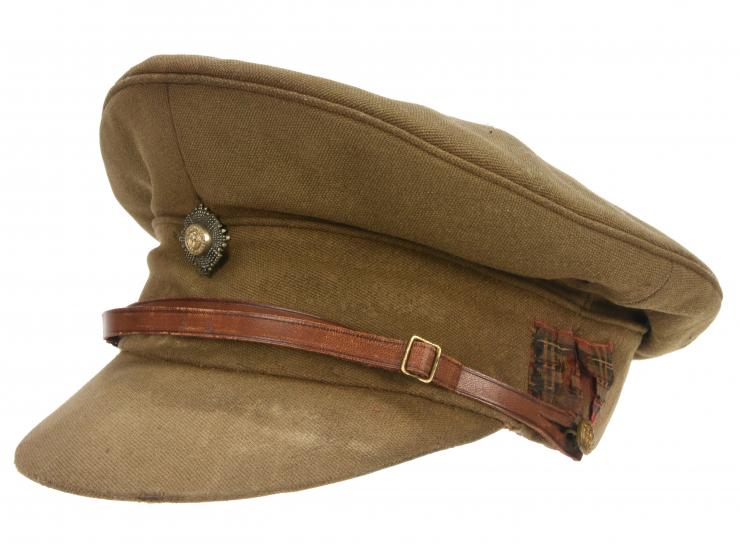
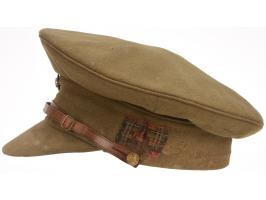
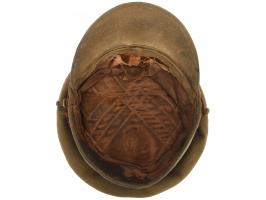
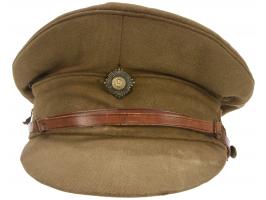
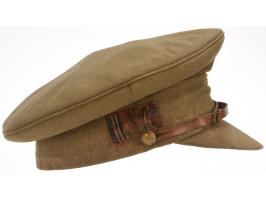
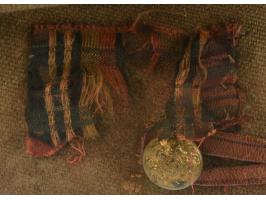
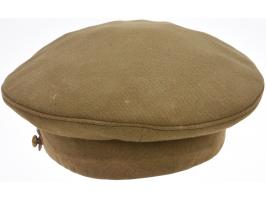
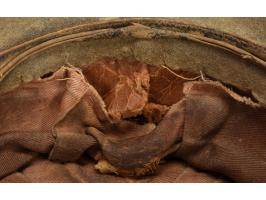
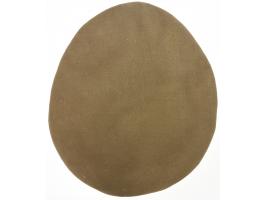
British WWI Scots Guards Officer's Service Cap
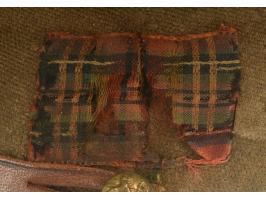
A well-used, worn, and sweat-stained veteran of service, this officer's khaki wool service dress cap has a Scots Guards cap badge and tattered Royal Stewart tartan flashes on the sides just above the side buttons. Retains the original brown leather chinstrap with general service side buttons. Interior has just a bit of the original sweatband remaining, quilted crown lining and body of the cap is stained with ground in sweat and grime from active front-line service, with sweat stains bleeding through the front. No name or initials, but clearly a serious veteran of front-line service!
Formed in the 17th century, the Scots Guards were among Britain’s most distinguished regiments when war broke out in August 1914. As part of the British Expeditionary Force, the 1st and 2nd Battalions fought throughout the Western Front, enduring the early battles of the Marne, Ypres, and Loos. In 1916, they took part in the Somme offensive, followed by the bitter campaigns at Arras and Passchendaele.
The regiment exemplified the discipline and endurance of the Guards Division, earning multiple battle honors and heavy casualties in the process. Their service spanned from the open fighting of 1914 to the static trench warfare that defined the remainder of the conflict. By the Armistice, the Scots Guards had contributed over 10,000 officers and men to the war, leaving a legacy of steadfast courage on the fields of France and Flanders.
$200 - $300
מתי יימכר הפריט במכירה?
Memorabilia
פתיחה: $100
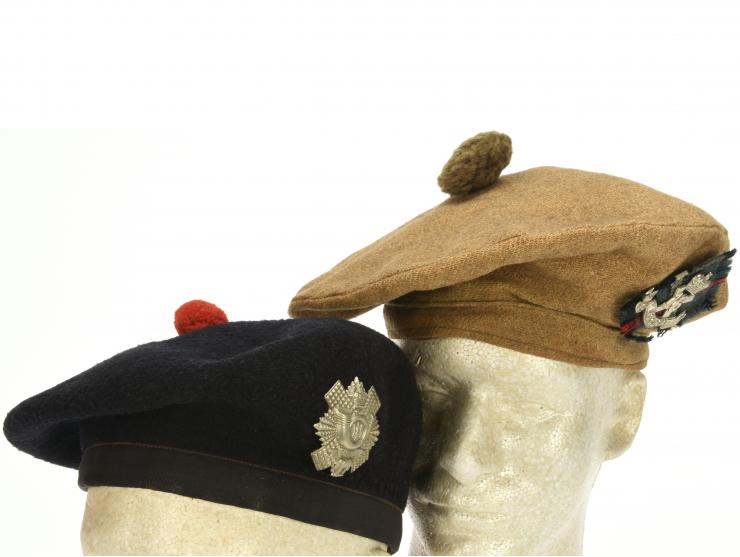
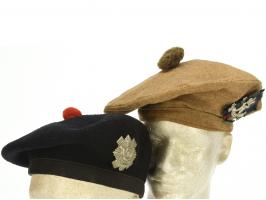
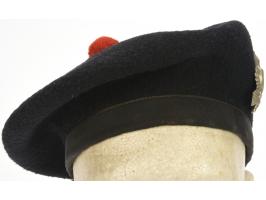
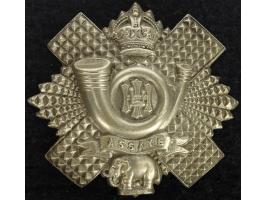
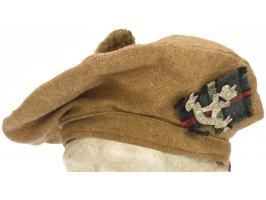
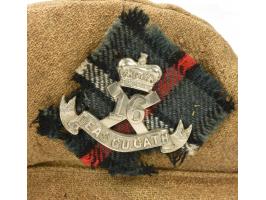
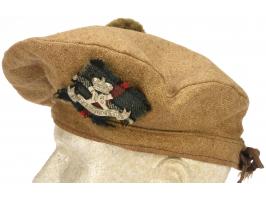
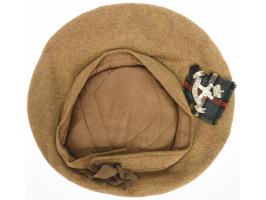
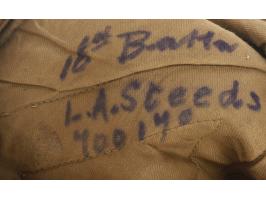
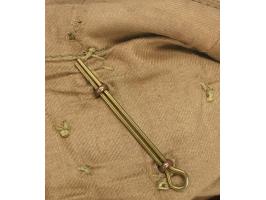
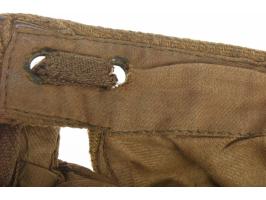
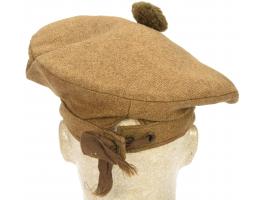
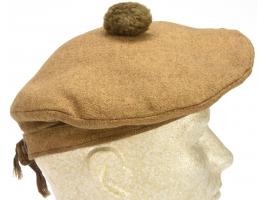
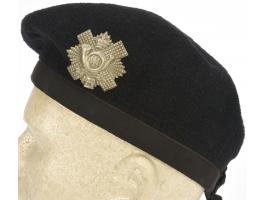
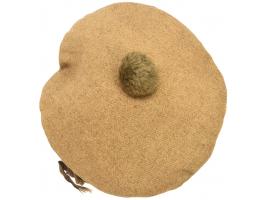
Includes blue wool Balmoral with Highland Light Infantry badge; has black ribbon edge binding and tails; brown polished cotton interior with no visible markings. Second piece is quite nice - an identified khaki wool Tam O’Shanter which has a 16th Battalion (Canadian Scottish) badge with tartan cloth backing; interior has laundry pen inscription with a soldier's name, service number, and "16th Battalion". Both are in nice condition; normal wear, no readily-apparent mothing. $200-$300
מתי יימכר הפריט במכירה?
Memorabilia
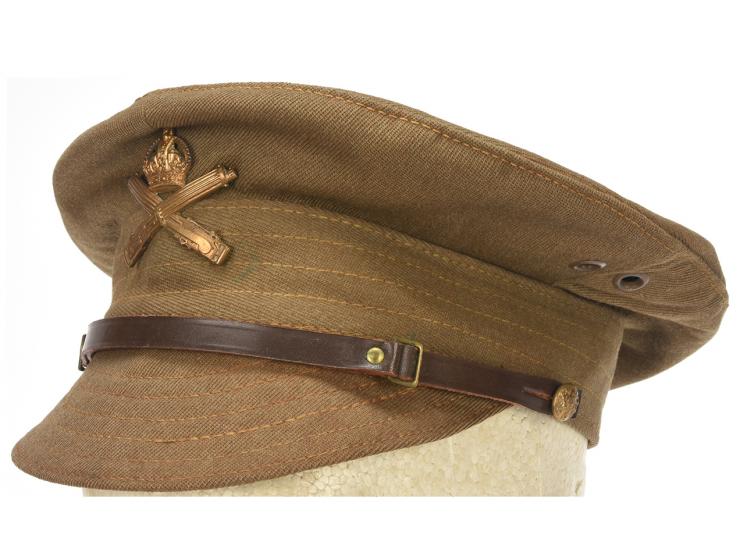
פתיחה: $100
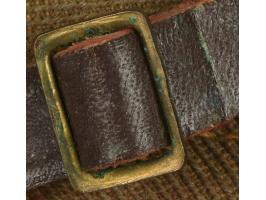
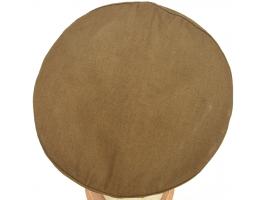
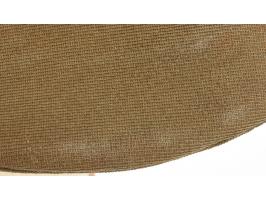
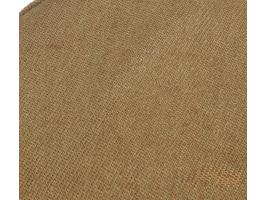
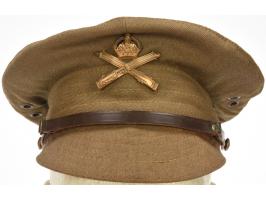
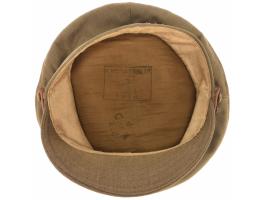
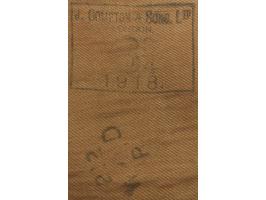
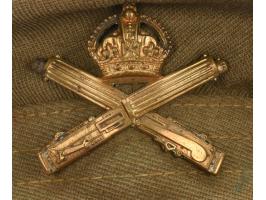
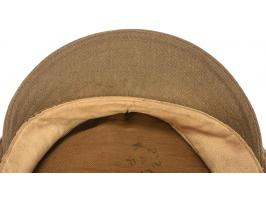
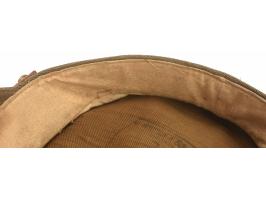
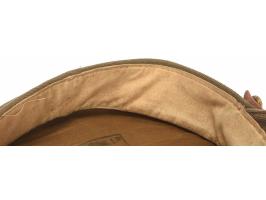
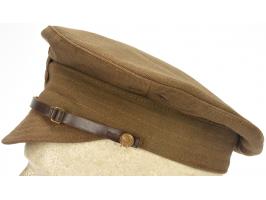
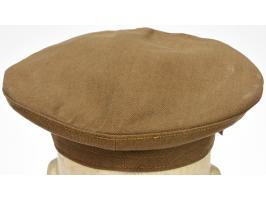
Pattern 9847 (19-Mar-1918) Cap, soft, Service Dress "Gabardine" Modification of Pattern 9783 - features a cotton lining in lieu of “American Cloth and flannel" prescribed before. Example has a nice pliable brown leather chinstrap, MG badge on the front, and general service side buttons. Interior has crown nicely marked with issue stamp and 1918 dated maker stamp. Very nice example! $200 - $300
מתי יימכר הפריט במכירה?
Memorabilia
פתיחה: $100
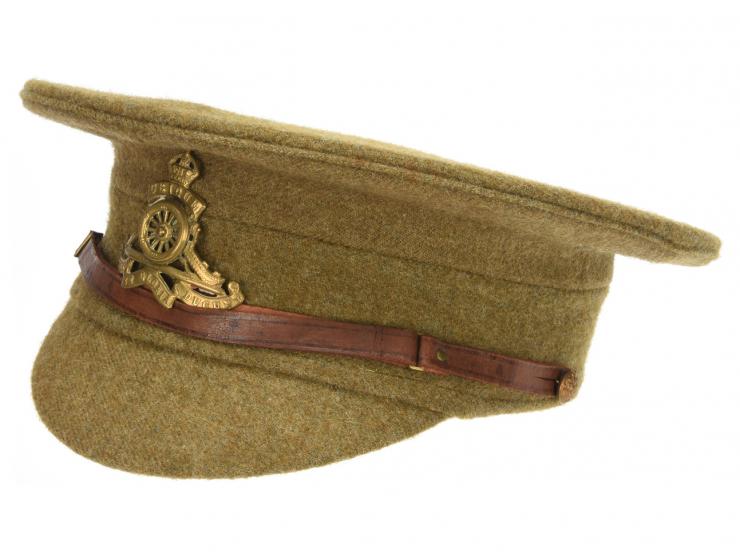
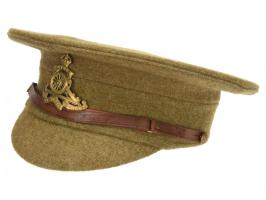
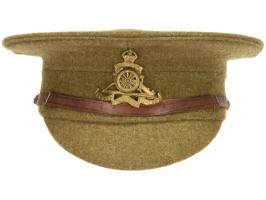
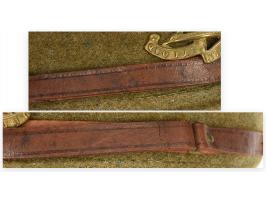
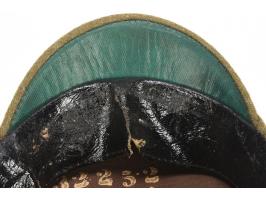
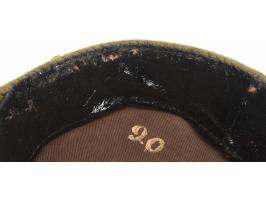
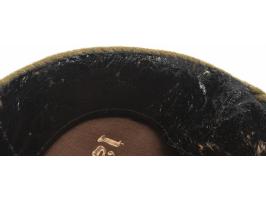
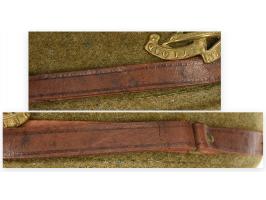
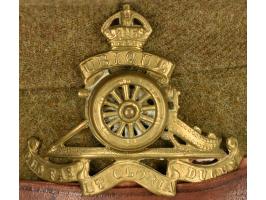
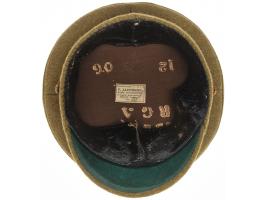
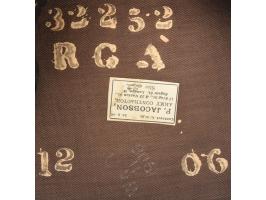
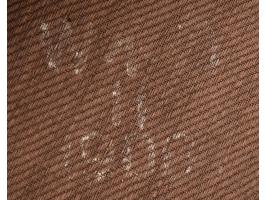
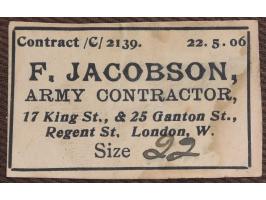
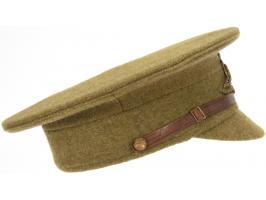
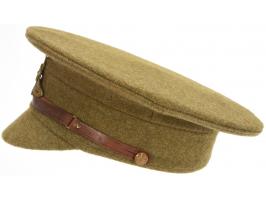
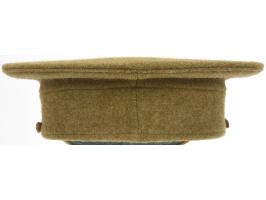
Drab khaki wool serge Pattern 1905 (6281) service dress cap has Royal Artillery badge and the brown leather chinstrap pattern that Joe Sweeny identifies as a post-1908 feature. Sides have general service buttons. Interior has an oilcloth painted fabric sweatband, 1906 dated issue stamp, nice 1906 dated maker's paper label in the crown, and the crown is also painted with a soldier's number and "R.G.A." The number identifies the former owner as Gunner J.G. Titmarsh who served with the Royal Guard Artillery in 1909. Light wear, no readily apparent mothing. $200-$250
מתי יימכר הפריט במכירה?
Memorabilia
פתיחה: $100
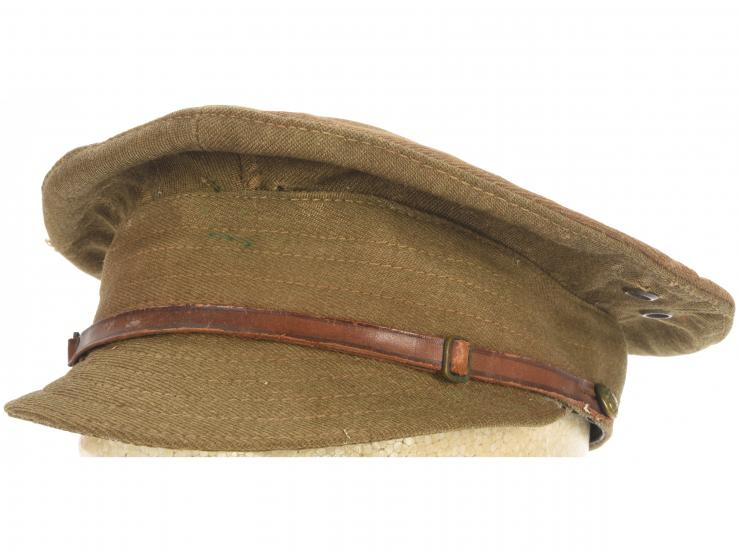
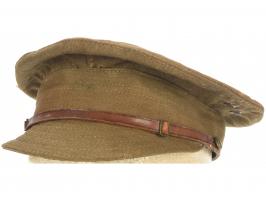
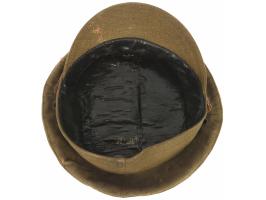
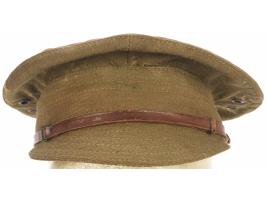
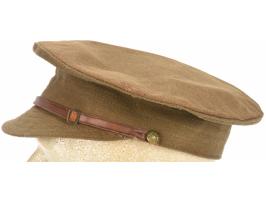
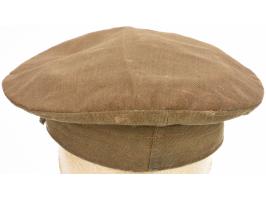
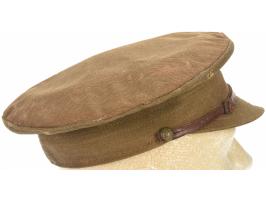
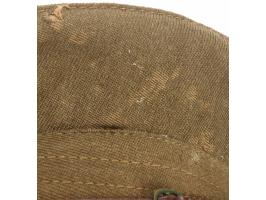
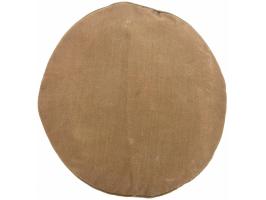
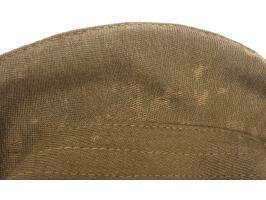
The former owner identifies this as "9783/1917, Cap, soft, Service Dress alternate pattern, all American cloth liner headband". This example has adjustable brown leather chinstrap with British general service buttons. Shows signs that a cap badge was once installed (no longer present). There is some minor surface wear or tracking. Black oilcloth interior has 1917 dated maker stamp. $200-$250
מתי יימכר הפריט במכירה?
Memorabilia
פתיחה: $150
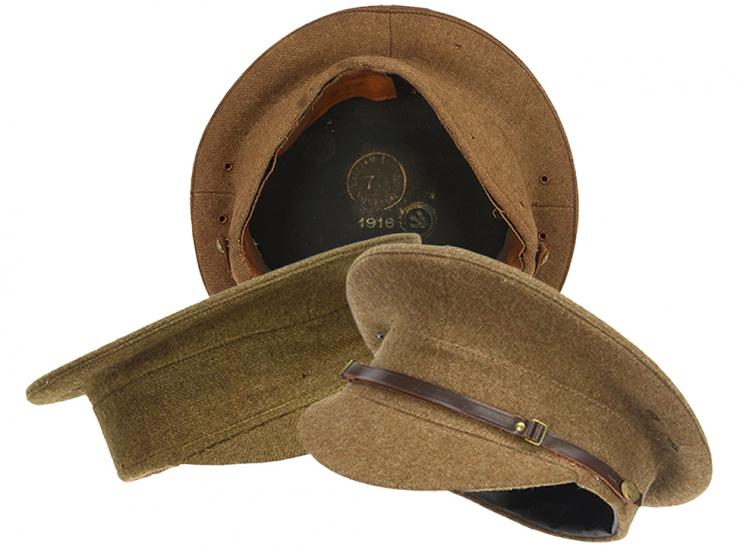
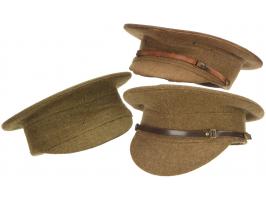
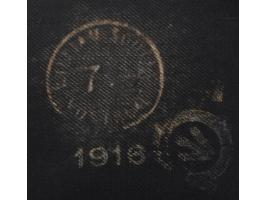
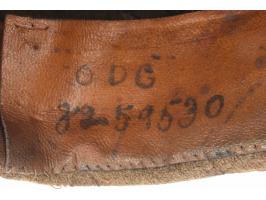
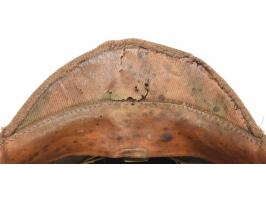
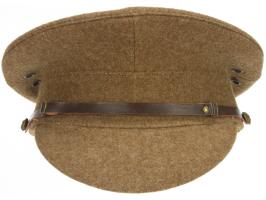
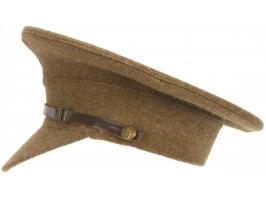
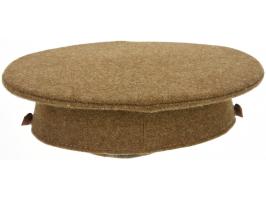
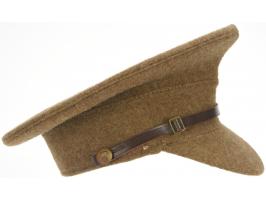
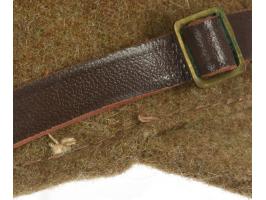
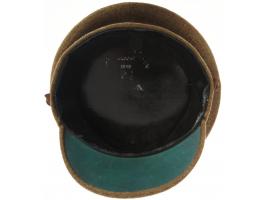
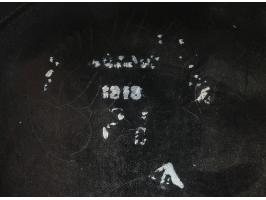
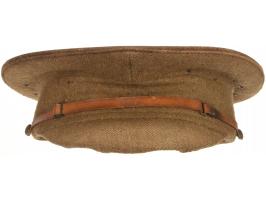
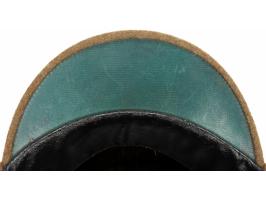
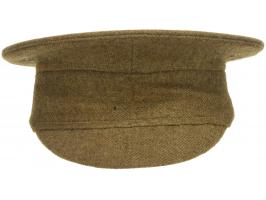
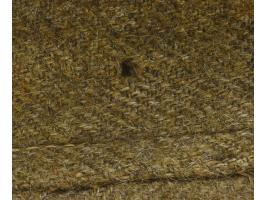
Three examples. First is in very nice overall condition has East Lancashire Regiment side buttons, a nice brown leather chinstrap, and an issue stamp in the crown that appears to date 1918. No mothing, and no sign that a badge was ever applied. Second in good overall condition has just a few moth bites and faint markings on the black crown lining, lacks chinstrap and side buttons. The third is a bit rougher with scattered light mothing, shows evidence of a badge that is no longer there, and has some damage to the leather underside of the cloth-covered visor. Chinstrap has Canadian side buttons; interior has a nice clear 1916 dated issue stamp, and the interior of the sweatband has a soldier's initials and service number. $250-$350
מתי יימכר הפריט במכירה?
Memorabilia
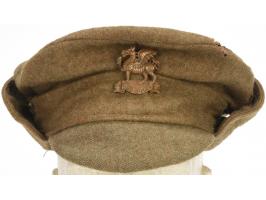
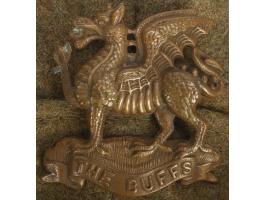
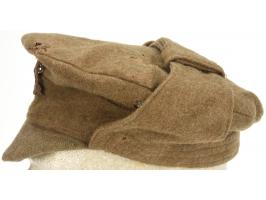
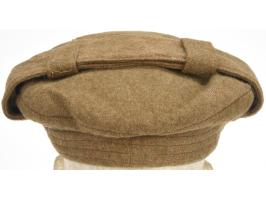
פתיחה: $1,000
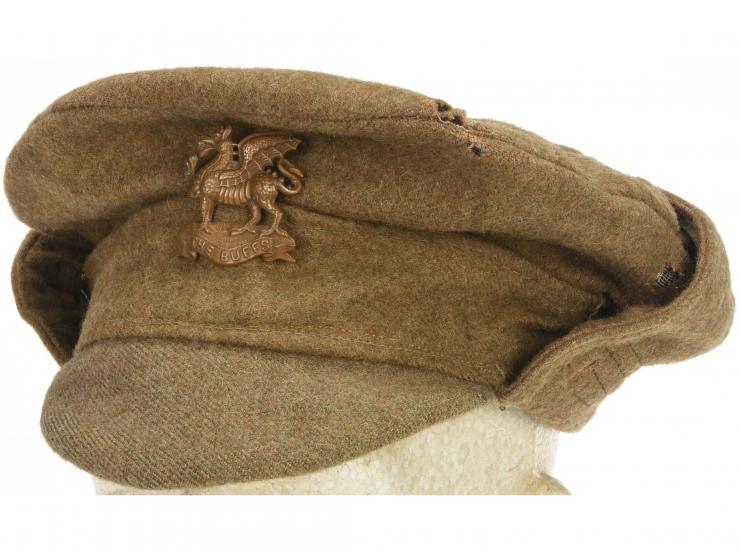
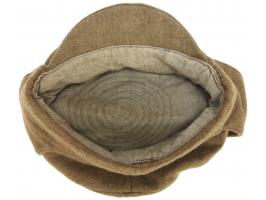
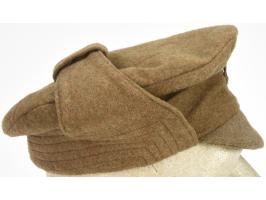
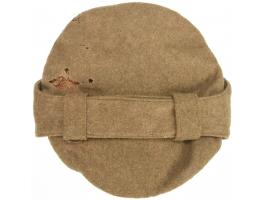
Although officially referred to as the "Cap, Winter, SD", this cap was universally known as the "Gor Blimey" by the soldiers who wore it. Made of khaki wool serge with a soft cloth covered visor, the cap has a distinct folding neck cape with multiple rows of stitched reinforcement. An integral adjustable strap with 1" standing loops crosses over the top of the cap and allows the cape to be secured upright, or it can be let down and used as a chinstrap when the cape covers the ears and neck. There are two japanned iron hooks on the sides of the band. One theory claims that a chin strap was intended to be attached to these but that opinion is not documented and their true purpose remains speculative. Obverse has Royal East Kent Regiment badge. Lined in blue-gray shirting flannel, the crown is padded and quilted in a spiraling pattern. No markings are visible. There is some moderate moth damage on the crown. Issue of the Gor Blimey began in the winter of 1914 and continued until the fall of 1916 when it was abolished to make way for the general issue of the steel helmet. During its service life it was only issued to front line troops making this, truly, a fighting man's cap. Arguably the most sought-after item of WWI Commonwealth headgear. $2000 - $2500
מתי יימכר הפריט במכירה?
Memorabilia
United States ➝ Individual Accoutrement
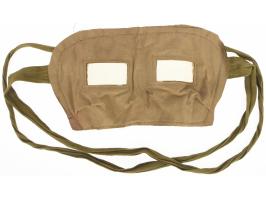
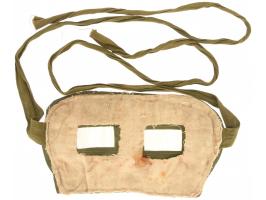
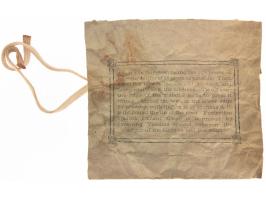
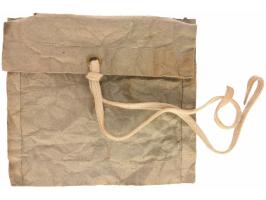
פתיחה: $100
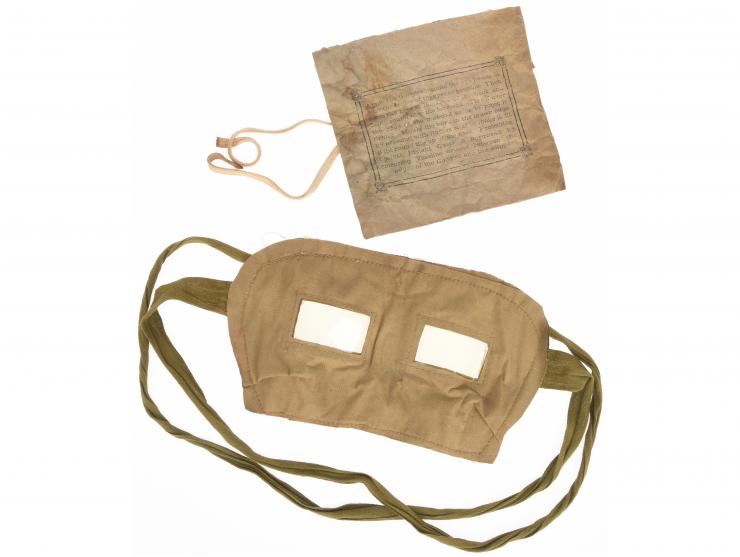
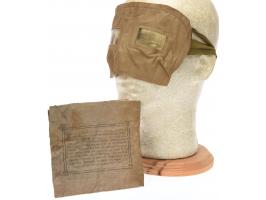
Face mask of layered thick khaki cloth with rectangular celluloid eye lenses and lined on the interior with brushed natural flannel, attached to the user with olive cotton twill tape ties, and complete with the original carrying pouch printed with instructions for use. The Spicer goggles were named for their designer in the gas warfare department. These were among several eye defenses issued concurrently with the P helmets, to be used in tear gas attacks when eye protection was required, but the gas helmet was not. $200 - $300
מתי יימכר הפריט במכירה?
Memorabilia
פתיחה: $100
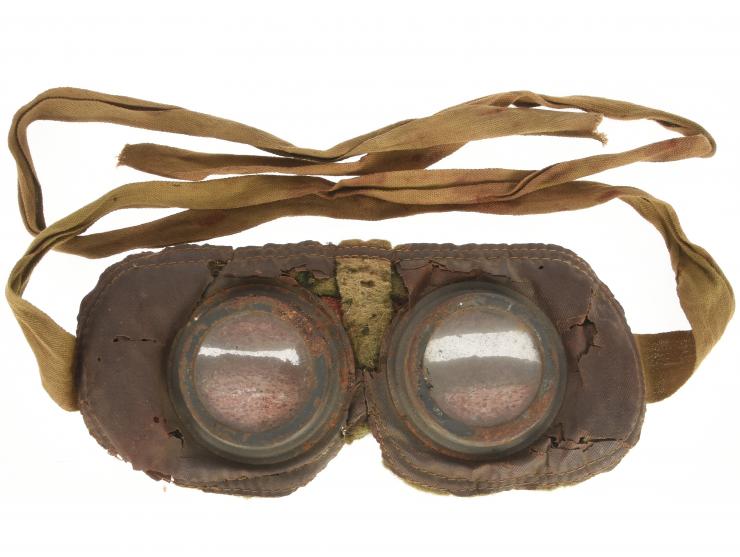
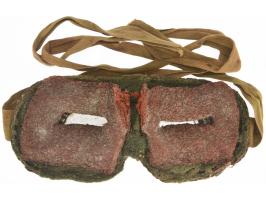
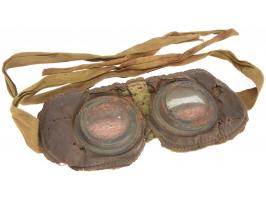
Face mask of layered brown rubberized fabric over wool shoddy is fitted with the same lenses as were used with the P helmets, with the user's side featuring a red sponge rubber pad cut with rectangular inlets for each eye in order to provide a reasonable seal when tightly worn. The mask is attached via khaki twill tape ties. Example retains 50% of the dark blue finish mixed with light rust in the worn areas on the screw-in lens bezels, wear and damage on the brown cloth outer piece, and a break in the sponge rubber pad at the bridge of the nose.
These were among several eye defenses issued concurrently with the P helmets, to be used in tear gas attacks when eye protection was required, but the gas helmet was not. $200 - $400
מתי יימכר הפריט במכירה?
Memorabilia
United States ➝ Headgear Helmets and Hats
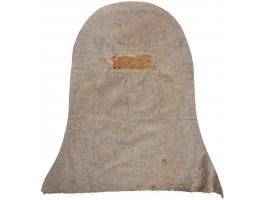
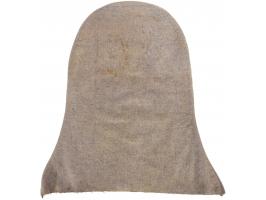
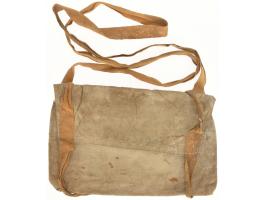
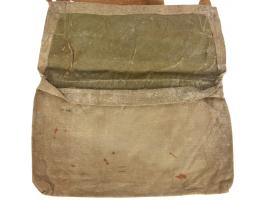
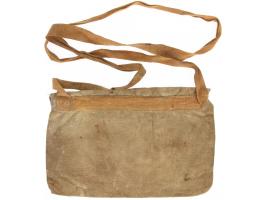
פתיחה: $1,000
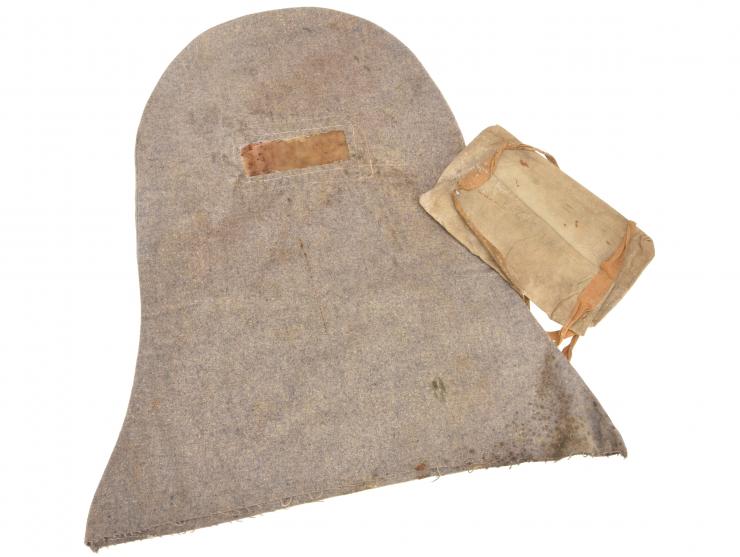
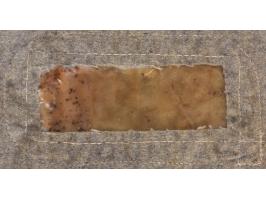
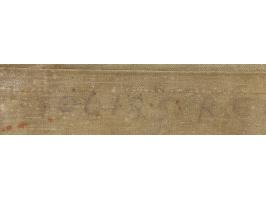
Gray shirt flannel gas hood has a single rectangular window with an amber isinglass lens. Example is complete with the correct original rubberized fabric carrying satchel, which is faintly inscribed with a service number. No markings are observed on the smoke helmet. The helmet, isinglass, and carrier have some spots of discoloration but overall remain in excellent condition.
The idea for the hypo helmet was (according to legend) suggested by a Canadian NCO. Communicated to England on May 10, 1915, a prototype was produced that same day. Being relatively quick and easy to produce, these were officially introduced for issue to the BEF in June 1915. The helmet was impregnated with Hyposulphite chemicals and moistened, which neutralized the chemical agents in use at the time, and allowed the soldier wearing it to breath with relative ease. The primary shortcoming of the early Hypo helmet was the fragile nature of the isinglass (mica) window which had to always be carefully considered when folding and handling the helmet. $2000 - $2500
מתי יימכר הפריט במכירה?
Memorabilia
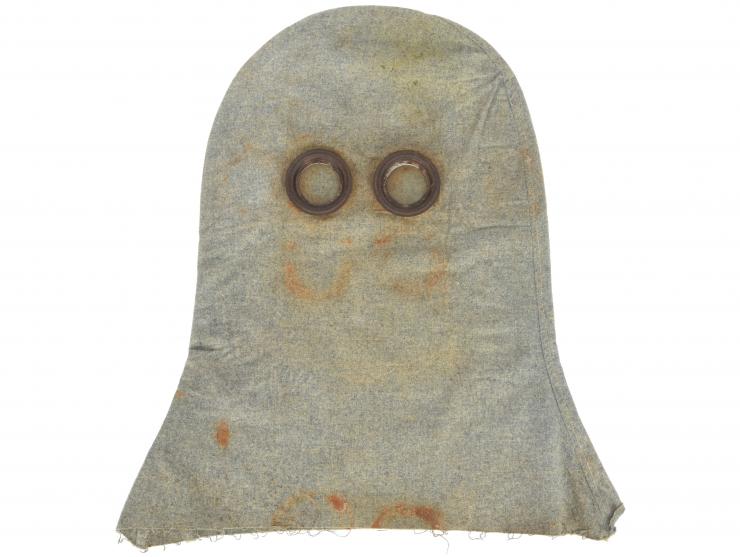
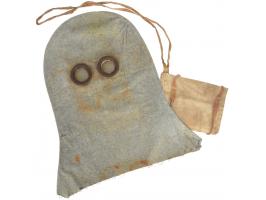
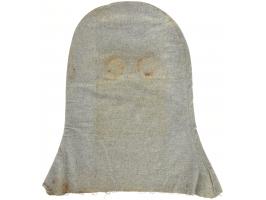
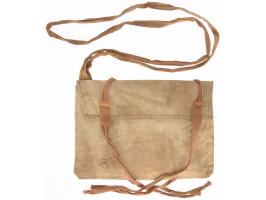
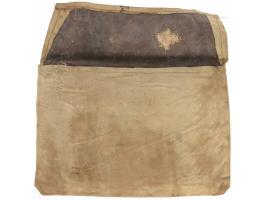
פתיחה: $1,000
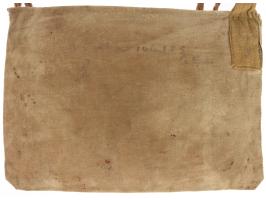
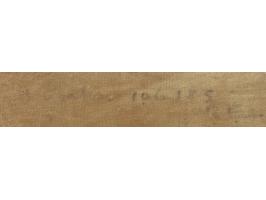
Gray shirt flannel gas hood has a pair of screw-in metal bezel eye pieces with glass lenses. Example is complete with the correct original rubberized fabric carrying satchel, which is faintly inscribed with a service number on the reverse. No markings are observed on the helmet. The helmet and carrier have some spots of discoloration, the eye bezels have a dark oxidized patina, and there are rust stain outlines of the eye lens bezels where it was once stored folded and the oxidation from the bezels has stained the fabric around them.
The idea for the hypo helmet was (according to legend) suggested by a Canadian NCO. Communicated to England on May 10, 1915, a prototype was produced that same day. Being relatively quick and easy to produce, these were officially introduced for issue to the BEF in June 1915. The helmet was impregnated with Hyposulphite chemicals and moistened, which neutralized the chemical agents in use at the time, and allowed the soldier wearing it to breath with relative ease. The primary shortcoming of the early Hypo helmet was the fragile nature of the isinglass (mica) window which had to always be carefully considered when folding and handling the helmet. This final pattern was a significant improvement, which remained the primary issue gas defense until the new P helmets were introduced in September 1915, and then as a backup until sufficient quantities of the P helmets made it to the front lines. $2000 - $2500
מתי יימכר הפריט במכירה?
Memorabilia
פתיחה: $1,000
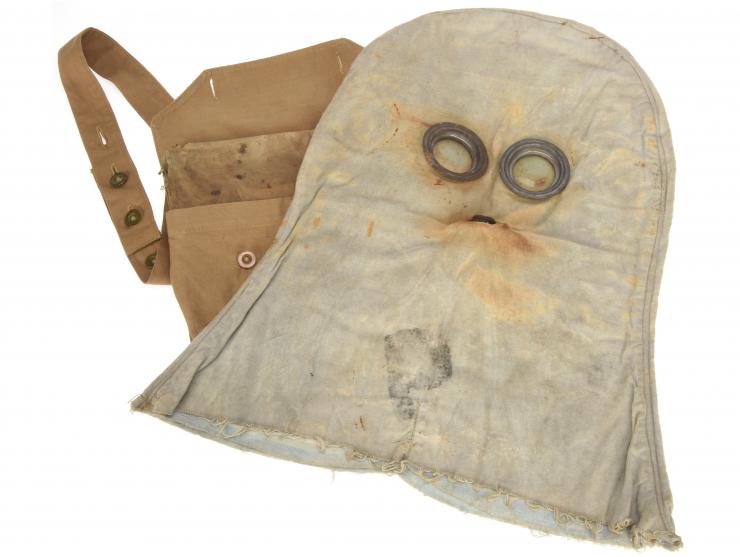
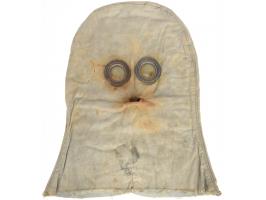
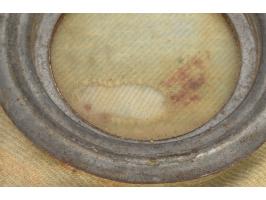
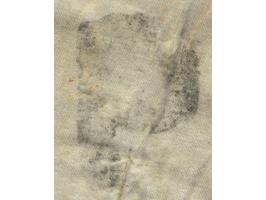
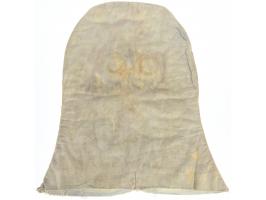
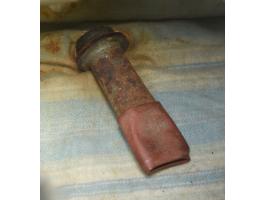
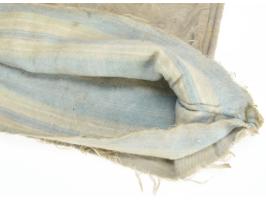
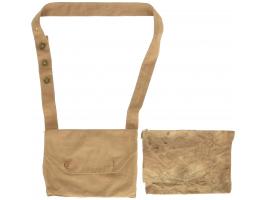
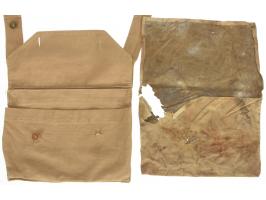
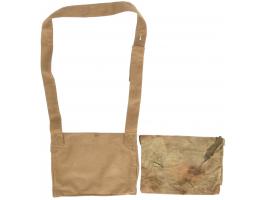
The P or Tube helmet is of gray flannelette with a blue and white striped flannel pajama material interior lining, fitted with screw-in metal bezel and glass eye pieces as was used for the second pattern Hypo helmet. A metal tube exhalation valve is attached with a rubber tube valve on the interior of the helmet, and the helmet is stenciled at the base "P". The tube valve fitting has oxidized and partially separated from the flannel along a portion of its circumference but remains securely in place. Lacks the rubber exhalation valve; the rubber portion on the interior is surprisingly good. Exterior has stains and discolorations but remains in very good overall condition. Includes the correct carrying satchel and liner. Satchel lacks one closure button.
The P or Tube helmets were introduced in September 1915, and featured improvements on the earlier Hypo helmets. The two layers of flannelette exhibited an increased absorption of the chemicals used to neutralize the gas agents. The P designation denotes the use of sodium phenolate and glycerin which neutralized the chlorine gas then in use, as well as phosgene that the British (correctly) anticipated was soon to be added to the German gas arsenal. $2000 - $3000
מתי יימכר הפריט במכירה?
Memorabilia
פתיחה: $750
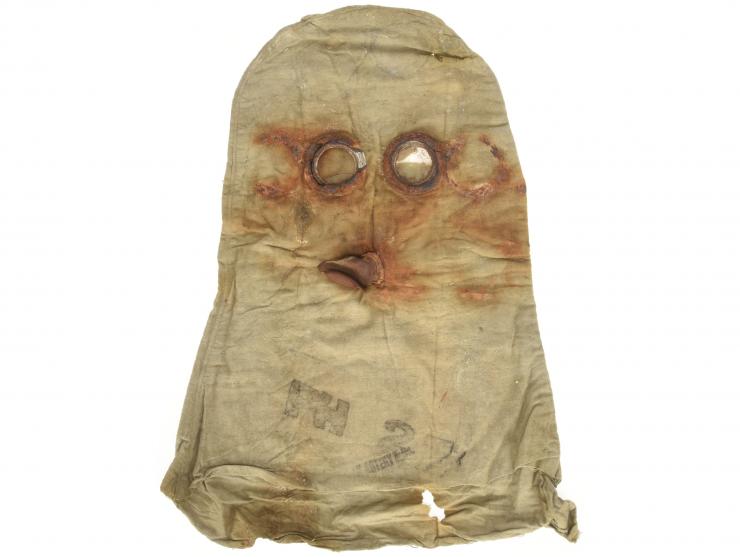
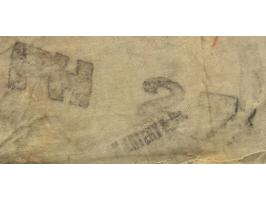
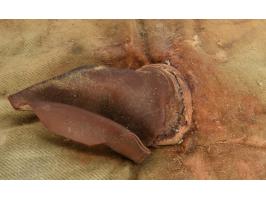
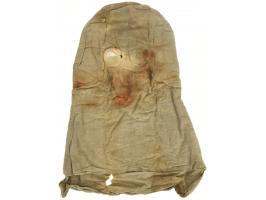
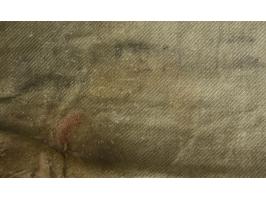
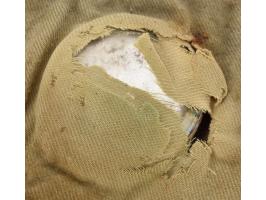
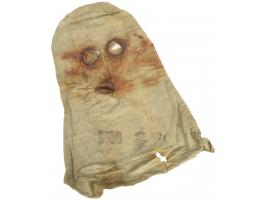
The PH helmet is of gray flannelette with gray flannel interior lining, fitted with screw-in metal bezel and glass eye pieces as was used for the second pattern Hypo helmet. A metal tube exhalation valve is attached with a rubber tube valve on the interior of the helmet, and the helmet is stenciled at the base "PH 27" and marked in several places with a maker stamp "L.LOTTERY & CO." The tube valve fitting has the rubber exhalation valve, though it is rigid and fragile; lacks the rubber portion on the interior. Exterior has stains and discolorations. The eye pieces have rusted and suffered significant material loss from that oxidation, and the surrounding fabric is heavily stained here it wasfolded over the rusting eye pieces. Lacks satchel.
The PH helmet is outwardly similar to the P helmet, but with the addition of hexamine to the phenolate and glycerin solution, yielding greater resistance to phosgene gas and some limited protection against hydrocyanic acid. The PH superseded the P helmet in early 1916 and remained in use until replaced by the small box respirator later that same year. $1500 - $2000
מתי יימכר הפריט במכירה?
Memorabilia
פתיחה: $1,000
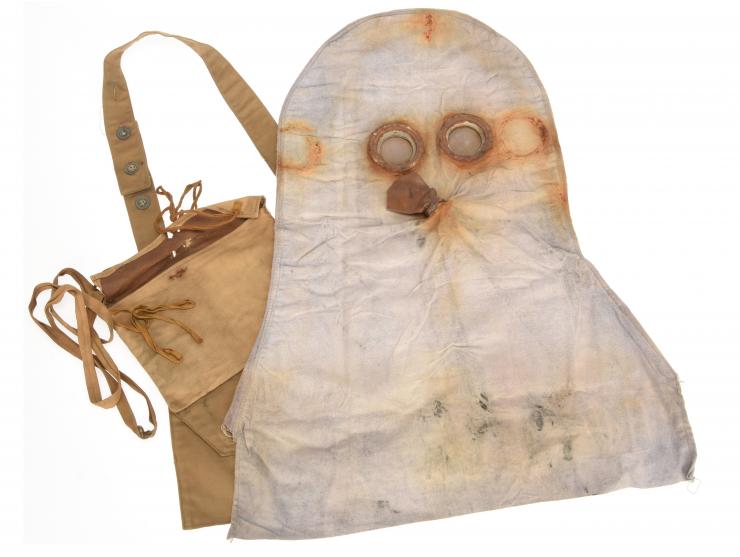
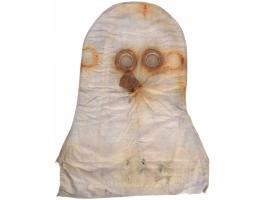
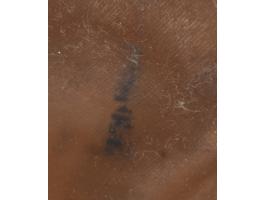
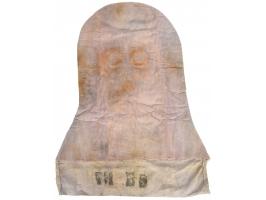
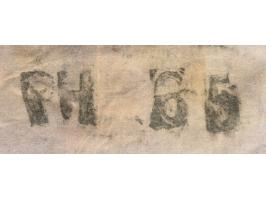
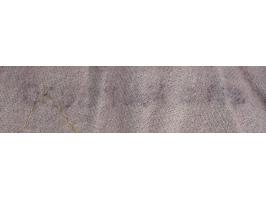
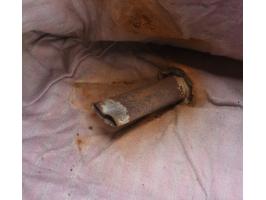
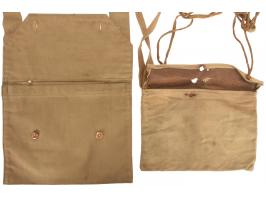
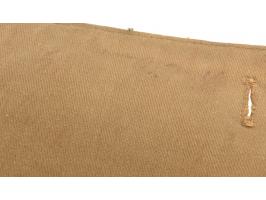
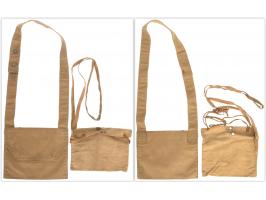
The PH helmet is of gray flannelette with a lavender and white striped flannel pajama material interior lining, fitted with screw-in metal bezel and glass eye pieces as was used for the second pattern Hypo helmet. A metal tube exhalation valve is attached with a rubber tube valve on the interior of the helmet, and the helmet is stenciled at the base "PH 65" on the interior. The tube valve fitting has the rubber exhalation valve; lacks the rubber portion on the interior. Exterior has stains and discolorations. The eye pieces have rusted and suffered some material loss from that oxidation, and the surrounding fabric shows stains where it was once folded over the rusting eye pieces. Includes the correct carrying satchel and liner.
The PH helmet is outwardly similar to the P helmet, but with the addition of hexamine to the phenolate and glycerin solution, yielding greater resistance to phosgene gas and some limited protection against hydrocyanic acid. The PH superseded the P helmet in early 1916 and remained in use until replaced by the small box respirator later that same year. $2000 - $2500
מתי יימכר הפריט במכירה?
Memorabilia
פתיחה: $1,200
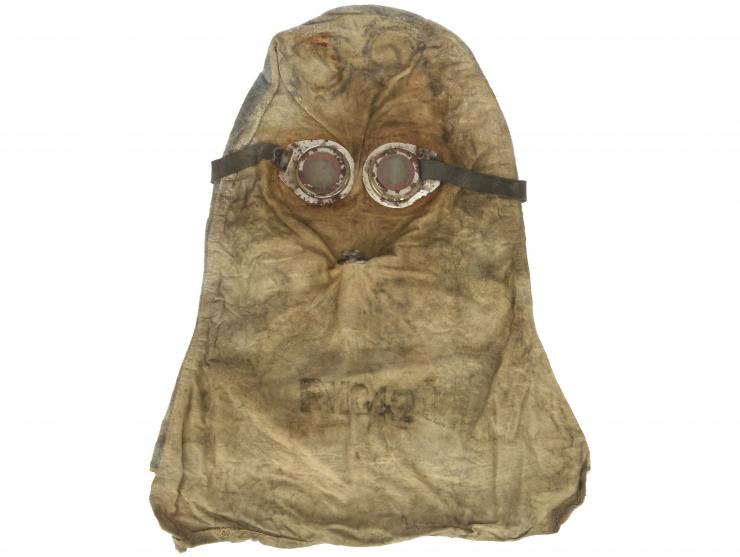
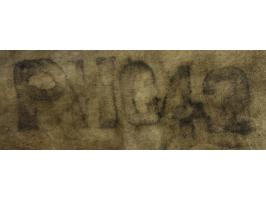
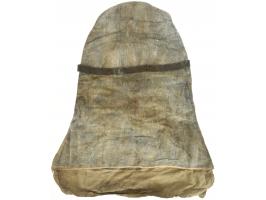
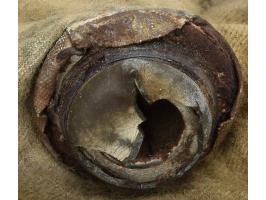
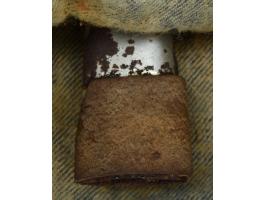
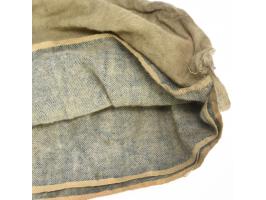
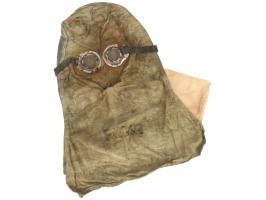
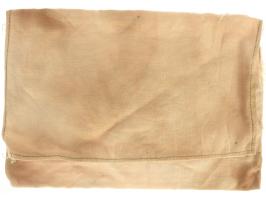
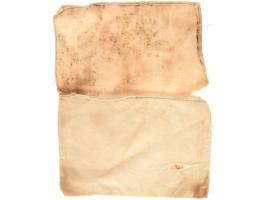
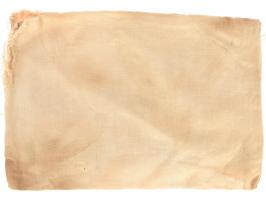
The Phenate-Hexamine Goggle (PHG) helmet is of gray flannelette with a blue twill flannel pajama material interior lining, fitted with fixed goggles with screw-in metal bezel and glass eye pieces, and a black elastic strap headband that encircles the crown. The goggles have red sponge rubber interior seals. The metal tube exhalation valve lacks the exterior rubber flutter valve, though the interior rubber portion survives. Helmet is stenciled at the base "PHG 42". This example has the rubber exhalation valve; lacks the rubber portion on the interior. Exterior has extensive stains and discolorations. Lacks satchel, but does include a non-lined white cotton carry pocket.
The PH helmet is outwardly similar to the P helmet, but with the addition of hexamine to the phenolate and glycerin solution, yielding greater resistance to phosgene gas and some limited protection against hydrocyanic acid. The PHG was a variant of the PH helmet developed specifically for artillery crews, incorporating sponge rubber goggles to protect gunners from becoming combat ineffective due to the effects of tear gas shells. These were issued from January 1916 until replaced by the small box respirator which was introduced in August 1916 and became standard issue by January 1917. $2500-$3000
מתי יימכר הפריט במכירה?
Memorabilia
United States ➝ Melee Weapons
פתיחה: $100
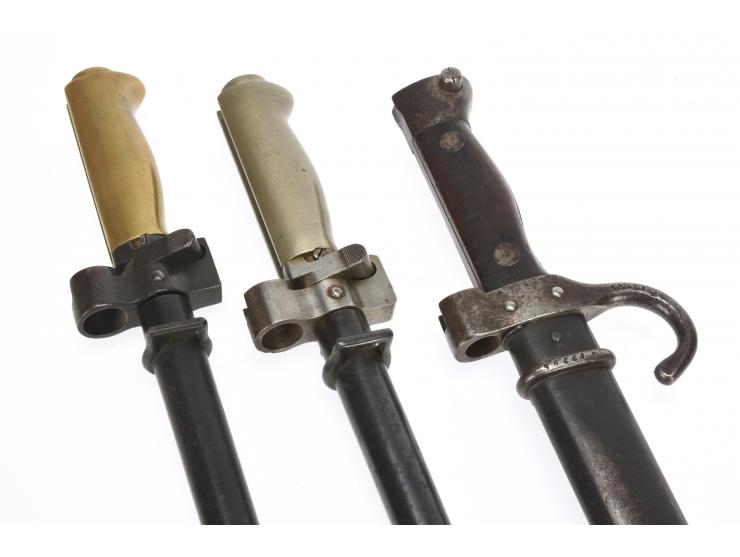
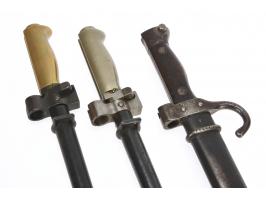
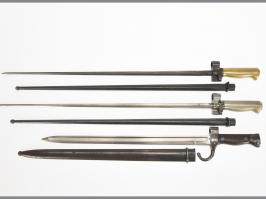
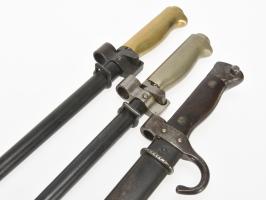
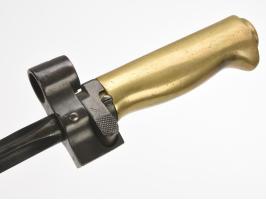
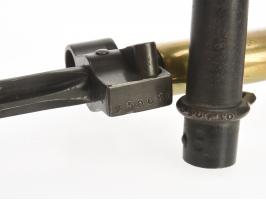
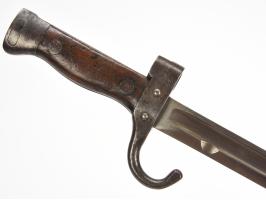
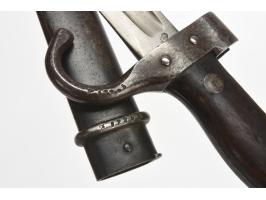
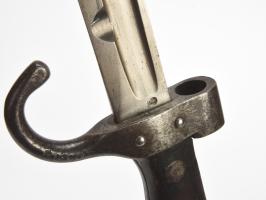
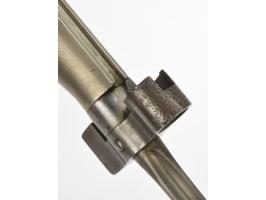
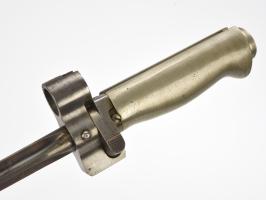
French WWI Bayonets Lot of Three: Two Lebel and One Berthier
Two Lebel Model 1886/93/15 Bayonets, one with white metal alloy hilt and the other with the brass alloy hilt. The brass alloy example has 52cm (20-3/8") quadrilateral blade blade with blued finish. The white metal example has 52cm quadrilateral bladeblade finished bright; has pitting on the top of the muzzle ring. Both complete with scabbards.
M1892 bayonet for the Mannlicher Berthier rifle; second pattern with the elongated muzzle ring, and wood scale grips. Has blade which is fullered both on the sides and for a distance from the tip on the spine - in excellent condition, finished bright; ricasso is marked with inspector stamps. Hilt has dark patina on the metal components, has hook quillon and two piece wood grips attached with slotted screw bolts. Includes scabbard.
$200 - $300
מתי יימכר הפריט במכירה?
Memorabilia
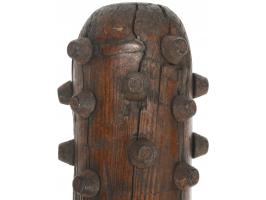
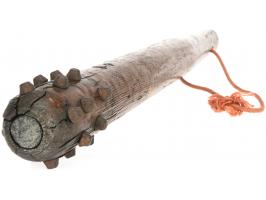
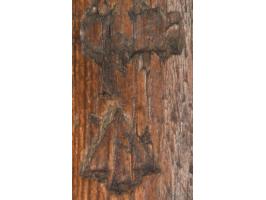
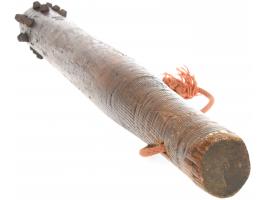
פתיחה: $150
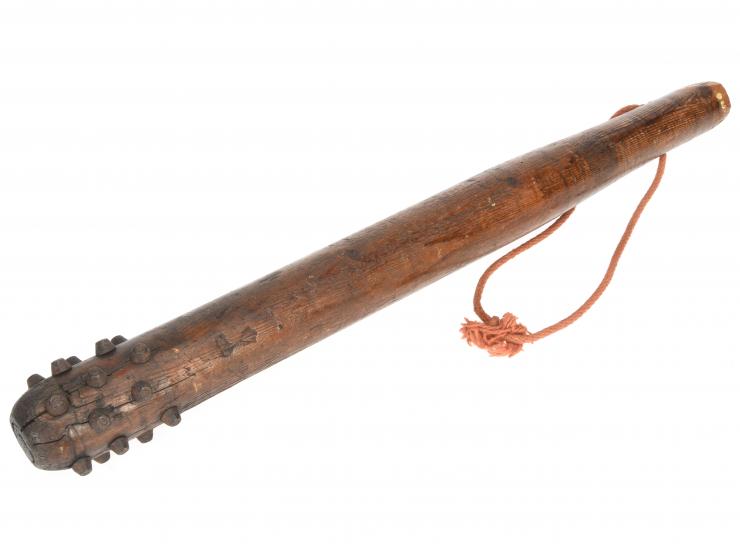
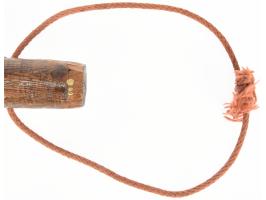
18" overall, turned wood club has lead weighted striking end fitted with hobnails. Handle end is fitted with a cloth lanyard. The shaft has a British BroadArrow stamp near the hobnails on one side. $300 - $500
מתי יימכר הפריט במכירה?
Memorabilia
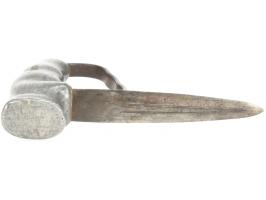
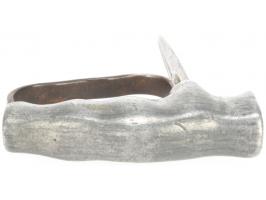
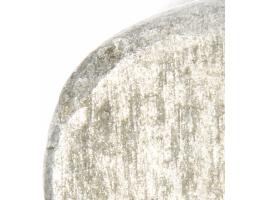
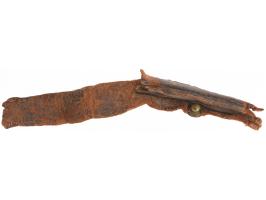
פתיחה: $150
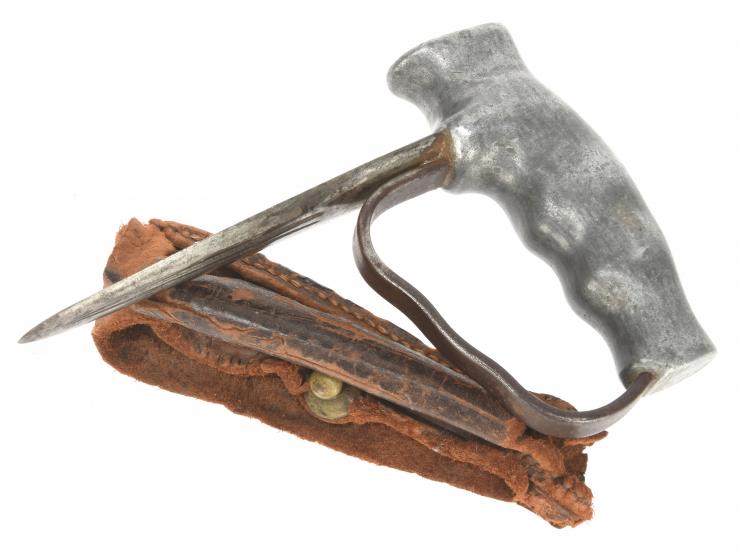
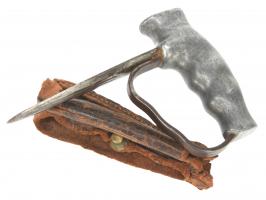
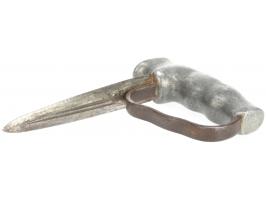
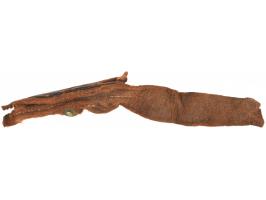
The most well-liked and recognized of a series of daggers produced during the Great War by Robbins & Company, these were not issue items, but available for private purchase by soldiers serving at the front. In the very personal, close quarters combat that characterized trench raids and other small unit actions on the Western Front, trench clubs, pistols, grenades, and close combat knives were particularly useful armaments. The push or punch dagger by Robbins features a heavy cast alloy ergonomic pistol-style grip with a steel knuckle guard and a 4" double-sided blade with two small fullers. The maker name was stamped into the base of the grip. It has almost entirely worn to invisibility on this example, but you can still make out the first letter "R". Example includes the very tattered remains of a scabbard. $300 - $500
מתי יימכר הפריט במכירה?
Memorabilia
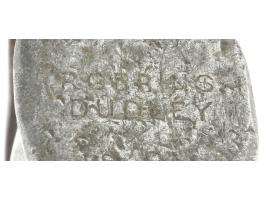
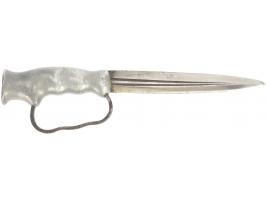
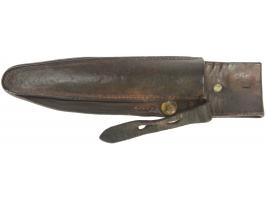
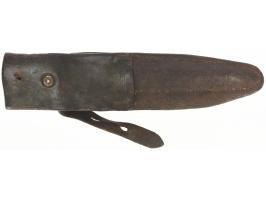
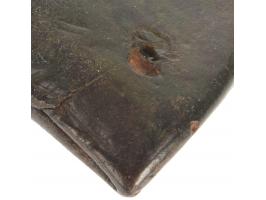
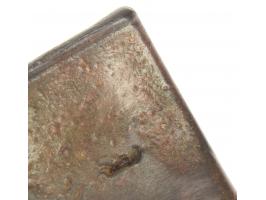
פתיחה: $300
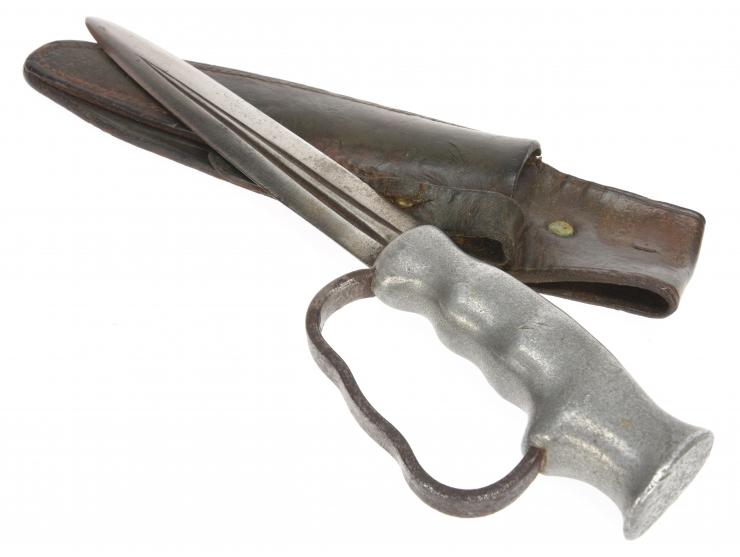
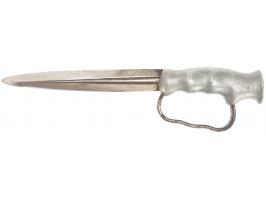
British WWI Robbins & Company of Dudley 3 Finger Knuckle Knife
This Robbins & Company fighting knife is one of the less often encountered variants, though no Robbins & Company knives could be accurately described as common. 8-7/8" in overall, with a 5-1/8" dagger blade. The blade is 7/8" wide at the base and tapers rapidly to a sharp double-edged dagger point. A pair of narrow fullers extend from the base, converging about 1" from the tip. The blade is cast directly into the aluminum hilt, which is contoured to fit the hand and has 4 finger grooves cast into it as well. A contoured steel knuckle guard is also cast into the hilt to protect the first 3 fingers of the hand holding the knife. The base of the aluminum hilt is cast wider than the balance of the hilt and is completely flat. Though marred and defaced from numerous impacts, the markings here remain legible: "ROBBINS / DUDLEY". Blade has light patina and age toning with some minor age discoloration and light surface oxidation, nothing significant or detrimental to display. The aluminum hilt has an even pewter gray color. Includes brown leather scabbard which remains in good pliable condition.
$600 - $800
מתי יימכר הפריט במכירה?
Memorabilia
United States ➝ Munitions and Ordnance
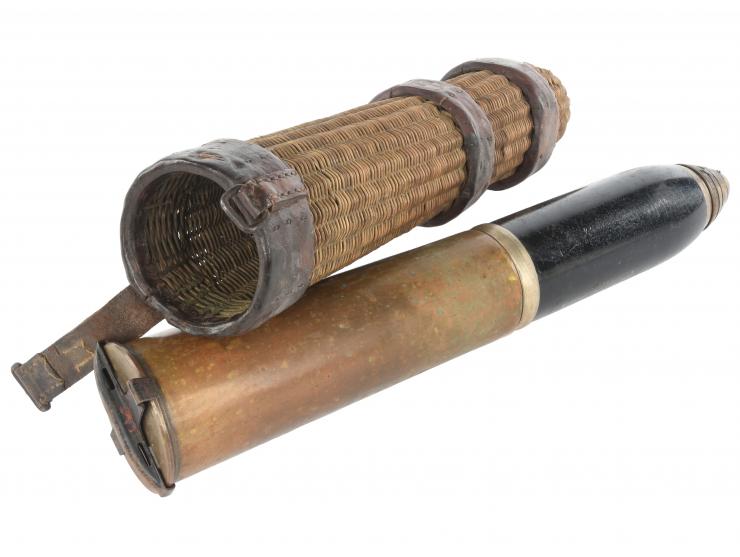
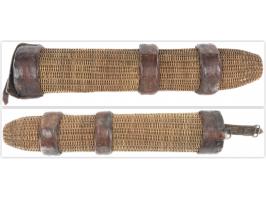
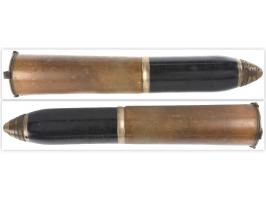
פתיחה: $50
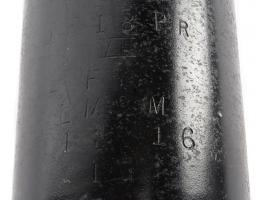
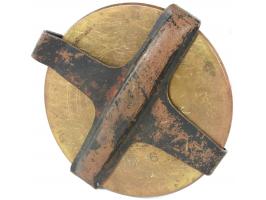
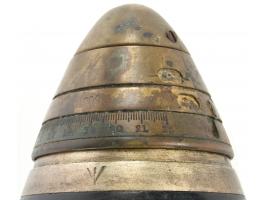
British WWI 18-Pounder Artillery Shell (inert) with Wicker Carrier
23-1/2" tall wood and leather reinforced wicker carrier for 18 pounder ammunition, contains an inert 18 pounder artillery shell (inert) with safety cap over the primer.
$100 - $200
מתי יימכר הפריט במכירה?
Memorabilia
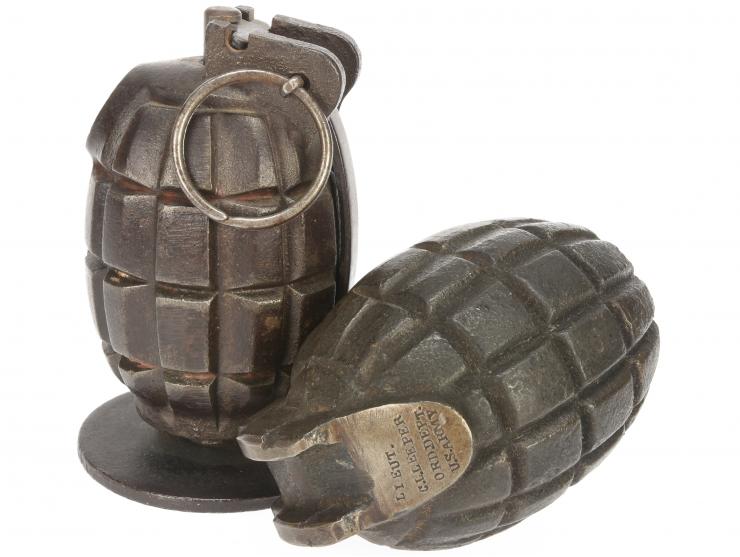
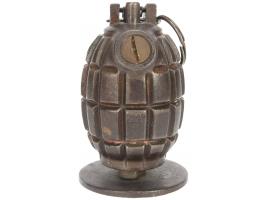
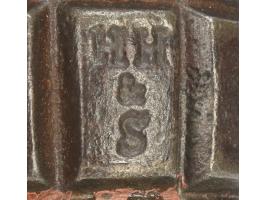
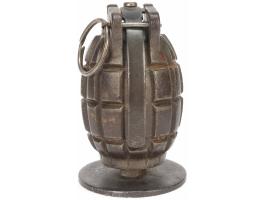
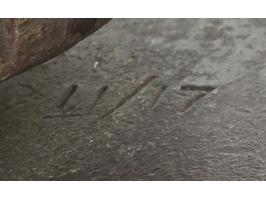
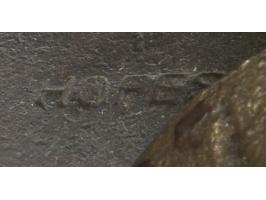
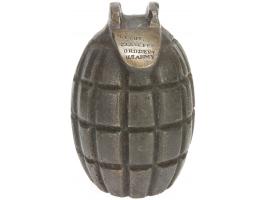
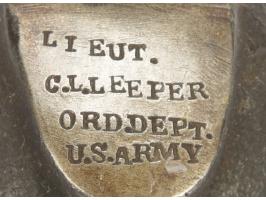
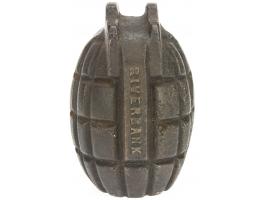
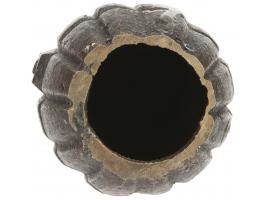
British WWI Mills Bomb Lot: No. 5 MK I with Launcher Disc Base & Unfinished Casting with Presentation
פתיחה: $75
INERT. Lot includes No. 5 MK I Mills Bomb with cup type launcher disc which is dated November 1917. Also includes a dummy casting Mills Bomb cast with "RIVERBANK" where the lever would normally be, also stamped information "LIEUT. C.L. LEEPER / ORD. DEPT. / U.S. ARMY". $150 - $200
מתי יימכר הפריט במכירה?
Memorabilia
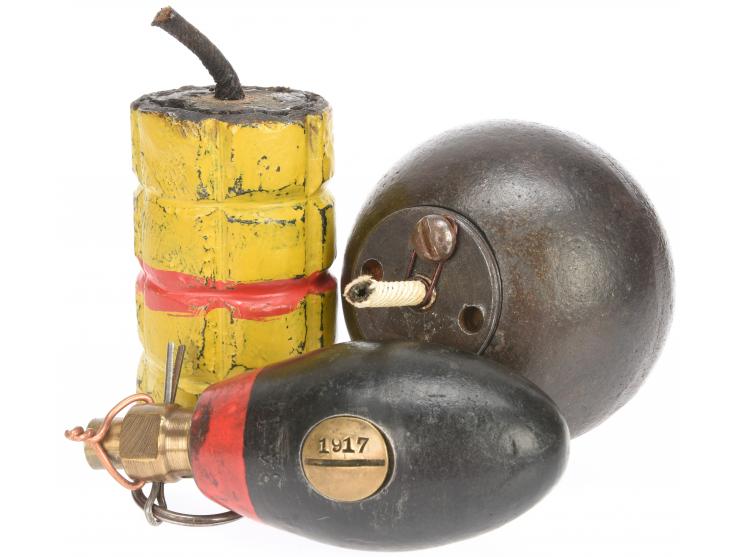
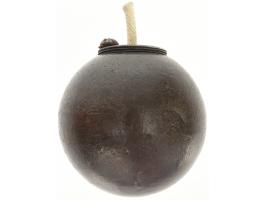
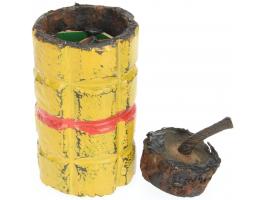
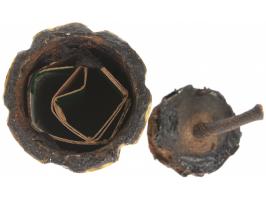
British WWI Inert Grenades: Battye Bomb, No. 15 'Cricket Ball' Grenade, & No. 34 'Testicle' Grenade
פתיחה: $100
British WWI Inert Grenades: Battye Bomb, No. 15 'Cricket Ball' Grenade, & No. 34 'Testicle' Grenade
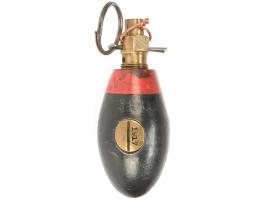
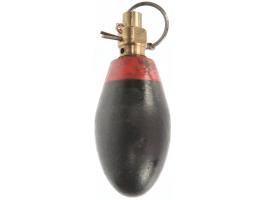
The Battye bomb was an interim weapon manufactured in the town of Bethune, France, in 1915 for the British Army, based on the design of Captain B.C. Battye of the Royal Engineers. These grenades consist of a segmented roughly cast iron cylinder sealed with a wooden plug, and fitted with variety of fuzes. This example has a simple wood plug and cloth fuze installed (supported by pasteboard on the interior, as the interior is happily empty). Exterior has yellow paint with a red stripe. No. 15 ball grenade or 'cricket ball' grenade is a 3" diameter iron sphere with a threaded plug and time fuze. Example has dark patina and a display analog installed to represent the fuze. No. 34 Mk III 'testicle' grenade was introduced in 1917 to rival the lightweight German 'Eierhandgranate.' Body is in good condition but with a red stripe near the top and dark patina on the remainder. Has brass fuze assembly with a replacement pull ring safety, brass plug on the side. Markings include designation "No. 34 III", maker "FB" and date "1917" on the plug.
$200 - $300
מתי יימכר הפריט במכירה?
Memorabilia
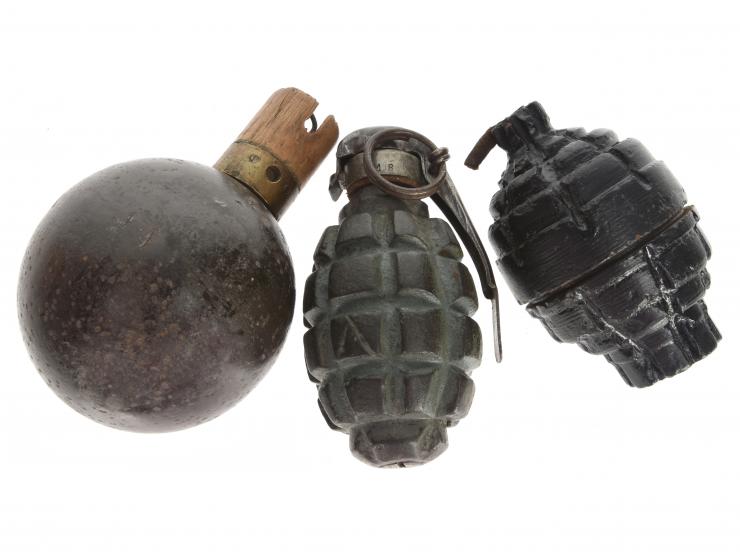
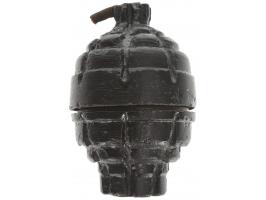
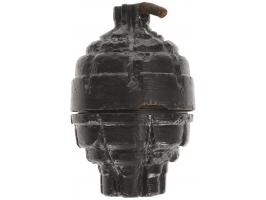
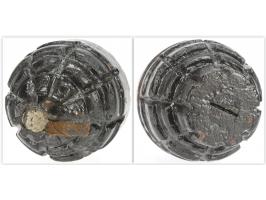
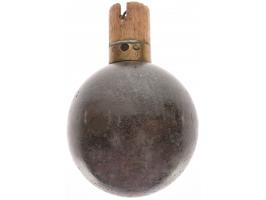
פתיחה: $150
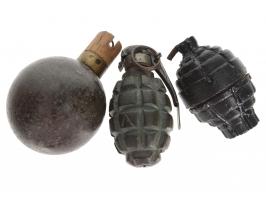
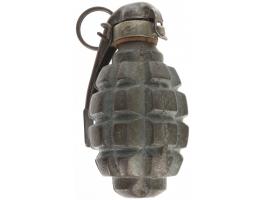
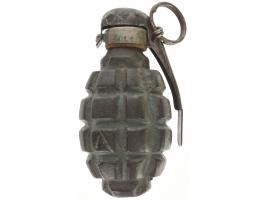
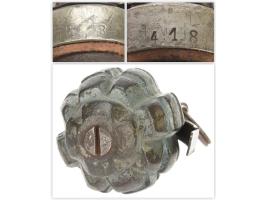
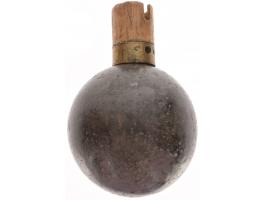
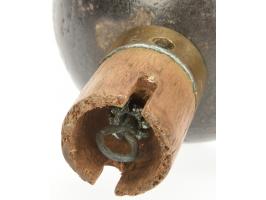
Lot of Three Inert WWI French Grenades: Mle. 1914 Spherical, Besozzi, & Mle. 1915 F1
Early War Mle. 1914 Spherical Grenade is a 3-1/8" diameter smooth, spherical cast iron body and threaded bronze fuse assembly complete with friction wire ring, even complete with the wooden plug that protects the fuse device. This grenade was the first to utilize a metal, screw-in fuse for water resistance and was thrown with the aid of sling, a method that proved difficult in narrow trenches during WWI. The French / Italian Besozzi Grenade is a pre-war Italian grenade that was imported by France at the beginning of the war, then manufactured in France under license after the Italy joined the party in May 1915. Externally segmented body has threaded plug hole in the base and a hole in the top through which a red phosphorous tipped time match fuze extended. End of the fuze is still present, which is normally not the case for these. Has dull black painted finish which if not original is at least old in appearance. A design that like the war itself was a collision of new, forward thinking design (externally-segmented iron grenade) and the archaic (time match fuze that was lit via a handheld striker box). Model 1915 F1 Grenade has segmented cast iron body and is complete with Mle. 1916 Billant automatic plug Igniter with safety pin and ring. Body retains horizon blue paint in the segmentation recesses, dark patina on the remainder. Fuze has a dummy (solid) copper ignitor inserted in the fuze for display purposes.
$300 - $400
מתי יימכר הפריט במכירה?
Memorabilia
פתיחה: $150
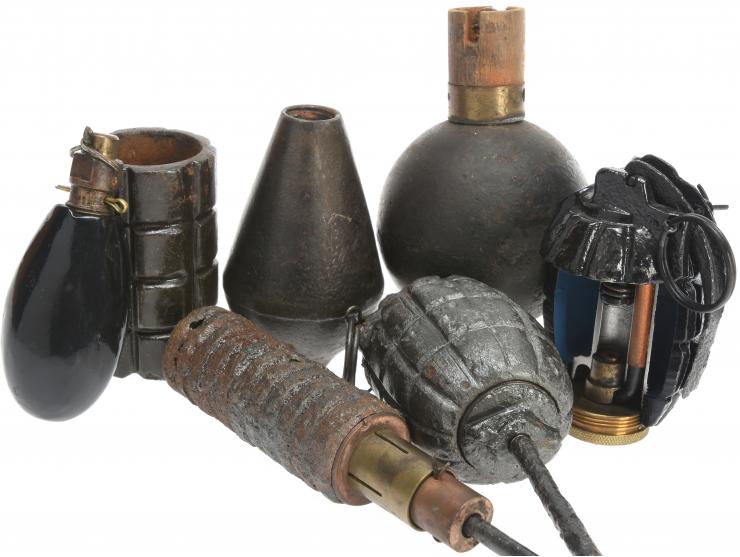
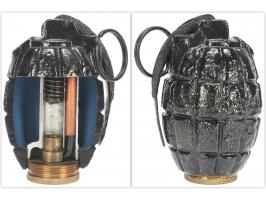
WWI British & French (inert) Grenade Lot: Featuring Cut-Away Mills Bomb
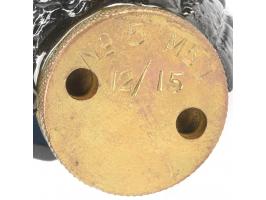
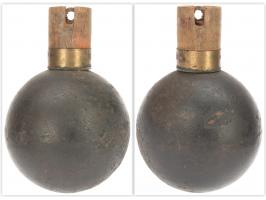
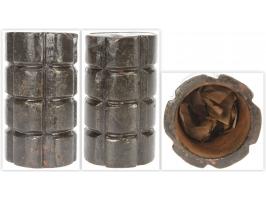
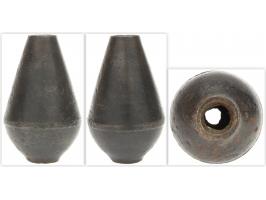
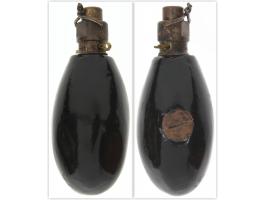
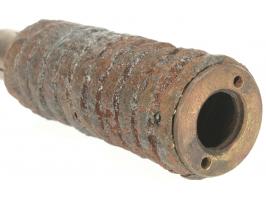
Lot features a very nice training cut-away Mills Bomb with base plug marked "No. 5 MkI" and dated "12/15". Also includes a nice example of the Battye bomb; an interim weapon manufactured in the town of Bethune, France, in 1915 for the British Army, based on the design of Captain B.C. Battye of the Royal Engineers. These grenades consist of a segmented roughly cast iron cylinder sealed with a wooden plug, and fitted with variety of fuzes. This example is one of the few that we have had that is not a ground dug recovery - has nice even dark patina, top is open with no plug or fuze installed. Early War French Mle. 1914 Spherical Grenade is a 3-1/8" diameter smooth, spherical cast iron body and threaded bronze fuse assembly complete with friction wire ring, even complete with the wooden plug that protects the fuse device. This grenade was the first to utilize a metal, screw-in fuse for water resistance and was thrown with the aid of sling, a method that proved difficult in narrow trenches during WWI. British No. 34 Mk III 'testicle' grenade was introduced in 1917 to rival the lightweight German 'Eierhandgranate.' This example appears to be a heavily restored ground dug example with a now-smooth black finish over filler. Has brass fuze assembly, no visible markings.
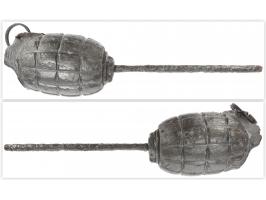
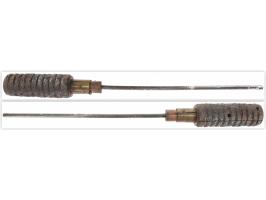
Lot further includes a relic condition British No. 24 Mk I rifle grenade, a No. 23 Mk II Mills Bomb with a portion of a rifle rod attached to the base plug, and the body portion of a French Brandt 60mm modèle 1915 pneumatic mortar projectile, lacking fuze and tail assembly.
$250 - $350