
Imperial Germany ➝ Firearms
פתיחה: $100
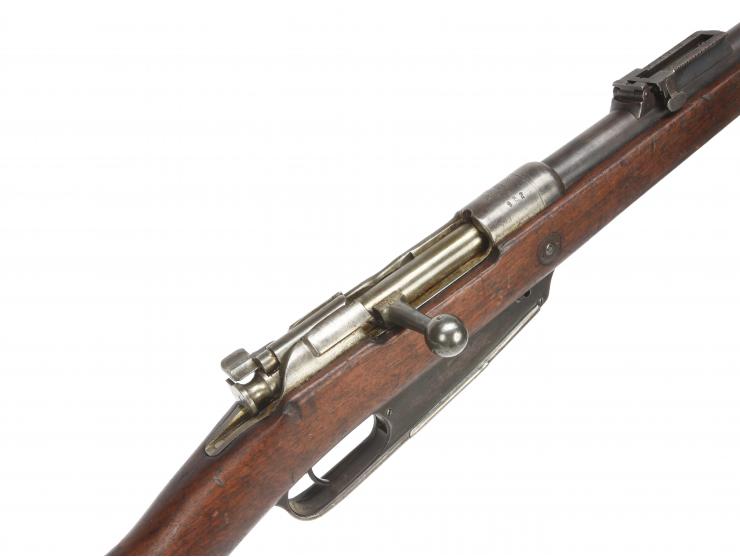
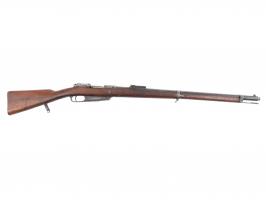
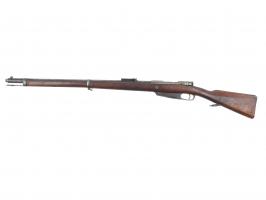
Imperial German Gewehr 88 "Commission" Rifle
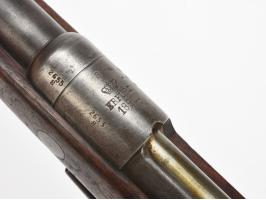
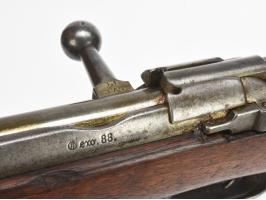
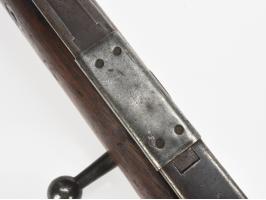
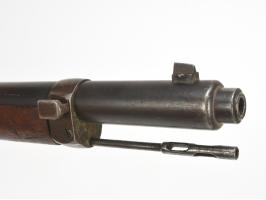
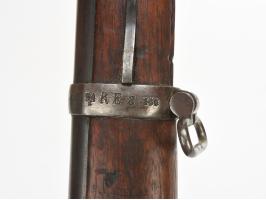
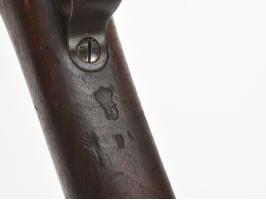
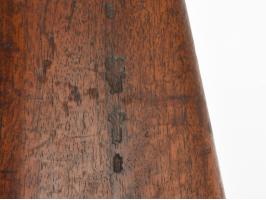
Gewehr 88/05 S (7.92×57mm S round) serial numbered "2655S". Blued finish has thinned and blends with a dark patina. Receiver ring is stamped "S / (crown) / Erfurt / 1890". Sheet metal covering on the clip ejection point stamped with an "E" logo over "1914." Buttstock stamped on the right side with Imperial inspection proofs. Barrel band has crossed out German unit marking to the 24th Infantry Regiment Ersatz Battalion, 3rd Company, "24. R.E. 3. 100". Distinctive "double jag" cleaning rod is present. Bolt is heavily greased. Bore is just a bit dirty, with deep, sharp-twist rifling.
The Gewehr 88 marked a turning point in military firearms as Germany's first smokeless powder bolt-action repeating rifle. Adopted in 1888 in response to France’s revolutionary Lebel rifle, the Gew.88 combined a Mauser-influenced bolt action and Mannlicher-style en-bloc clip system. Originally chambered for the round-nosed Patrone 88 cartridge, the German rifle testing commission adopted a dimensionally redesigned 7.92×57mm Mauser 'S Patrone' cartridge in 1903. This cartridge was loaded with a pointed (spitzer) bullet and more powerful double-base smokeless powder, marking a significant improvement over the earlier round. Gew.88 rifles in service were converted by an enlarged chamber in the barrel, thus ensuring the continued usefulness of this rifle long after it was superseded by the Gew.98. The vast stocks of Gew.88 rifles armed second-line, colonial, and allied troops throughout World War I, supporting Germany’s rapid wartime mobilization and providing essential firepower across multiple fronts.
$200 - $300
מתי יימכר הפריט במכירה?
Memorabilia
פתיחה: $100
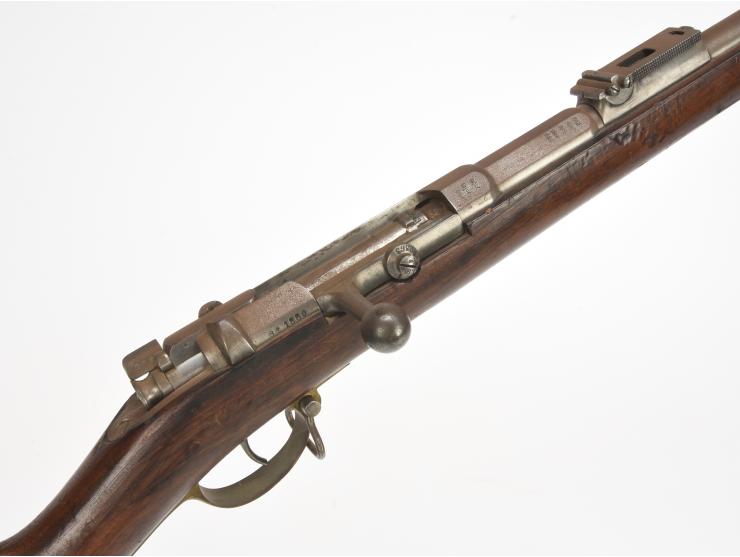
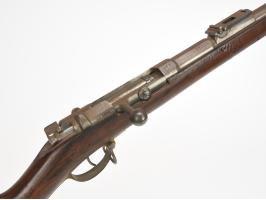
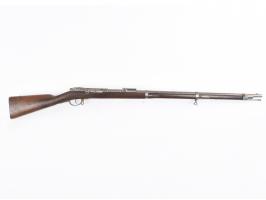
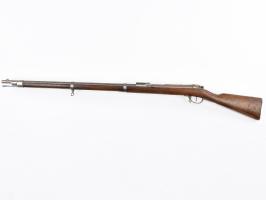
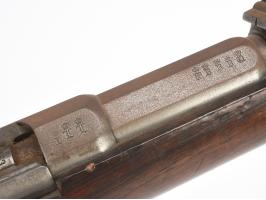
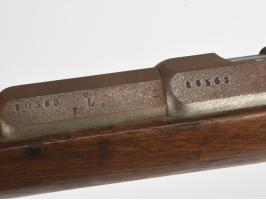
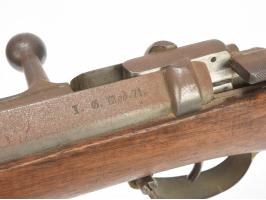
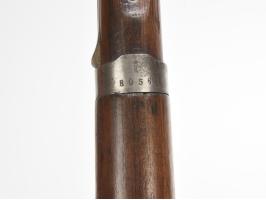
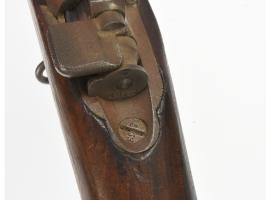
German Gewehr 71 Mauser Rifle: Amberg Arsenal 1880
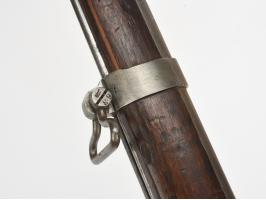
Manufactured at Amberg Arsenal in 1880, complete with all matching numbers, and marked with the "Crown / L" proof for Ludwig II of Bavaria. Butt plate tang is has unit marking for the Bavarian 17th Infantry Regiment. Stock shows numerous dings and scrapes but remains solid. Interior of the chamber and underside of the bolt that rested there in storage are nice and clean, but the exterior of the metal surfaces has a light coat of rust throughout from neglect and poor storage. Bore is dirty but shows strong rifling.
$200 - $300
מתי יימכר הפריט במכירה?
Memorabilia
פתיחה: $150
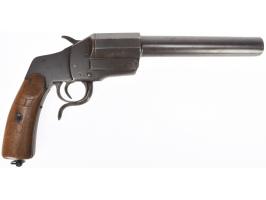
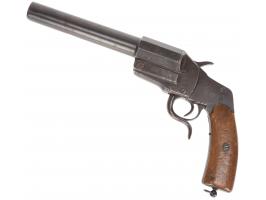
German WWI Hebel Flare Pistol
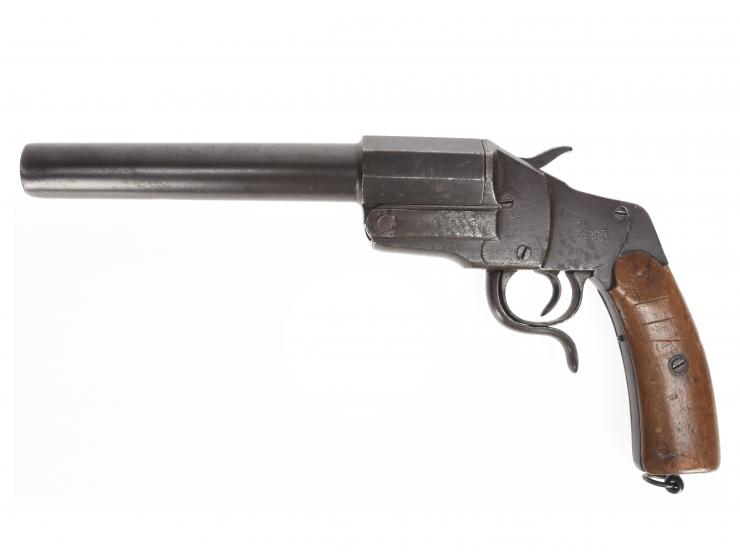
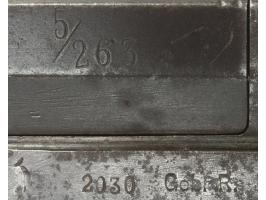
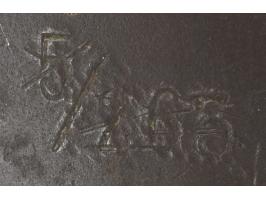
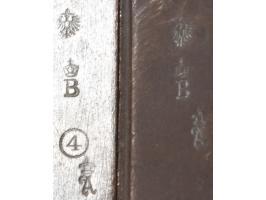
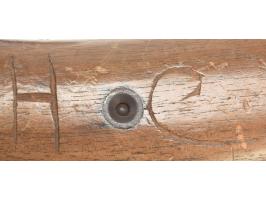
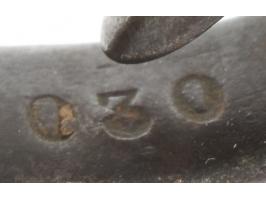
36 cm overall, 16.5 cm barrel, Hebel Pattern flare pistol has hints of blued finish blending with overall dark even patina, has some pots of light pitting. Breech break lever is mounted below trigger guard, frame has serial number "2030", "5/263" large stamped markings in several places, and is also marked with Imperial proof stamps. Walnut grips show scuffs and dings from service wear, initials "HC" carved on one side, base is complete with lanyard loop. There is a small screw protruding from the frame on the grip which is either 'boogered' or a replacement. Action is tight but functional. This was the workhorse flare gun of the Imperial forces, and as such they tend to be in pretty rough condition - this one is about average as far as that goes, but what it lacks in pristine condition is more than compensated for with legitimate wartime service character.
$200 - $300
מתי יימכר הפריט במכירה?
Memorabilia
פתיחה: $150
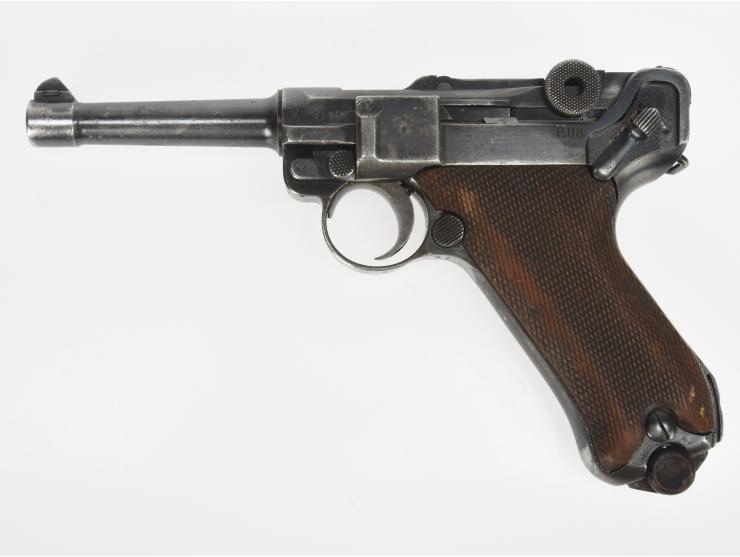
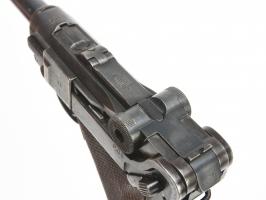
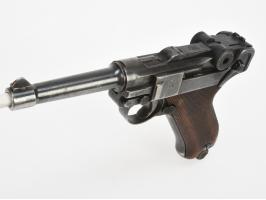
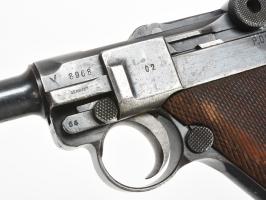
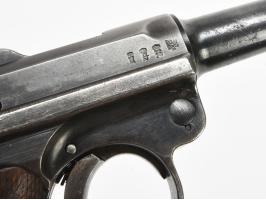
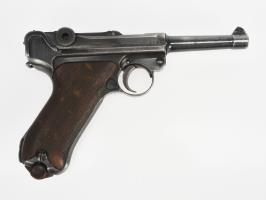
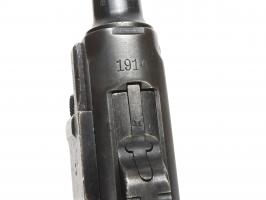
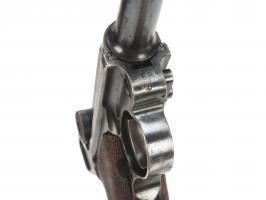
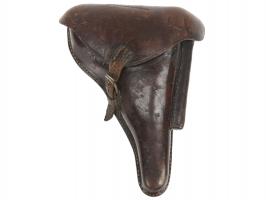
Imperial German P08 Luger Semi-Automatic Pistol: DWM 1914 (Imported Parts Rebuild)
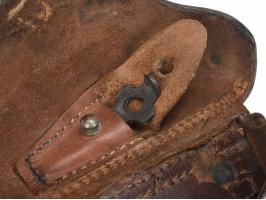
9mm Luger caliber, 3.9" barrel, S/N 9463. NRA Fair. Retains ~40% blued finish blending with patina, checkered hardwood grips show extensive service wear but no breaks or damage. Barrel has some light pitting but is clean with strong rifling. Chamber is dated "1914", toggle with script "DWM" logo, Imperial proofs on right side of chamber. Safety marked "GESISCHERT", grip frame with stock lug. Example appears to be rebuilt from original parts, with the frame serial number "3164", "8968" on the barrel, and partial numbers "02", "64", and "21", along with a small import marking "GERMANY". Includes a single unnumbered wood base magazine. Has some light pitting in spaces with finish loss on the high edges and points of contact. Includes an original brown leather holster which has no visible markings, but the tool is still present in the pouch inside the flap. US sales only, FFL required.
$300 - $400
מתי יימכר הפריט במכירה?
Memorabilia
פתיחה: $150
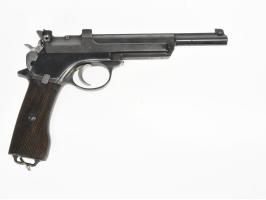
Steyr Mannlicher Argentine Modelo 1905 Semi-Automatic Pistol
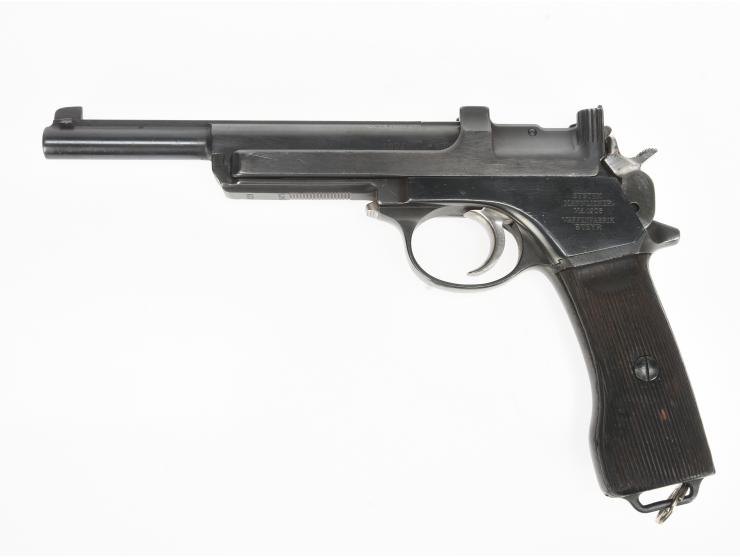
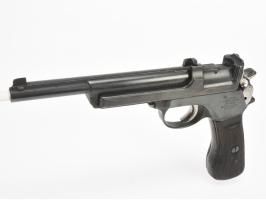
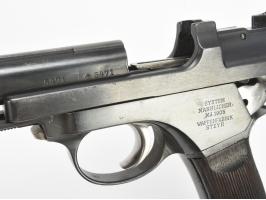
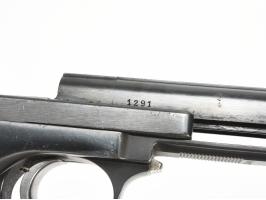
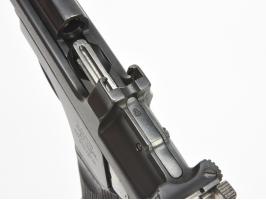
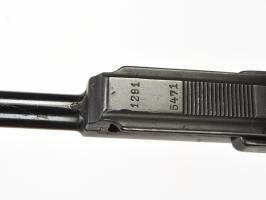
Mannlicher Model 1905 is a 7.63x21mm delayed blowback single action semi-auto with an external hammer, fed from a fixed 10-round internal magazine loaded with stripper clips. This example was made for Argentina, designated the Modelo 1905. NRA Good condition, with the Argentine crest removed and blued finish reapplied, as is commonly encountered on these; retains "RA" Republica Argentina acceptance stamp on the beavertail. Bore appears to have some light pitting in the grooves on the upper portion near the breech. Left side of the frame, action cover, and barrel has serial number "5471", with "71" duplicated on all numbered internal components. Right side of the barrel and underside of the cover plate also have "1291" Argentian "Numero de Dotacion" accountability numbers. Butt has lanyard loop and serrated wood grip scales showing normal wear. Action is good and tight. Barrel has strong rifling. US sales only, FFL or C&R required.
$300 - $400
מתי יימכר הפריט במכירה?
Memorabilia
פתיחה: $150
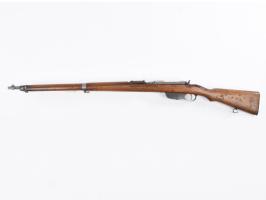
Austrian M95 Steyr-Mannlicher Rifle
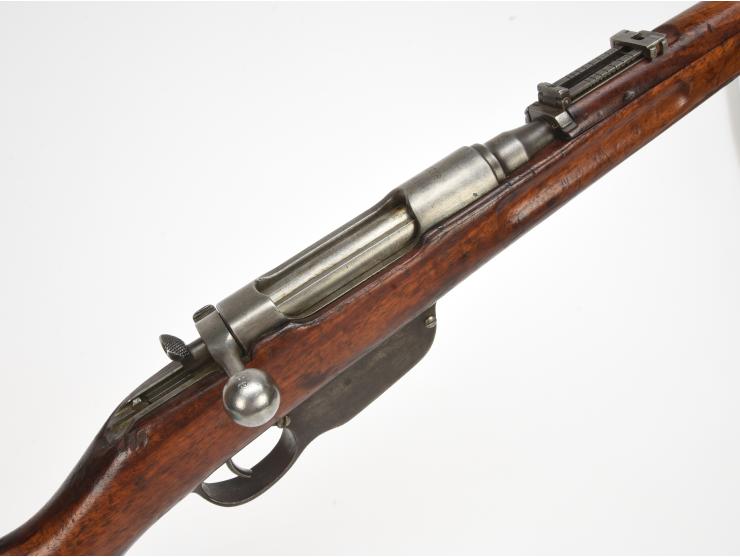
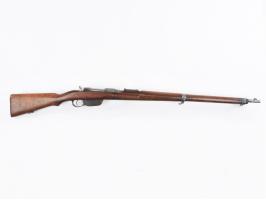
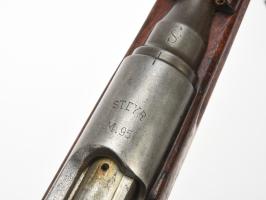
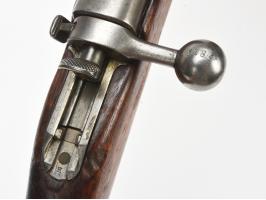
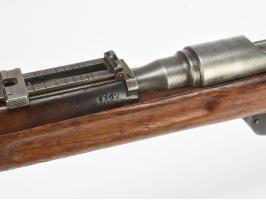
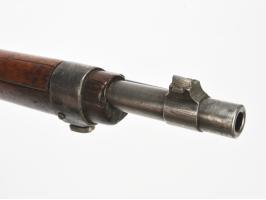
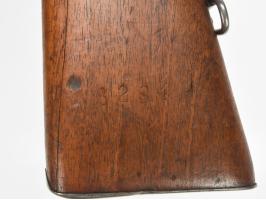
M95 'straight-pull' Mannlicher rifle does not exhibit any visible date or military issue stamp markings, marked "STEYR / M95" on the receiver, along with the "S" marking indicating that it was converted to chamber the 8x56mmR M30 ammunition, adopted by the Austrian Republic in 1930 and Kingdom of Hungary in 1934 as the more powerful replacement for the 8x50mmR Mannlicher cartridge. Frame and barrel have serial number "1468", mismatched where visible on the bolt and wood stock components. Stock has normal surplus rifle dings and dents but remains in good overall condition. Bore is good with strong rifling.
The Austro-Hungarian M95 Steyr-Mannlicher rifle, adopted in 1895, signaled a dramatic advancement in military weaponry with its straight-pull bolt-action mechanism—distinctly increasing rate of fire over traditional turn-bolt systems. Originally chambered in 8x50mmR, the rifle armed Austro-Hungarian forces throughout the First World War and became one of the most recognizable service rifles of the empire. In the 1930s, large numbers of these rifles were upgraded for the more powerful spitzer-type 8x56mmR M30 cartridge; examples so converted are marked with an “S” on the barrel shank—a detail indicating their compatibility with modernized ammunition and increased ballistic performance. Emblematic of its robust design and adaptability, the M95 continued to see active service through the Second World War with Austria, Hungary, Bulgaria, and other successor states—used both as a frontline and reserve weapon well into the mid-twentieth century.
$300 - $400
מתי יימכר הפריט במכירה?
Memorabilia
פתיחה: $400
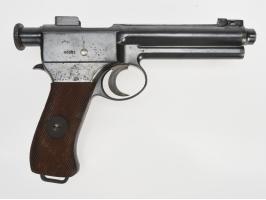
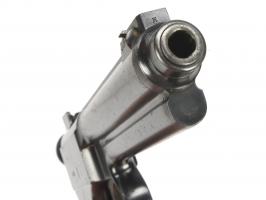
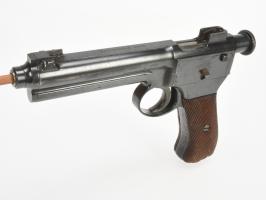
Austro-Hungarian WWI M1907 Roth-Steyr Semi-Automatic Pistol
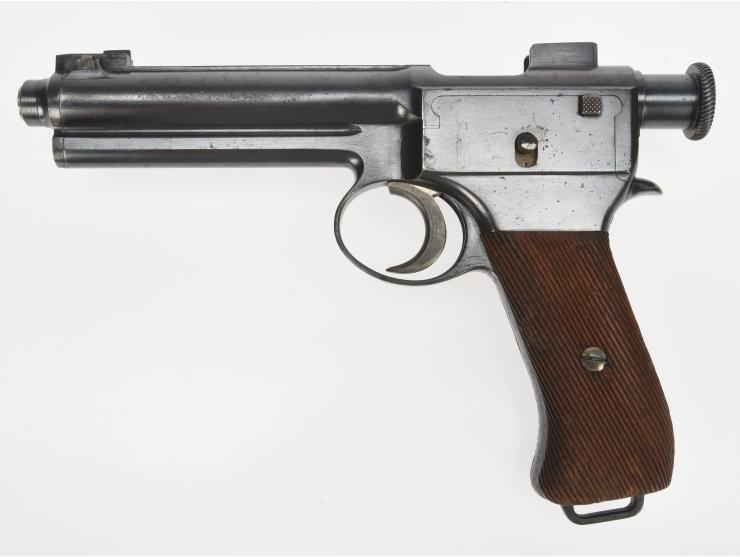
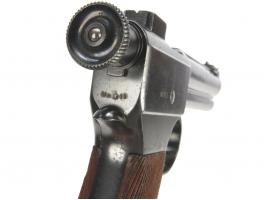
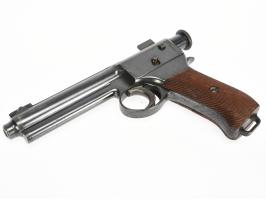
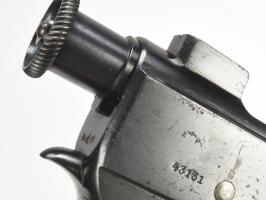
Austro-Hungarian WWI M1907 Roth-Steyr Semi-Automatic Pistol, manufactured in 1910 and chambered in the proprietary 8mm Steyr cartridge. NRA Excellent with 95% original blued finish; has a few age discolorations on the serial number side of the frame, but very nice overall. Bore is excellent with strong rifling. Diagonally ribbed wood grips show normal light wear. Frame side has serial number "43131", and the barrel legend indicates manufacture by Österreichische Waffenfabrik (Steyr). Action remains good and tight. Excellent example! Rear of the frame is marked with manufacture date "W.n/eagle/10".
This pistol was adopted by the Austro-Hungarian Army in 1907 and manufactured by Osterreichische Waffenfabrik-Ges in Steyr, Austria, from 1907 to 1914, with approximately 70% of the production handled by Österreichische Waffenfabrik in Steyr, and the remainder in Budapest by Fegyvergyár. The Roth-Steyr M1907 was a technological milestone as the first semi-automatic pistol widely adopted by a major military, specifically the Austro-Hungarian cavalry. Its advanced rotary-barrel locking system and striker-fired trigger mechanism enhanced safety and reliability, features crucial for mounted troops. The M1907’s integral 10-round magazine was loaded by stripper clips, streamlining reloading compared to earlier sidearms, though its fixed magazine slowed the process in combat. Chambered for the 8mm Roth cartridge, the pistol was robust and dependable in harsh field conditions, but its heavy trigger pull and moderate stopping power were considered drawbacks. Despite these limitations, the Roth-Steyr served extensively throughout the First World War and remained in use into the interwar period, marking a significant step in military handgun evolution.
$800 - $1000
מתי יימכר הפריט במכירה?
Memorabilia
פתיחה: $300
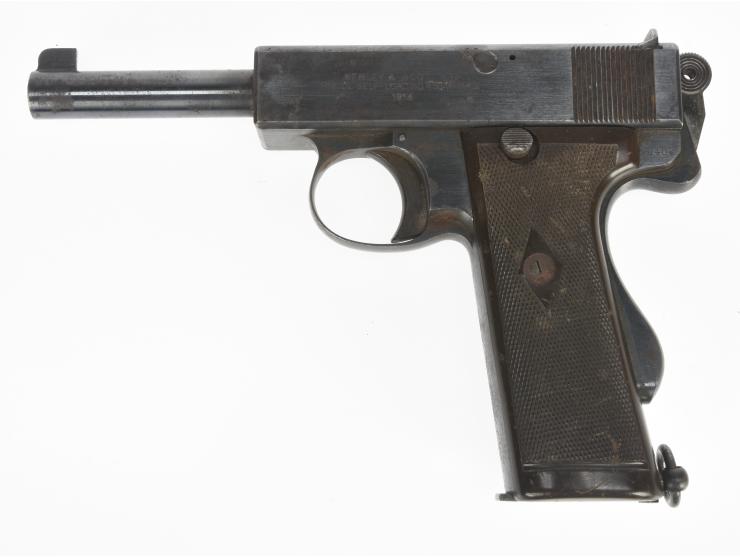
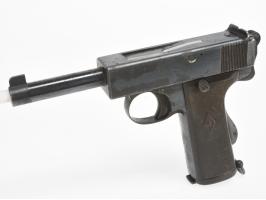
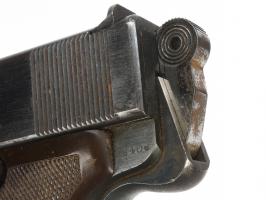
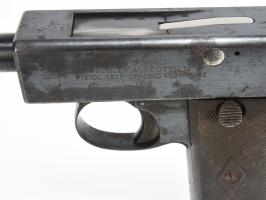
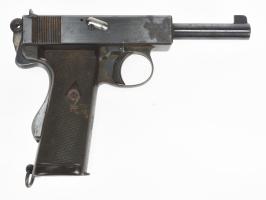
British M1912 Webley & Scott .455 Semi-Automatic Pistol
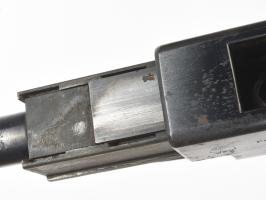
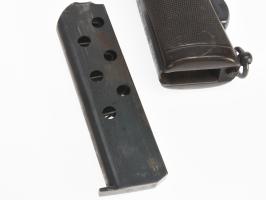
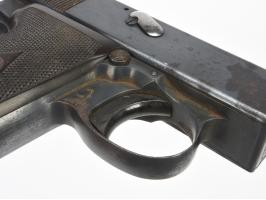
NRA good, with areas of light rust and pitting, ~50% blued finish blended with oxidized patina. Left side of the slide is marked "WEBLEY & SCOTT LTD. / PISTOL SELF-LOADING 455 MARK I / 1913". Top of the frame and chamber has inspector proofs. Side of the frame has serial number "98406". As appropriate for the Mark I, this has fixed sights. Though the exterior has age blemishes, the internal mechanics are fine, with a nice crisp bore and tight action. Includes a single magazine. Brown plastic grips show wear but are intact. The pistol is often referred to by collectors as the Model 1913 because the date is included in the marking, but the company labels it "Webley & Scott .455 High Velocity Automatic Pistol, Naval and Military Model" in their 1921 catalog.
The pistol was the first automatic pistol in British military service, adopted by the Royal Navy in February 1912, though production did not begin in earnest until 1913. The first 20 examples were delivered in April 1913, with another 60 in May. Navy contract pistols were marked with an upper case "N" after "MARK I" on the slide, whereas those produced for commercial sale were not. According to one author, commercial production ran from 1913 until the opening shots of the Great War shuttered commercial production which did not resume until May 1919. In the end, the Navy purchased 7530, while a total of 1260 were sold commercially. The markings on this example identify it as one of the 426 pistols made for the commercial market in 1913.
$600 - $800
מתי יימכר הפריט במכירה?
Memorabilia
פתיחה: $500
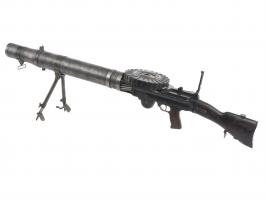
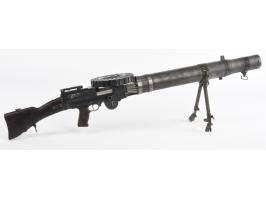
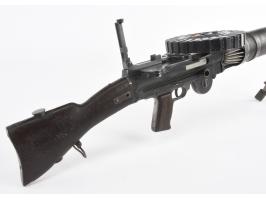
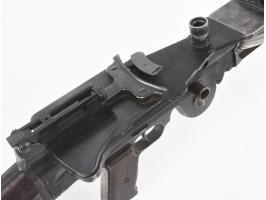
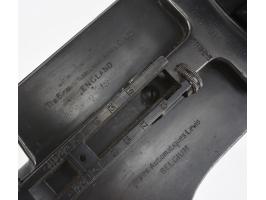
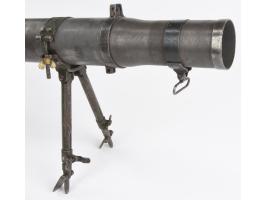
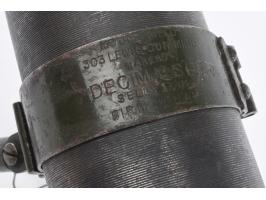
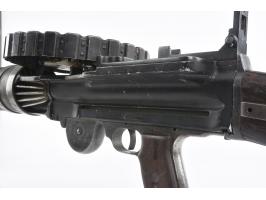
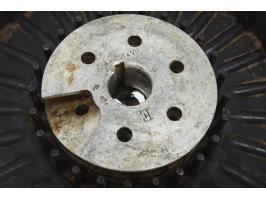
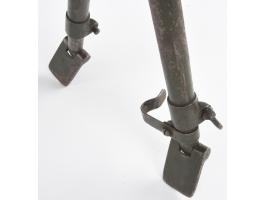
British WWI Lewis Light Machine Gun: Original Parts on a Non-Gun Receiver
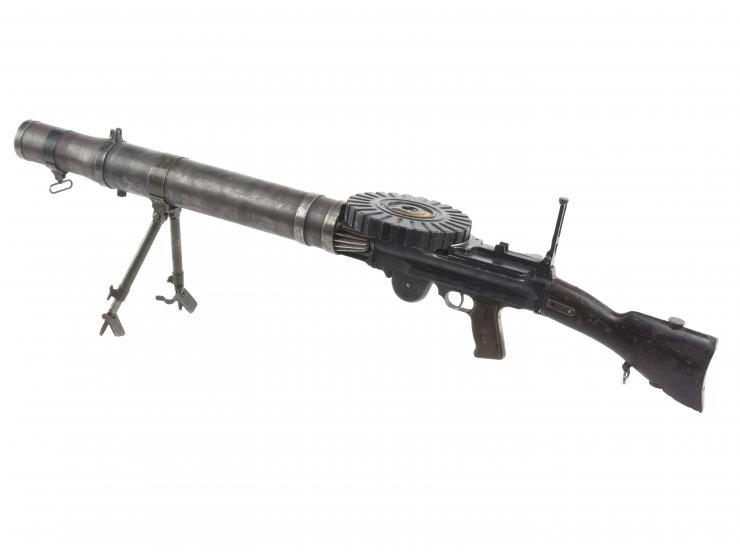
Original Model 1914 Lewis light machine gun parts (non-matching) including an obstructed barrel on a solid aluminum billet non-gun 'dummy' receiver with an original pan magazine; a very impressive display and perfect for collectors who live where posession of a registered live gun is legally possible, or who simply don't have tens of thousands of dollars wandering aimlessly about in their bank accounts! Very nice example with legible markings, and more importantly the thin aluminum catch on the receiver is perfectly intact. (Of the run of aluminum receiver Lewis guns out there on the market, the catch seems to be broken more often than not.)
The Lewis M1914 light machine gun was one of the most recognizable automatic weapons of the First World War, widely used by British and Commonwealth infantry units. Designed by American engineer Isaac Newton Lewis and manufactured primarily in Britain, it featured a distinctive top-mounted pan magazine and air-cooling shroud that made it both portable and reliable under battlefield conditions. Capable of sustained fire while remaining light enough for a single gunner to carry, the Lewis Gun revolutionized infantry tactics by providing mobile automatic firepower at the squad level. Its effectiveness in trench assaults and defensive positions made it a defining weapon of the modern battlefield.
$1000 - $1500
מתי יימכר הפריט במכירה?
Memorabilia
פתיחה: $100
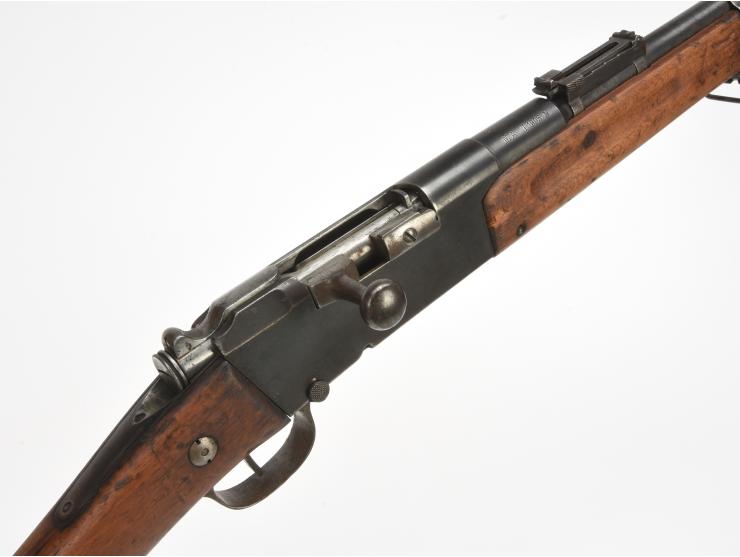
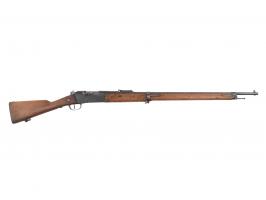
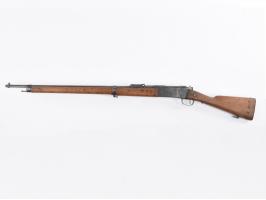
French Lebel M1886/93 Rifle
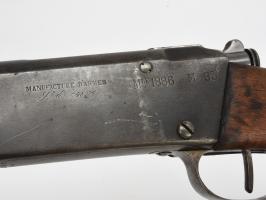
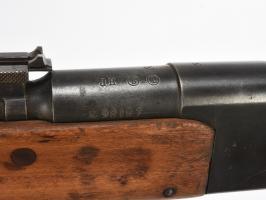
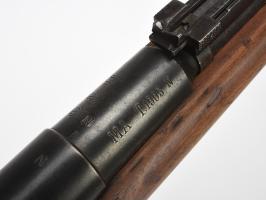
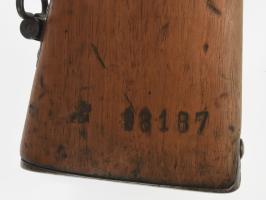
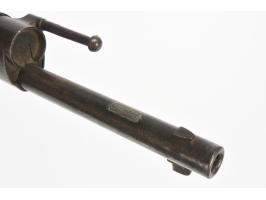
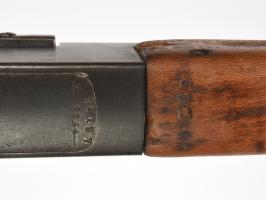
Made at St. Etienne Arsenal, M1886/93 rifle has matching numbers on the stock and receiver, mismatched bolt, and the left side of the receiver has faint St. Entienne Arsenal stamp along with "M1886" and "M 93". Bluing is 70%+ on the receiver mixed with dark patina, thinning considerably on the barrel. Barrel has receiver ring which is marked with a capital "N" over the chamber denoting that the rifle has an enlarged chamber throat to accommodate the same ammunition as the Hotchkiss machine gun. Bore exhibits deep rifling but is dark and dirty. Lower bayonet mounting tenon is missing from the underside of the barrel near the muzzle. Stock shows normal service dings and blemishes, stamped on the buttstock with matching serial number. A decent representative example of the classic French infantry rifle. FFL required; US sales only.
$200 - $300
מתי יימכר הפריט במכירה?
Memorabilia
פתיחה: $100
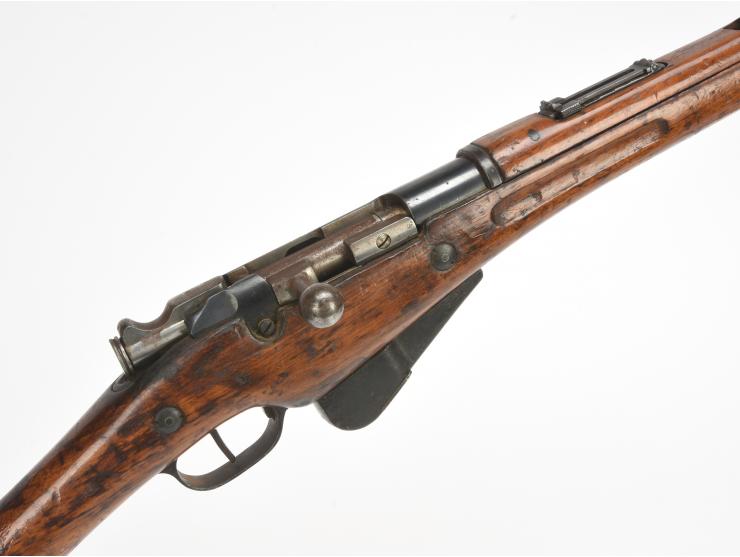
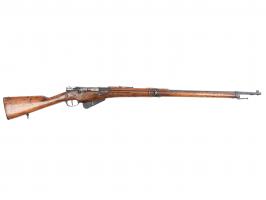
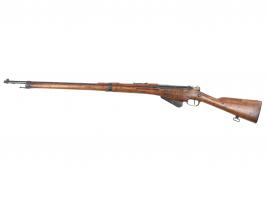
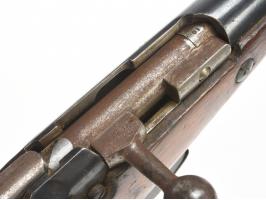
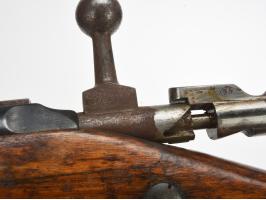
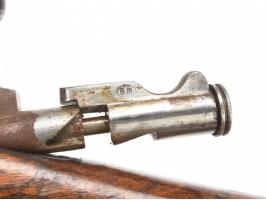
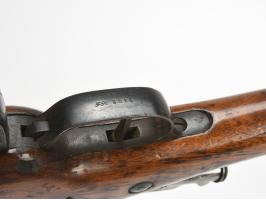
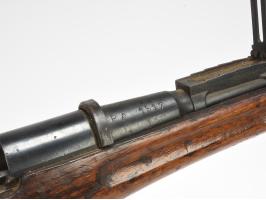
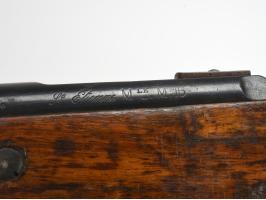
French WWI M1916 Berthier Rifle
Caliber 8 mm Lebel, 78 cm round barrel, bore good with strong rifling, serial number "16894", matching except for the bolt, receiver side marked "St. Etienne Mle. M1916", retains ~70% blued finish, bolt finished white with age toning and spots of light rust. Light colored wood stock has numerous dings and dents with dark stained areas, fitted with a five round capacity external magazine. Production of the M1916 began in the summer of 1918 with finished rifles arriving in the hands of French troops during the last few months of the war. US sales only, FFL required.
The Model 1916 Berthier rifle represents a significant advancement over the earlier M1907/15 variant, most notably through the adoption of a five-round en-bloc magazine in place of the previous three-round system. This modification greatly improved sustained fire capability and reduced vulnerability during reloading in combat. A spring-loaded trapdoor was added to the magazine base, minimizing the ingress of trench debris. Further refinements included a short wooden upper handguard for improved handling and, on some examples, radium-painted sights to enhance night-time target acquisition. These improvements responded directly to the challenges of trench warfare and contributed to the Berthier rifle’s effectiveness in World War I service.
$200 - $300
מתי יימכר הפריט במכירה?
Memorabilia
פתיחה: $100
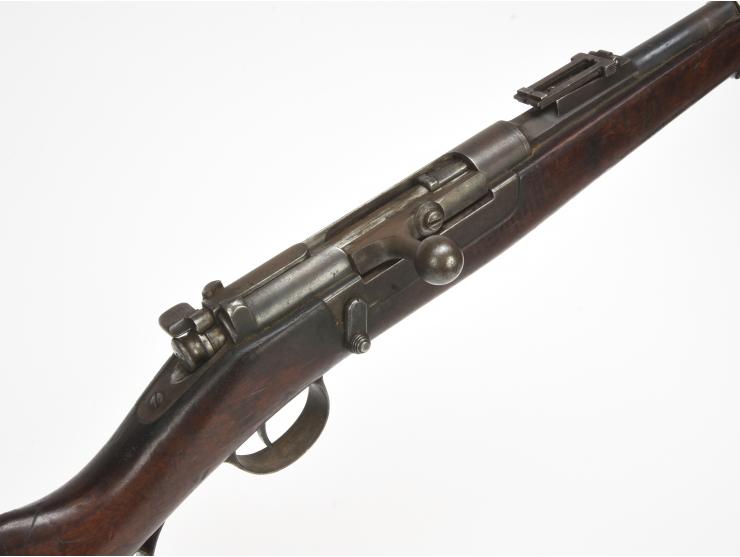
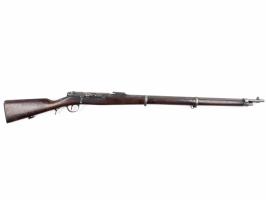
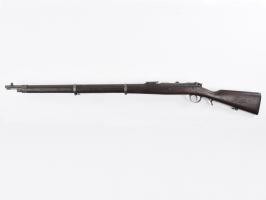
Portuguese Kropatschek M1886 Rifle
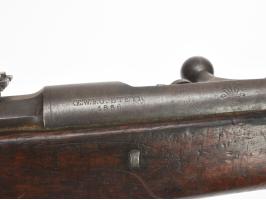
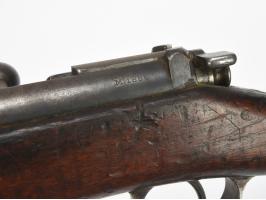
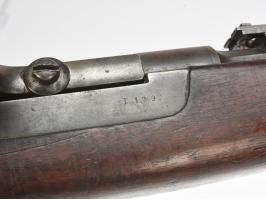
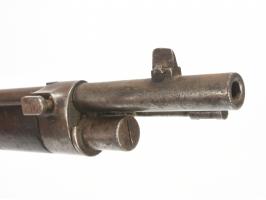
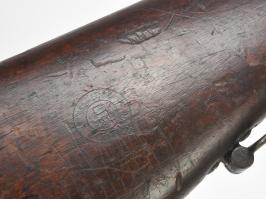
8mm Infantry rifle made under contract by OE.W.F.G. (Österreichische Waffenfabriksgesellschaft) in Steyr, Austria. Has serial number "1129" on the receiver, with mismatched bolt. Receiver is marked with this manufacturer and "M1886", as well as a crown over "LI" designating King Louis I of Porgugal. Bluing has thinned considerably, with traces remaining, mixed with dark patina and spots of very light rust. Stock is dark with numerous dings and scrapes. Round Portuguese issue and acceptance stamps are faint but visible on the left and right butt. Bore still has strong rifling but is dark and dirty.
$200 - $300
מתי יימכר הפריט במכירה?
Memorabilia
פתיחה: $100
Swedish M96 Mauser Rifle
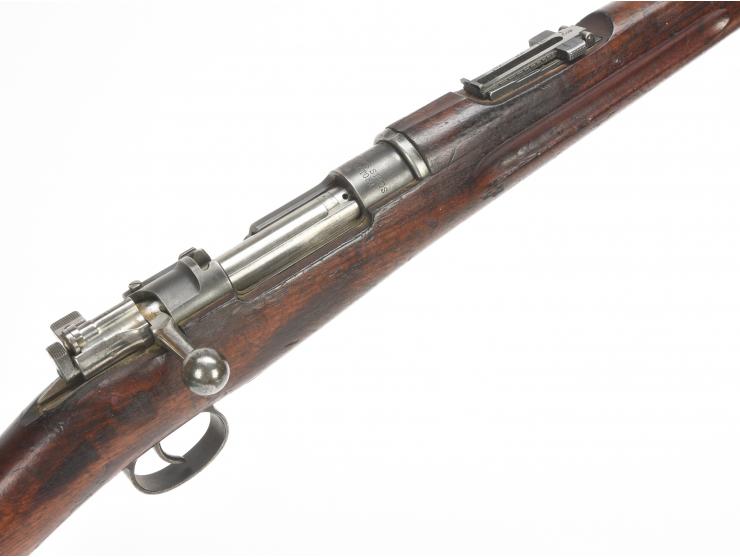
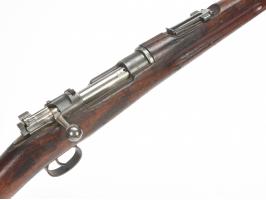
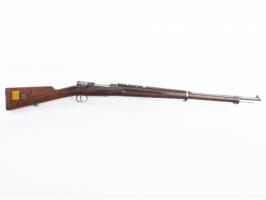
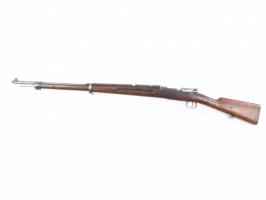
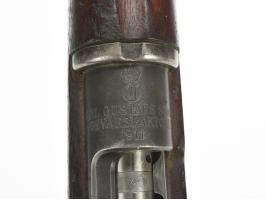
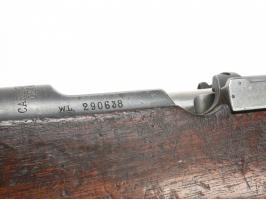
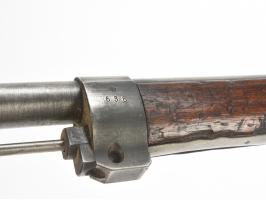
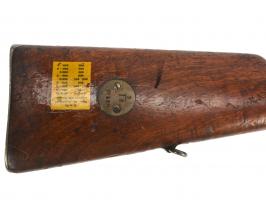
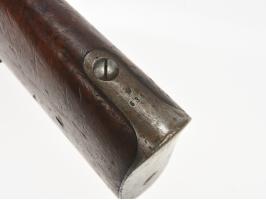
6.5x55mm, has thinning blued finish on the barrel, blued receiver and bolt finished bright, receiver marked "Carl Gustafs stads Gevärsfaktori" with "1911" manufacture date. Stock is dark with normal light service and storage wear and dings, range table on the buttstock and circular accountability number disc remains. Receiver is marked with serial number "290638". Bore is dark but has strong rifling.
The Swedish Model 1896 (M96) Mauser rifle was adopted by Sweden in 1896 for use with the 6.5×55mm cartridge, a round developed in partnership with Norway. Initially produced in Germany and later in Swedish state arsenals, the M96 replaced the Remington rolling block as the standard infantry weapon. Known for its precision engineering and high-quality steel, the M96 embodied Sweden’s tradition of military preparedness, even while maintaining a policy of neutrality through both World Wars. Though it never saw major combat, the rifle served as the primary arm of the Swedish infantry, supplied to Finland during World War II for second-line use, and continued to be valued for military training and marksmanship long after its introduction.
$200 - $300
מתי יימכר הפריט במכירה?
Memorabilia
פתיחה: $250
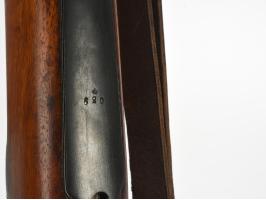
Swedish Mauser M1894/14 Carbine
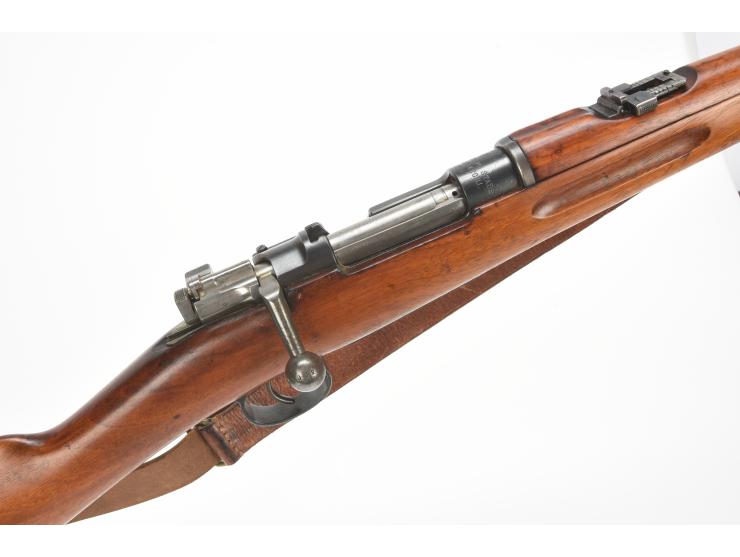
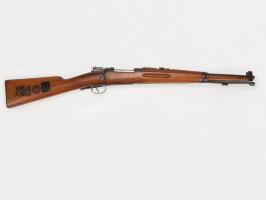
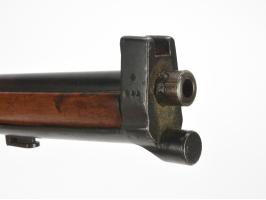
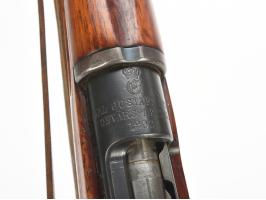
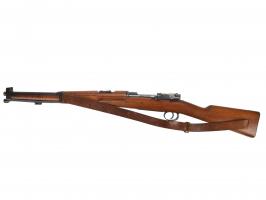
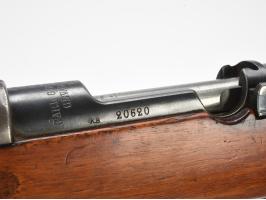
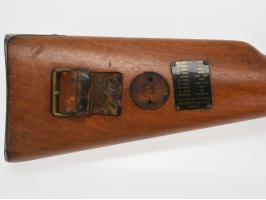
The Swedish Model 1894/14 Carbine represents an updated version of the m/1894 carbine originally adopted for cavalry and other mounted troops. Produced at Carl Gustafs Stads Gevärsfaktori and by Mauser in Oberndorf, this refined bolt-action carbine was chambered for the 6.5×55 mm cartridge, noted for its excellent ballistic performance and moderate recoil. The 1914 modification added a bayonet lug and front band to allow mounting of the m/1914 knife bayonet, bringing the carbine in line with evolving support and specialty troop requirements. Compact, accurate, and finely finished, the M1894/14 exemplifies Sweden’s emphasis on precision engineering and craftsmanship in its early twentieth-century small arms development. This example has nice strong blued finish throughout, bolt finished bright, receiver marked "Carl Gustafs stads Gevärsfaktori" with "1903" manufacture date. Side has serial number "20620". Stock shows normal light service and storage wear and dings. "Has range table on the buttstock, with the circular accountability number disc no longer present. Complete with leather sling. Bore is dark but has strong rifling. Barrel has a ~8mm unrifled extension added to the muzzle (to meet US import requirements).
$500 - $600