United States ➝ Headgear Helmets and Hats
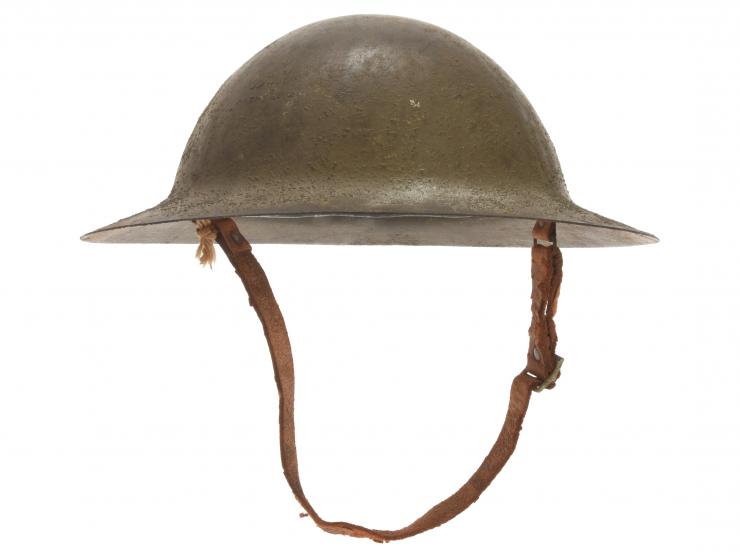
Opening: $50
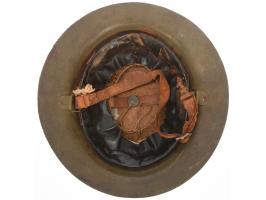
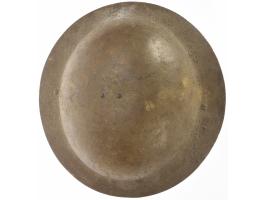
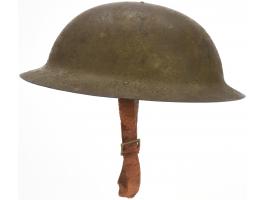
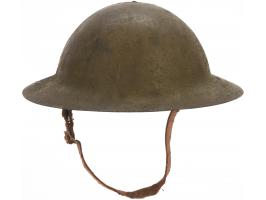
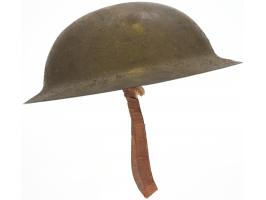
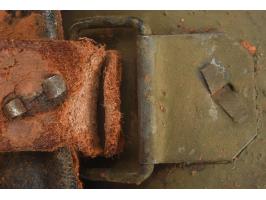
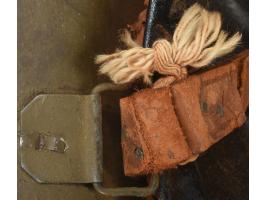
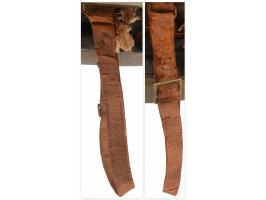
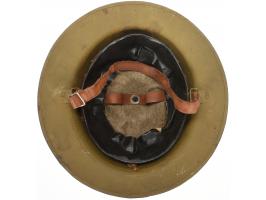
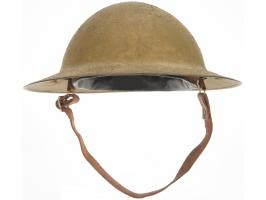
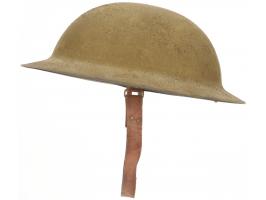
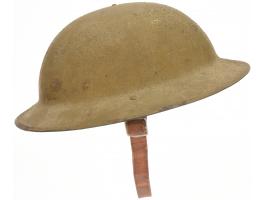
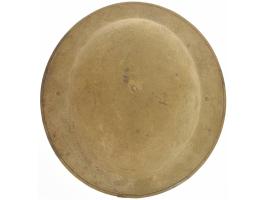
British steel helmet is the early 'rimless' variety. Retains 80% tectured olive finish; interior has a nice complete second pattern liner with felt crown pad intact. Lacks the paper tag, and the chinstrap suffers from red rot. $100-$200
When will this lot be auctioned?
Memorabilia
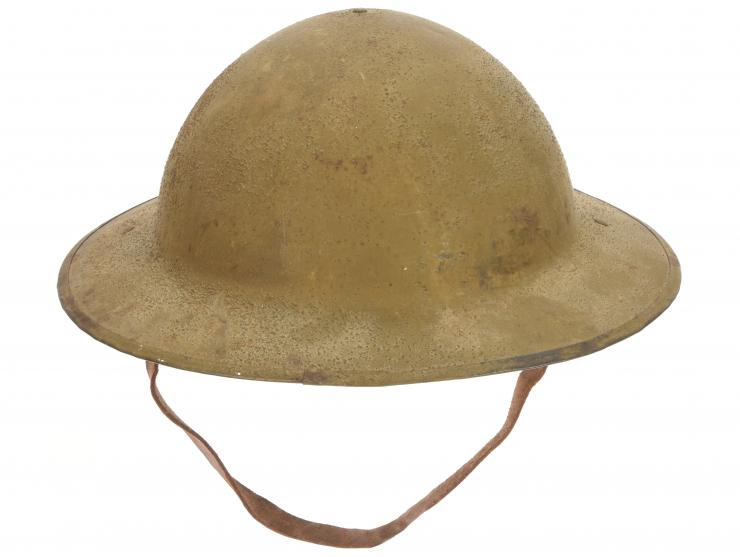
Opening: $50
British WWI issue helmet has third pattern Brodies liner with fully intact felt crown pad and a nice pliable brown leather chinstrap. Excellent finish inside and out - a particularly nice example. $100-$150
When will this lot be auctioned?
Memorabilia
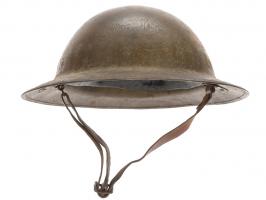
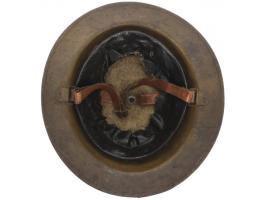
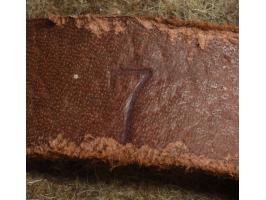
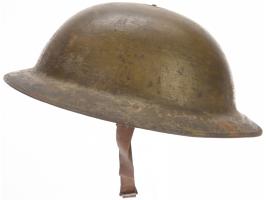
Opening: $50
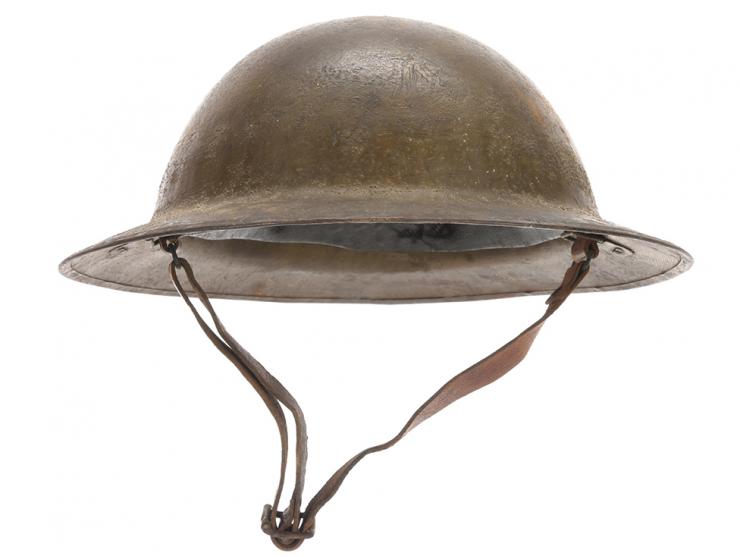
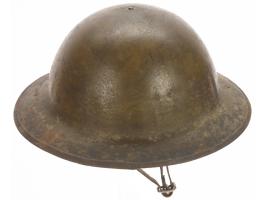
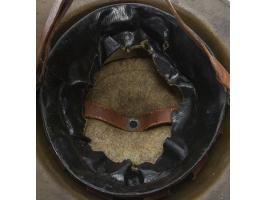
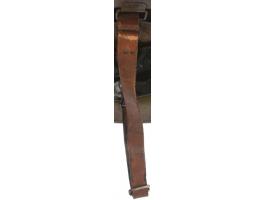
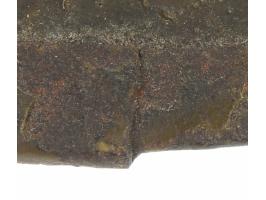
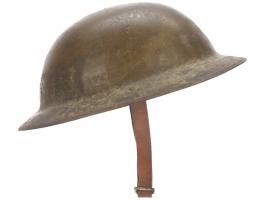
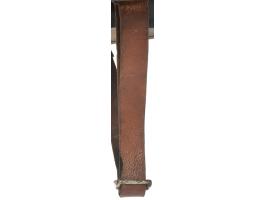
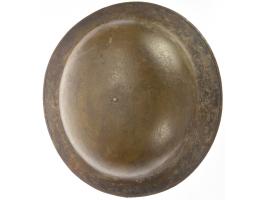
A nice example, has 80%+ olive finish. Interior has an excellent, intact third pattern liner with gray felt crown pad and a nice condition chinstrap. Lacks only the paper tag. $100-$150
When will this lot be auctioned?
Memorabilia
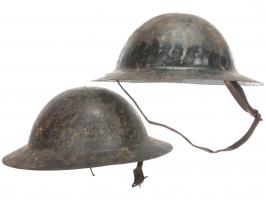
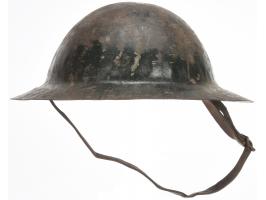
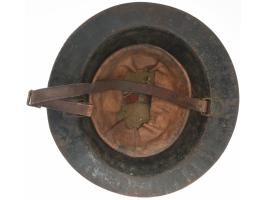
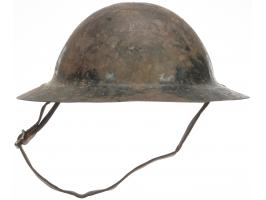
Opening: $50
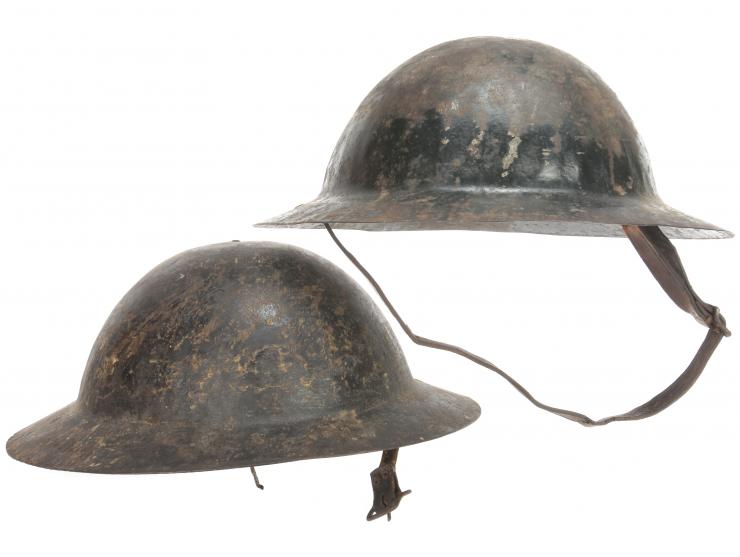
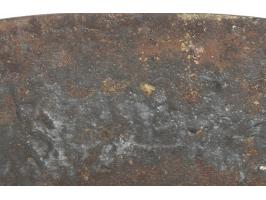
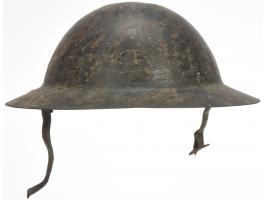
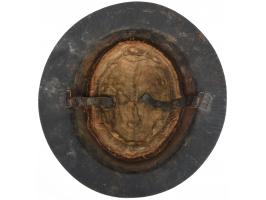
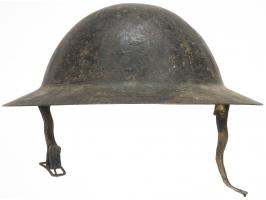
Both of these are 'rimless' WWI British helmets, but each have heavily worn black painted finish. One has a commercially altered liner with the third pattern style 'donut' in the crown, complete with brown leather chinstrap. The second has a thick crown pad with a broken black leather chinstrap. I recall that back in the 1990's a number of these turned up in Britian that had been refurbished for use as police / fire brigade helmets after their military service careers were over. Few still exist in that configuration as they were snapped up by reenactors to be refitted once more as Great War helmets for living history. $100-$150
When will this lot be auctioned?
Memorabilia
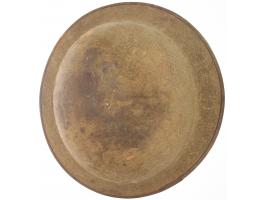
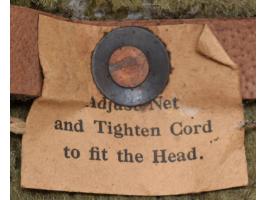
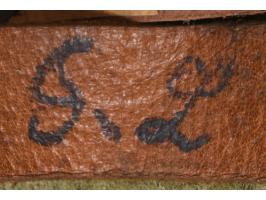
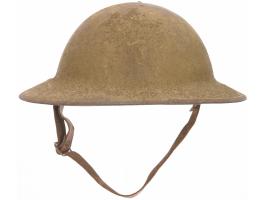
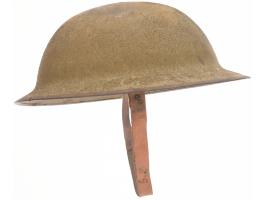
Opening: $50
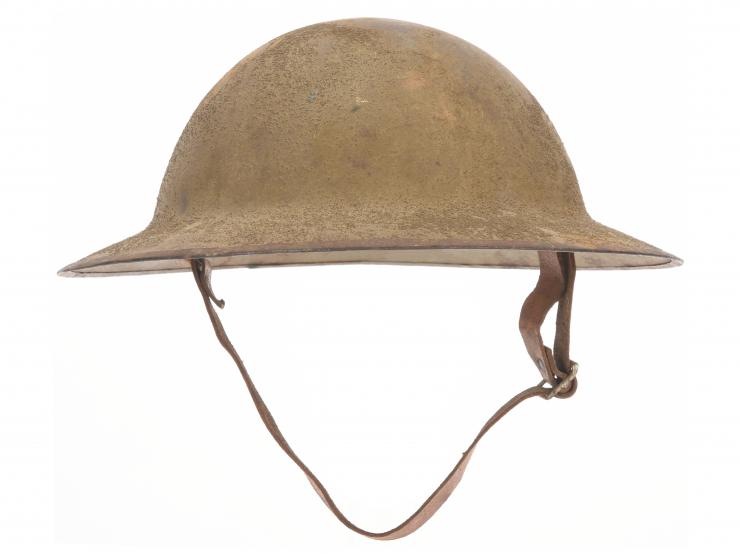
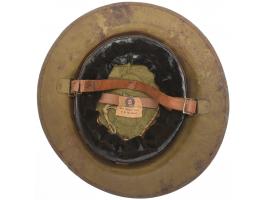
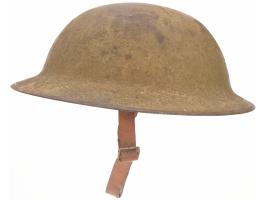
British WWI issue helmet has second pattern Brodies liner with largely intact felt crown pad with instruction tag and a nice pliable brown leather chinstrap. Retains 80%+ textured finish, oxidized patina where worn. Chinstrap has a soldier's initials. $100-$150
When will this lot be auctioned?
Memorabilia
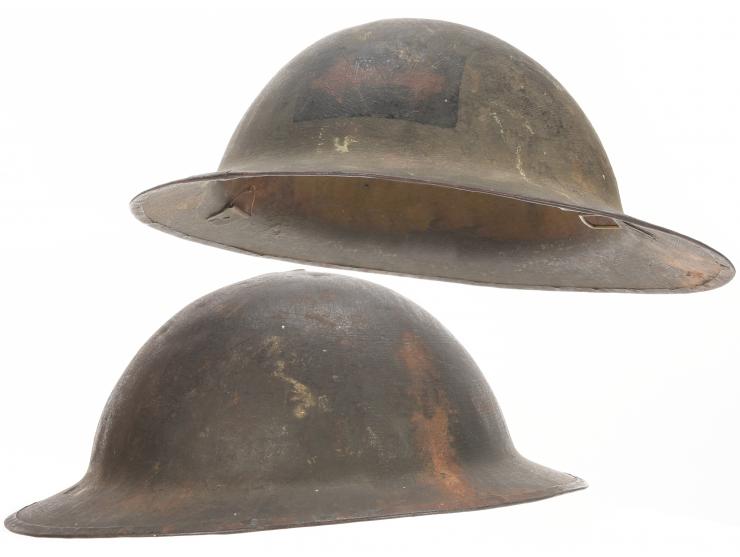
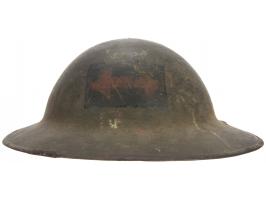
Opening: $50
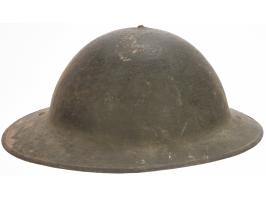
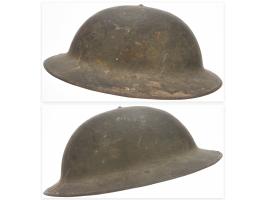
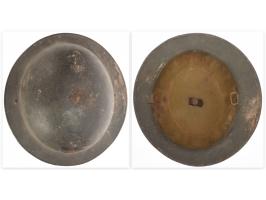
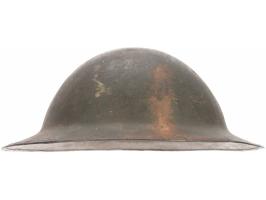
Two WWI British helmet shells, neither of which retains liner or chinstrap. Both have dark olive exterior finishes. One has a clearly visible red arrow on blue rectangle formation sign designating 2nd Canadian Division Machine Gun Battalion. $100-$200
When will this lot be auctioned?
Memorabilia
Opening: $50
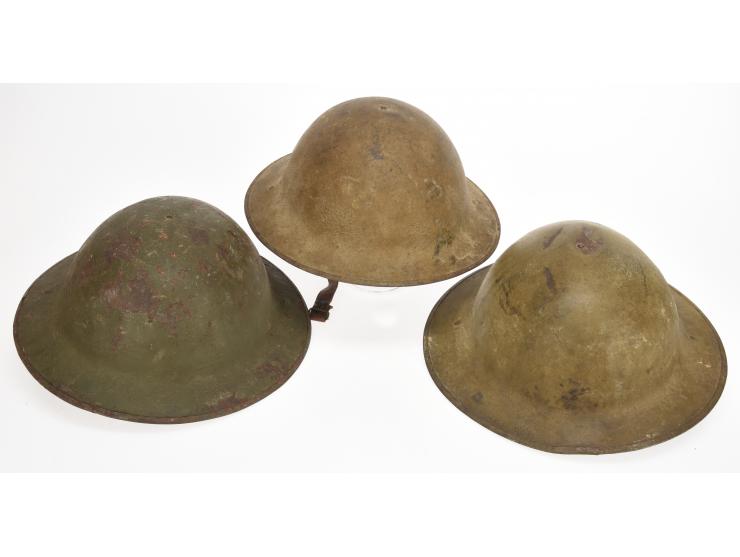
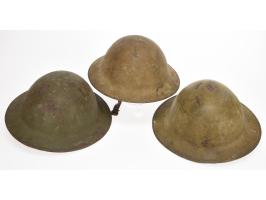
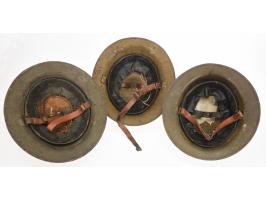
British / Commonwealth WWI Helmet Lot: Three Helmets
Three WWI British / Commonwealth Helmets: First example has nice khaki textured finish; interior has third pattern liner with felt crown pad intact and a broken chinstrap. Second has dark textured olive finish with oxidation showing through the worn areas; interior has second pattern liner with felt crown pad largely intact, chinstrap is a replacement. Third has worn but good exterior finish; interior has third pattern liner with the felt crown pad missing, as is the 'donut' rubber cushion element. Chinstrap on this one is also replaced.
$100 - $200
When will this lot be auctioned?
Memorabilia
Opening: $75
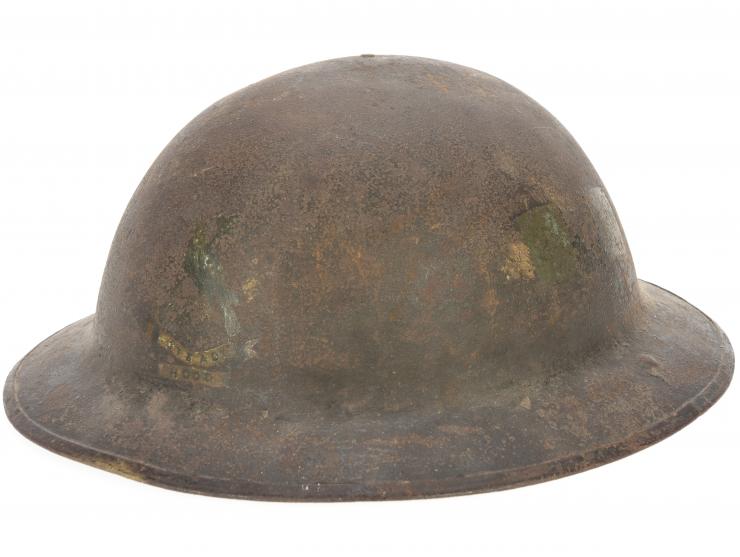
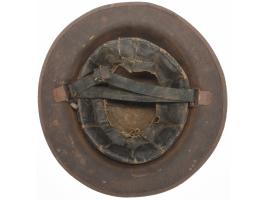
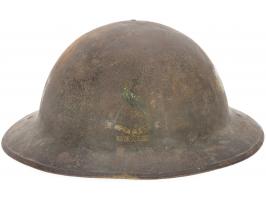
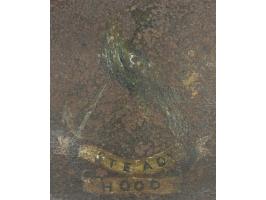
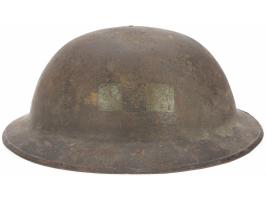
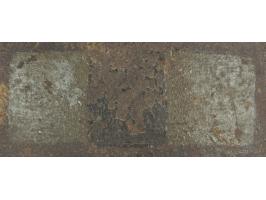
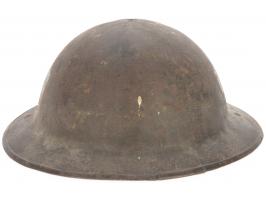
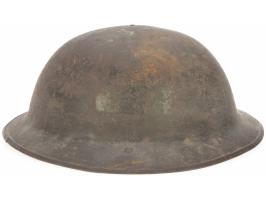
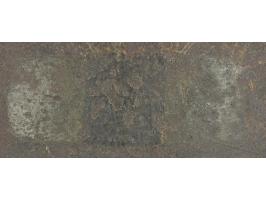
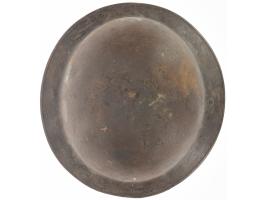
British helmet has dark patina and traces of dark olive finish; sides have faint but legible painted formation signs that appear to be a rectangle divided into thirds: green, black (or dark blue) and green. Interior is similarly rough with a very well-worn second pattern liner and a replacement black rubberized fabric chinstrap that is now quite inflexible. I had a look through Kevin Beckhurst's reference on formation signs and did not locate this one, but am thoroughly convinced that it is original to the helmet. $100 - $150
When will this lot be auctioned?
Memorabilia
Opening: $100
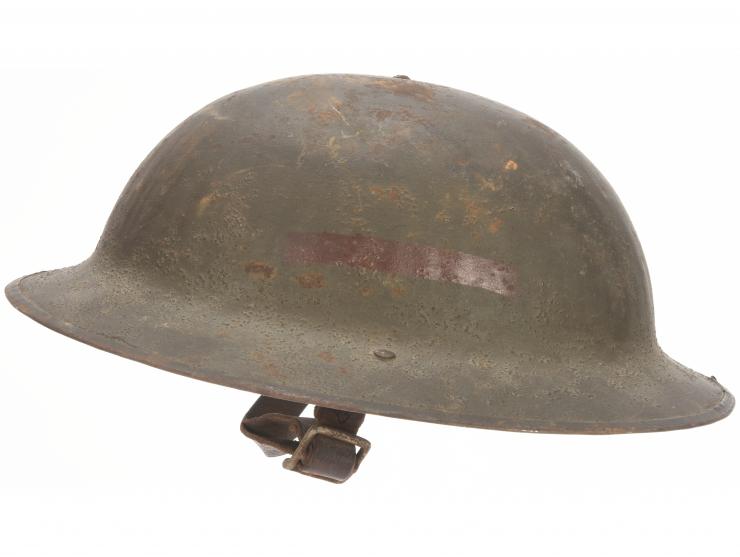
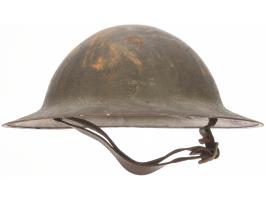
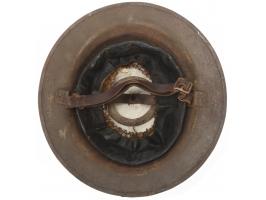
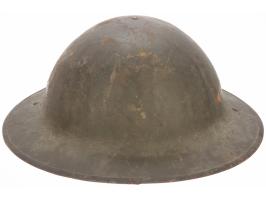
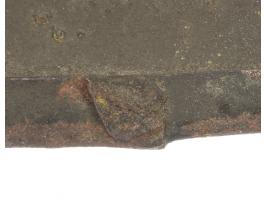
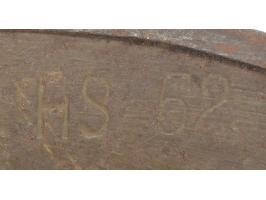
British helmet has dark olive textured finish; sides have clear painted horizontal red line formation signs. Interior has third pattern Brodies liner which lacks the felt crown pad, chinstrap is intact and pliable. I had a look through Kevin Beckhurst's reference on formation signs which revealed that there are several candidates - at least five different units utilized this simple formation sign for identification. $200 - $300
When will this lot be auctioned?
Memorabilia
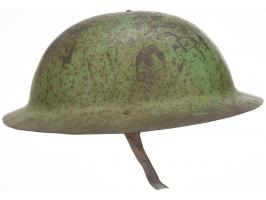
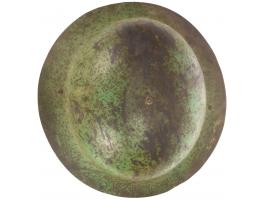
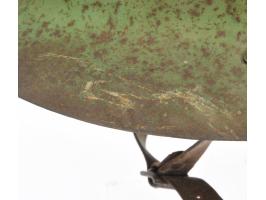
Opening: $500
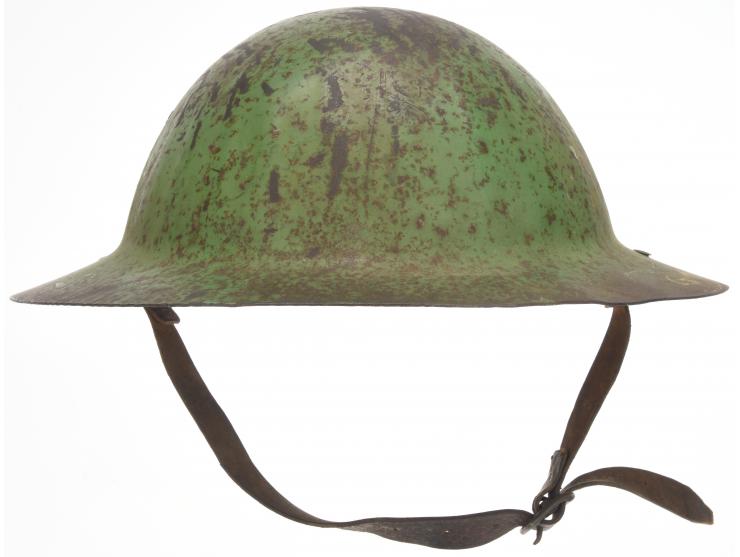
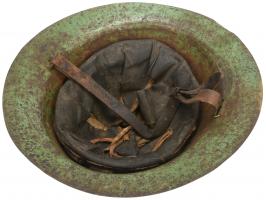
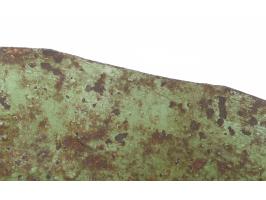
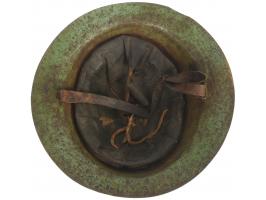
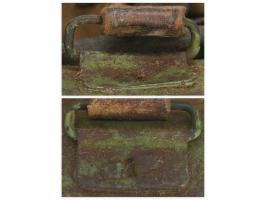
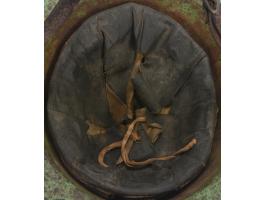
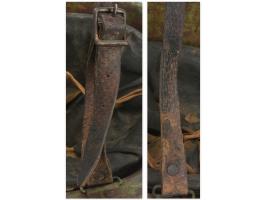
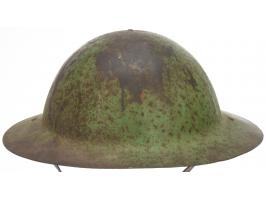
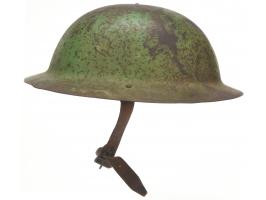
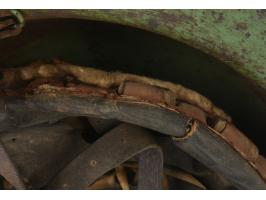
Very early production rimless Brodies helmet has 60% early (and only) apple green painted finish. Interior has worn but intact brown leather chinstrap with buckle adjustment, and a complete first pattern Brodies liner. These early, true first pattern Brodies helmets are rarely available on the market, and are one of the true collectors' 'holy grail' pieces of First World War headgear. $1000-$1500
When will this lot be auctioned?
Memorabilia
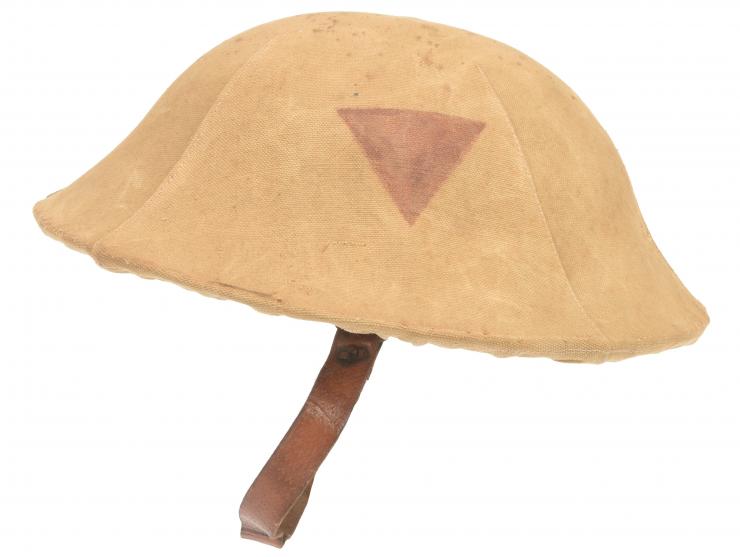
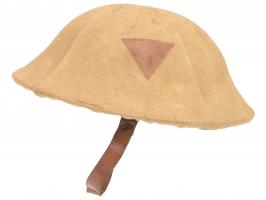
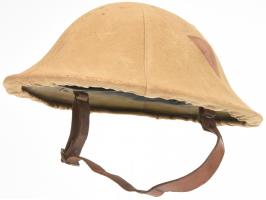
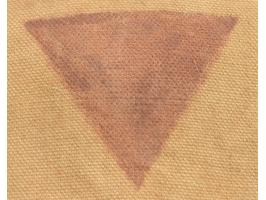
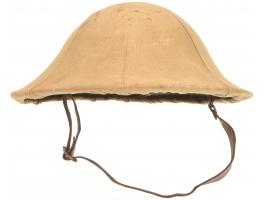
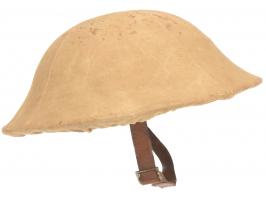
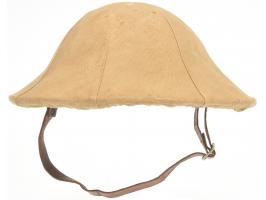
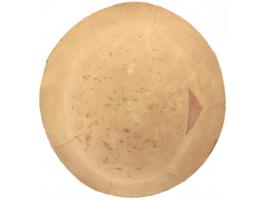
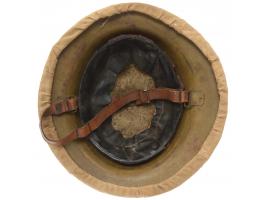
Opening: $500
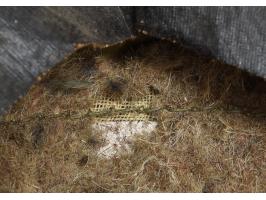
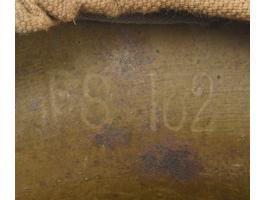
Brodies with a nice complete third pattern liner is fitted with a faded khaki field camouflage cover painted with a red inverted triangle formation sign on one side. The cover is stretched taut over the crown, exhibiting rust stains from prolonged close contact with the helmet and some minor worn / weak spots along the edge. Without unduly disturbing this relationship, I have gently loosened it just enough to get a small pen light in to see if there was a matching painted formation sign on the helmet side (there is not).
Per the Kevin Beckhurst reference, this formation sign could actually apply to a few different units over time, but assuming the helmet with the 3rd pattern liner is original to the cover, which very much appears to be the case, the precludes some earlier uses of the insignia and leads to the conclusion that this designates 12th Battalion, Cheshire Regiment. $1000-$1500
When will this lot be auctioned?
Memorabilia
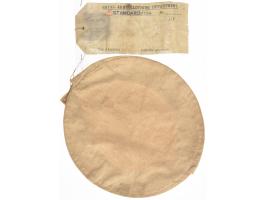
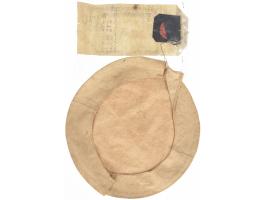
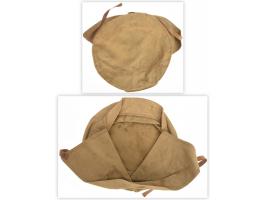
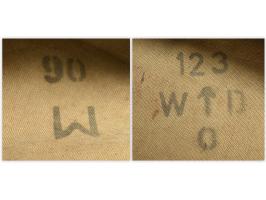
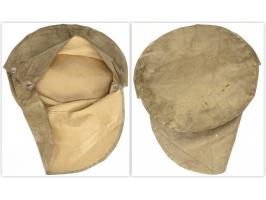
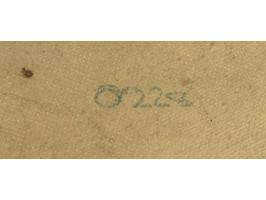
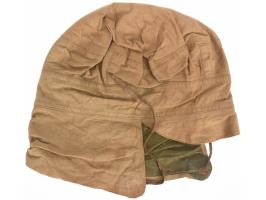
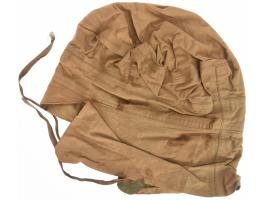
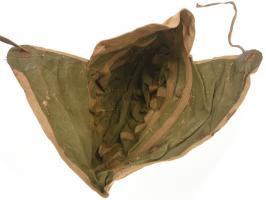
Opening: $50
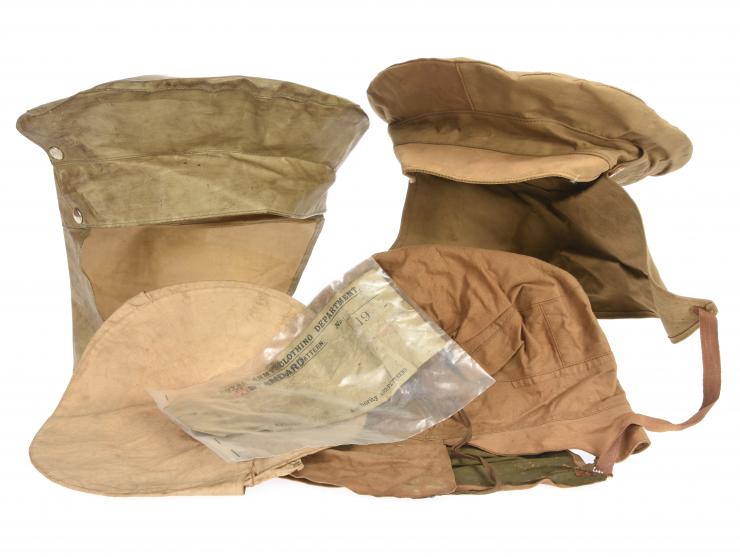
Includes cap cover with Royal Army Clothing Department sealed sample tag listing pattern date 1912 and subsequent notations dating into the early 1930's. Second, the Pattern 8180/1914 "cover, cap, waterproof" for use with "caps, winter, service dress", of khaki rubberized fabric with folding ear cape and twill tape ties. Third, a water repellent khaki canvas cap cover with neck cape and tape ties, nicely marked on the crown interior. Fourth, a khaki rubberized fabric cap cover with nickel finish snap fittings and a long neck cape. $100 - $150
When will this lot be auctioned?
Memorabilia
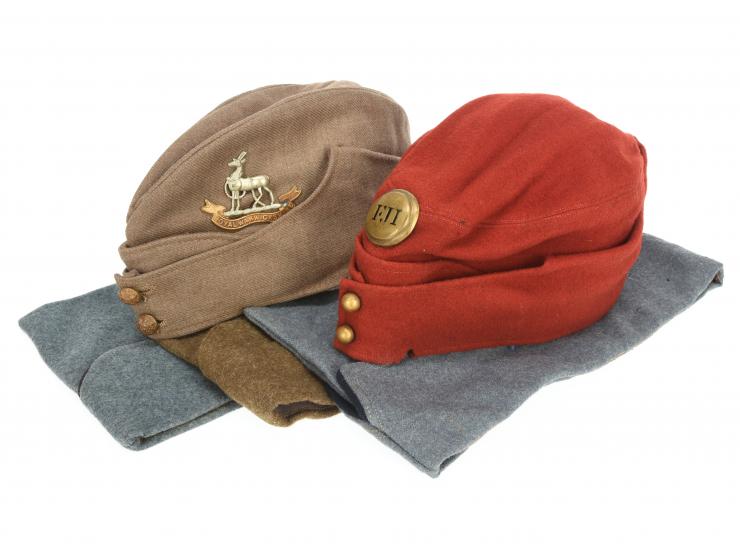
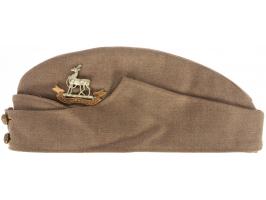
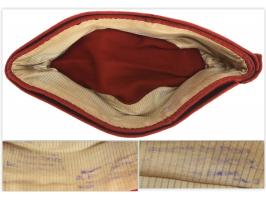
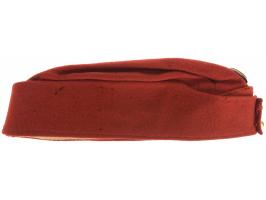
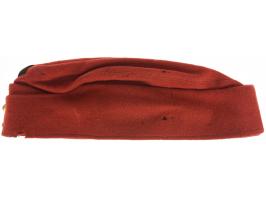
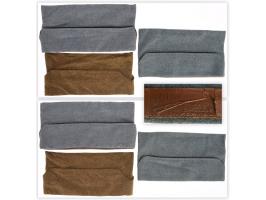
Opening: $25
WWI Sidecap Mixed Lot Including Austrian Cavalry & British Private Purchase Cap
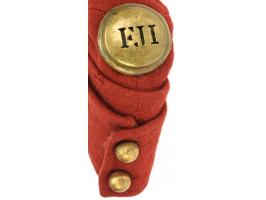
Includes Austrian Cavalry red wool sidecap with "FJI" Franz Joseph cockade on the front. Cap has several moth bites in the ear cape and along the bottom edge; interior has blue striped white silk lining with several illegible stamped property markings.
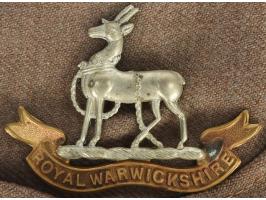
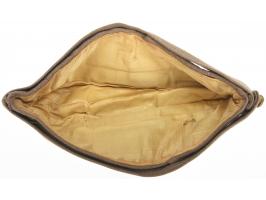
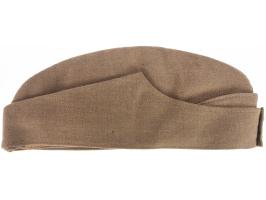
British officer quality private purchase khaki wool twill sidecap has folding ear cape with British general service buttons in the front, fitted with Royal Warwickshire tongue back badge on the side; interior has cream colored silk twill lining.
Lot further includes two dark blue piped horizon blue wool sidecaps, one of which has an American maker stamp embossed in the (damaged) sweatband, revealing that these are US Forty and Eight (WWI veterans) Society caps. Also includes a French style olive drab wool sidecap with beige ribbon sweatband.
$50 - $100
When will this lot be auctioned?
Memorabilia
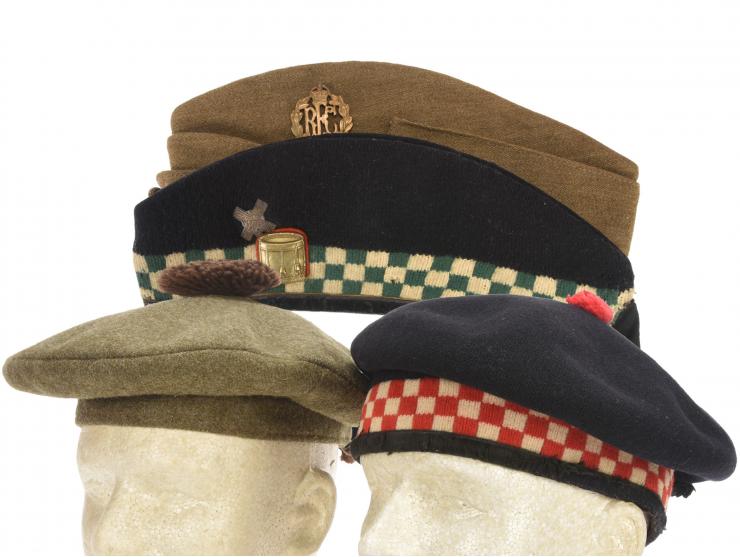
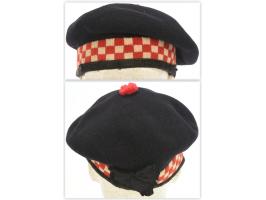
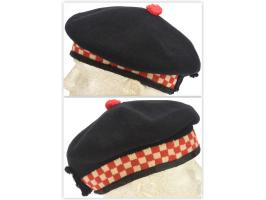
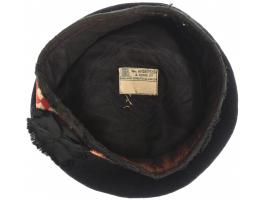
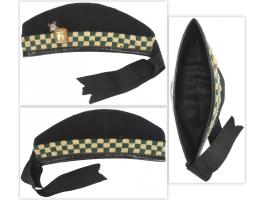
Opening: $75
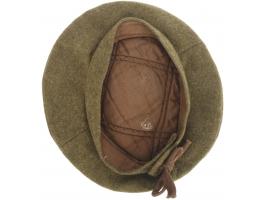
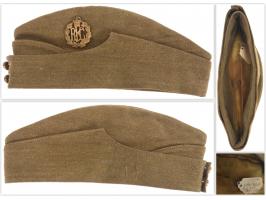
British / Commonwealth WWI Headgear Lot: Four Caps
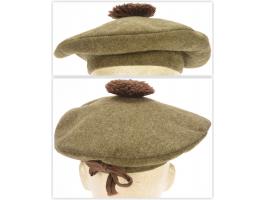
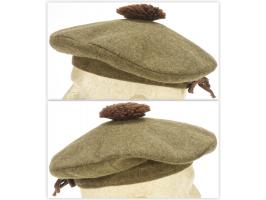
Includes a Canadian khaki wool Tam O’Shanter, a blue wool Balmoral bonnet with red and white band dicing and a Glasgow maker's label on the black silk interior lining, heavy wear along the bottom edge. Also includes a green and white diced Glengarry cap with British Army drummer proficiency badge on the side, and a nice khaki wool sidecap with RFC buttons and cap badge on the side.
$150 - $200
When will this lot be auctioned?
Memorabilia
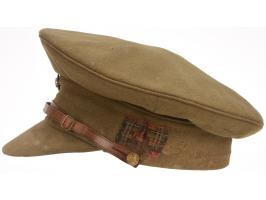
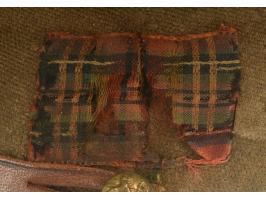
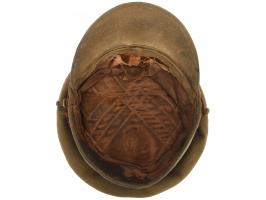
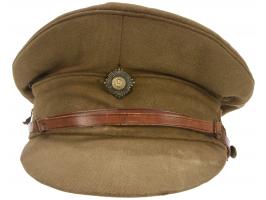
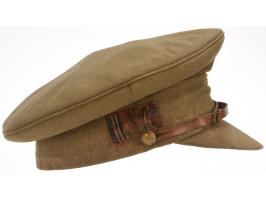
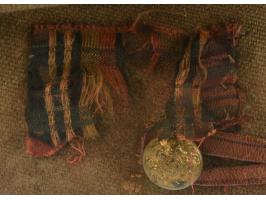
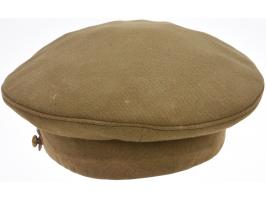
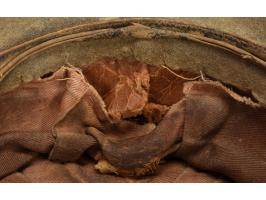
Opening: $100
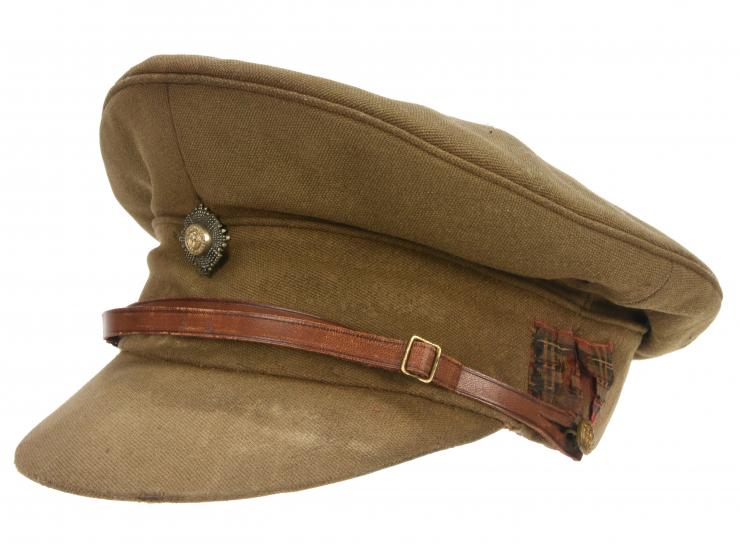
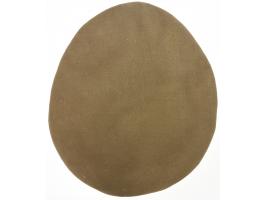
British WWI Scots Guards Officer's Service Cap
A well-used, worn, and sweat-stained veteran of service, this officer's khaki wool service dress cap has a Scots Guards cap badge and tattered Royal Stewart tartan flashes on the sides just above the side buttons. Retains the original brown leather chinstrap with general service side buttons. Interior has just a bit of the original sweatband remaining, quilted crown lining and body of the cap is stained with ground in sweat and grime from active front-line service, with sweat stains bleeding through the front. No name or initials, but clearly a serious veteran of front-line service!
Formed in the 17th century, the Scots Guards were among Britain’s most distinguished regiments when war broke out in August 1914. As part of the British Expeditionary Force, the 1st and 2nd Battalions fought throughout the Western Front, enduring the early battles of the Marne, Ypres, and Loos. In 1916, they took part in the Somme offensive, followed by the bitter campaigns at Arras and Passchendaele.
The regiment exemplified the discipline and endurance of the Guards Division, earning multiple battle honors and heavy casualties in the process. Their service spanned from the open fighting of 1914 to the static trench warfare that defined the remainder of the conflict. By the Armistice, the Scots Guards had contributed over 10,000 officers and men to the war, leaving a legacy of steadfast courage on the fields of France and Flanders.
$200 - $300
When will this lot be auctioned?
Memorabilia
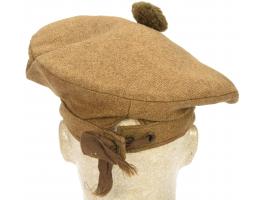
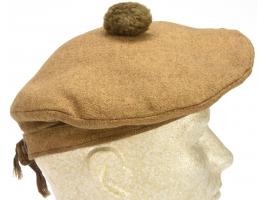
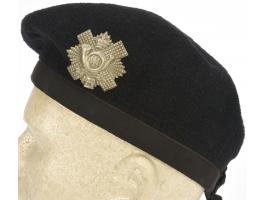
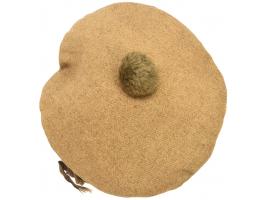
Opening: $100
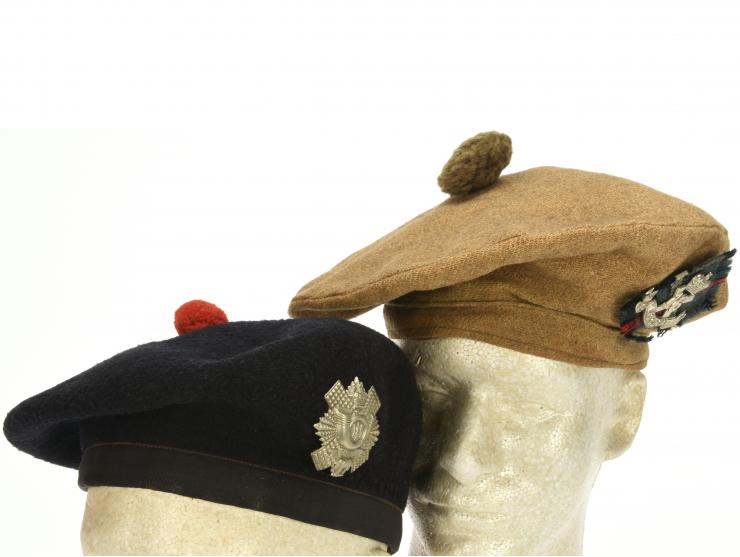
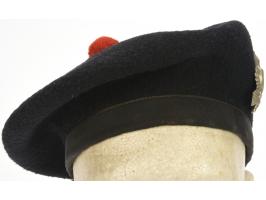
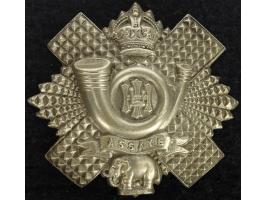
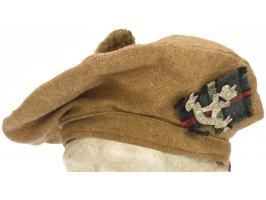
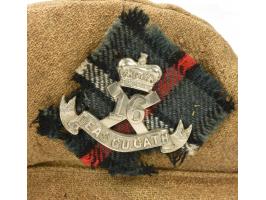
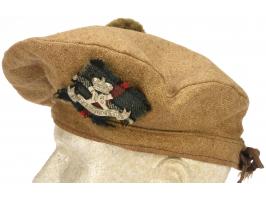
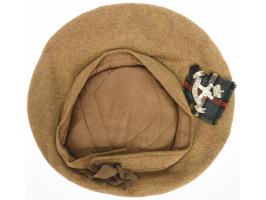
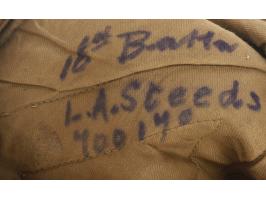
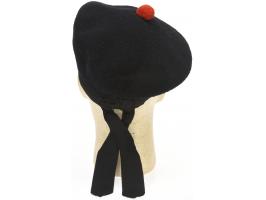
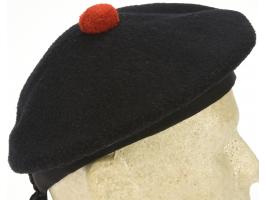
Includes blue wool Balmoral with Highland Light Infantry badge; has black ribbon edge binding and tails; brown polished cotton interior with no visible markings. Second piece is quite nice - an identified khaki wool Tam O’Shanter which has a 16th Battalion (Canadian Scottish) badge with tartan cloth backing; interior has laundry pen inscription with a soldier's name, service number, and "16th Battalion". Both are in nice condition; normal wear, no readily-apparent mothing. $200-$300
When will this lot be auctioned?
Memorabilia
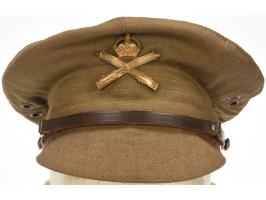
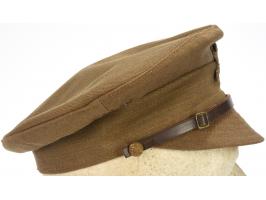
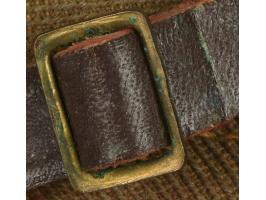
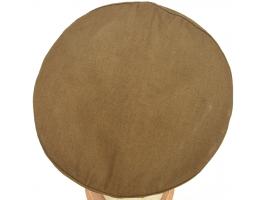
Opening: $100
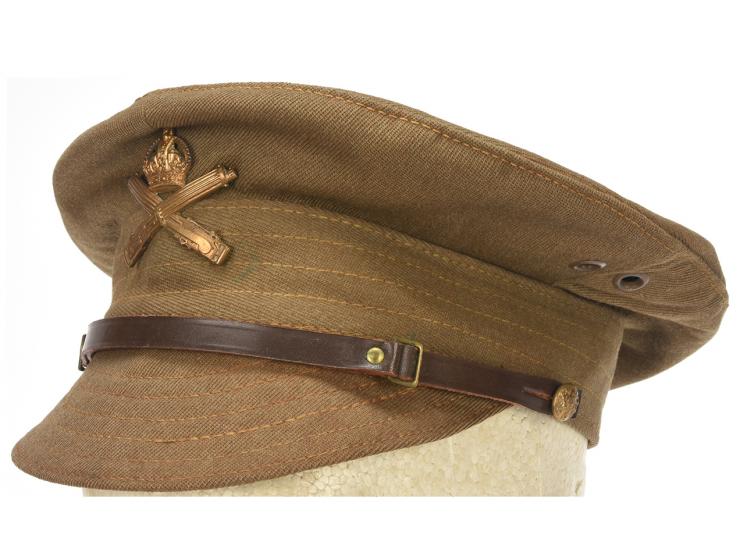
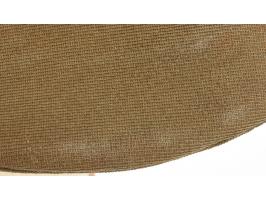
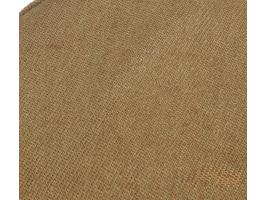
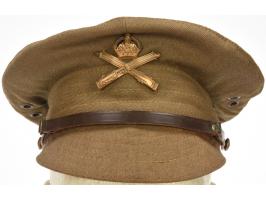
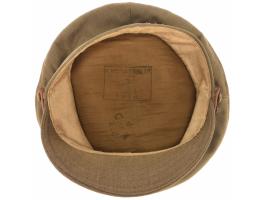
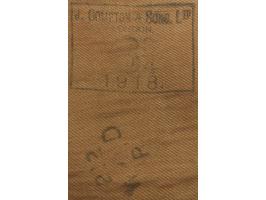
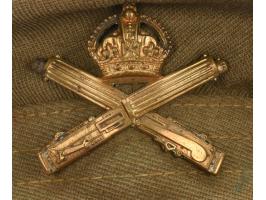
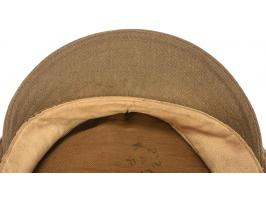
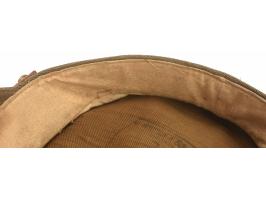
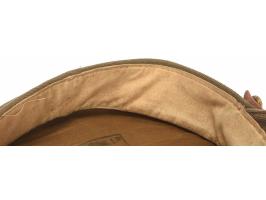
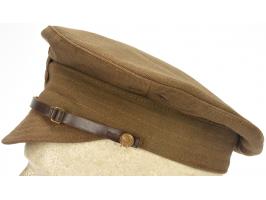
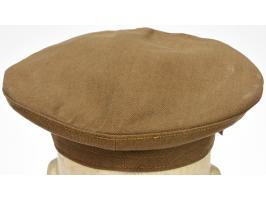
Pattern 9847 (19-Mar-1918) Cap, soft, Service Dress "Gabardine" Modification of Pattern 9783 - features a cotton lining in lieu of “American Cloth and flannel" prescribed before. Example has a nice pliable brown leather chinstrap, MG badge on the front, and general service side buttons. Interior has crown nicely marked with issue stamp and 1918 dated maker stamp. Very nice example! $200 - $300
When will this lot be auctioned?
Memorabilia
Opening: $100
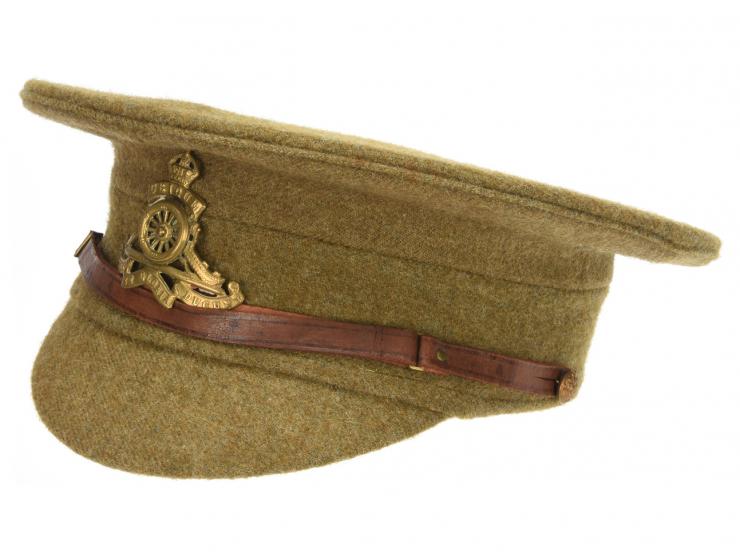
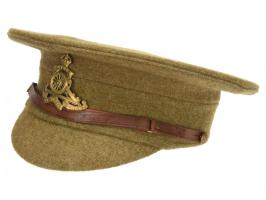
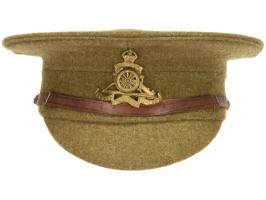
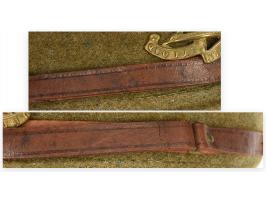
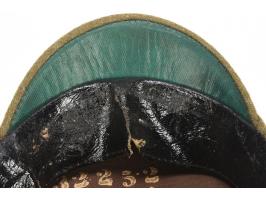
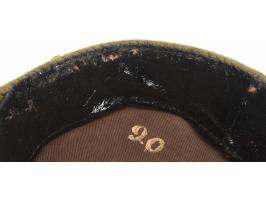
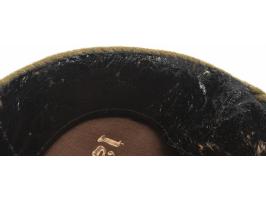
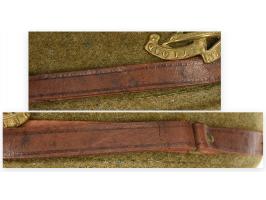
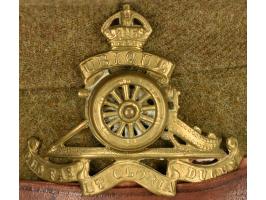
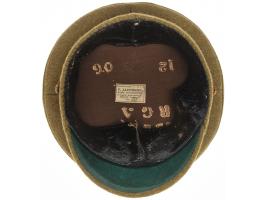
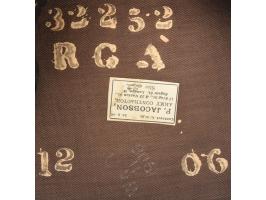
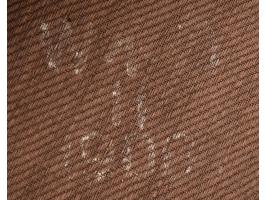
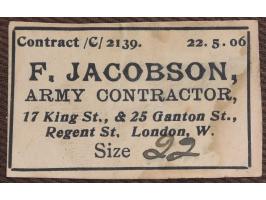
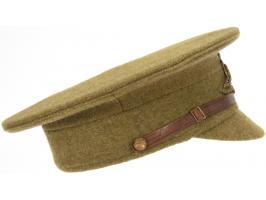
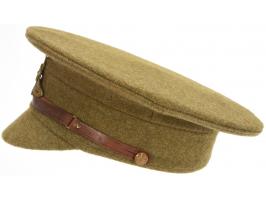
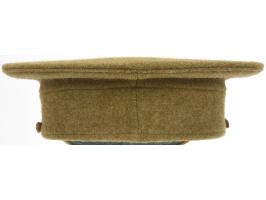
Drab khaki wool serge Pattern 1905 (6281) service dress cap has Royal Artillery badge and the brown leather chinstrap pattern that Joe Sweeny identifies as a post-1908 feature. Sides have general service buttons. Interior has an oilcloth painted fabric sweatband, 1906 dated issue stamp, nice 1906 dated maker's paper label in the crown, and the crown is also painted with a soldier's number and "R.G.A." The number identifies the former owner as Gunner J.G. Titmarsh who served with the Royal Guard Artillery in 1909. Light wear, no readily apparent mothing. $200-$250
When will this lot be auctioned?
Memorabilia
Opening: $100
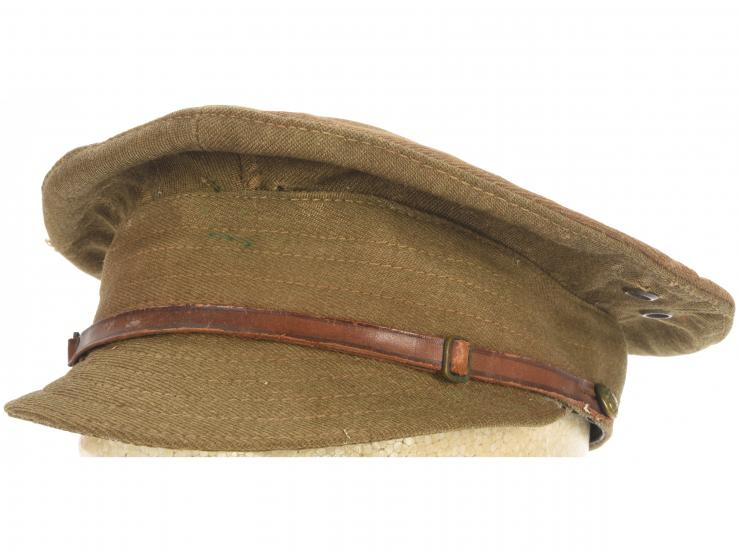
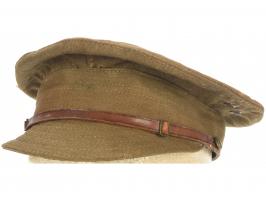
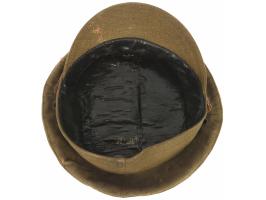
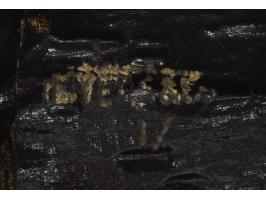
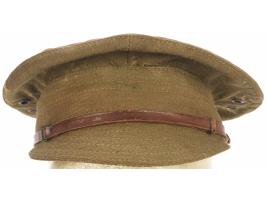
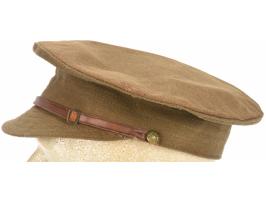
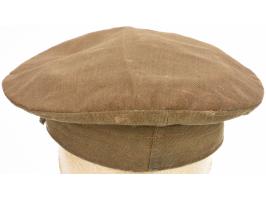
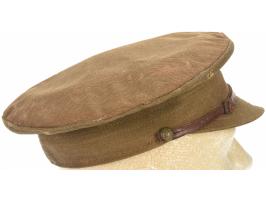
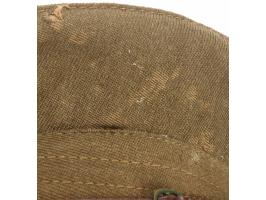
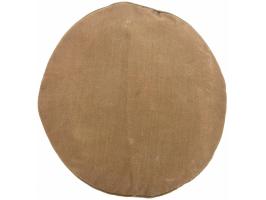
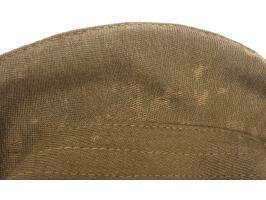
The former owner identifies this as "9783/1917, Cap, soft, Service Dress alternate pattern, all American cloth liner headband". This example has adjustable brown leather chinstrap with British general service buttons. Shows signs that a cap badge was once installed (no longer present). There is some minor surface wear or tracking. Black oilcloth interior has 1917 dated maker stamp. $200-$250
When will this lot be auctioned?
Memorabilia
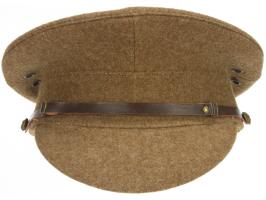
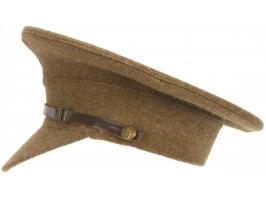
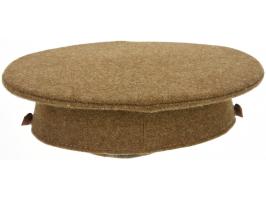
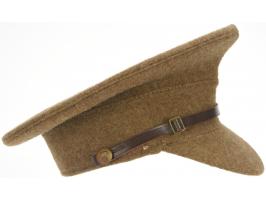
Opening: $150
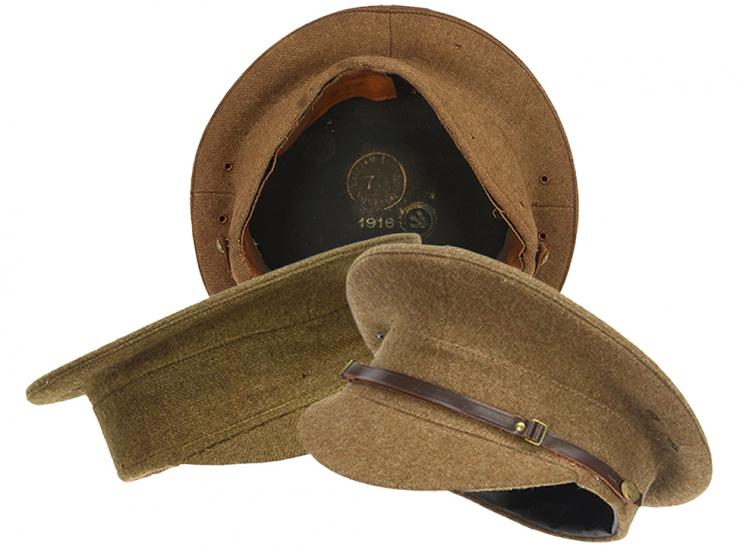
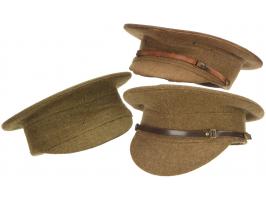
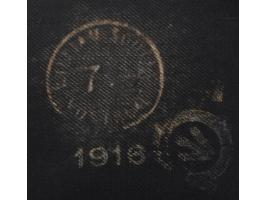
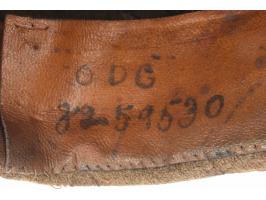
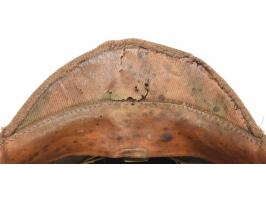
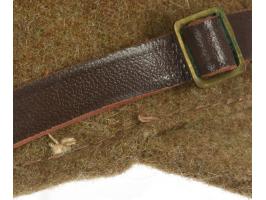
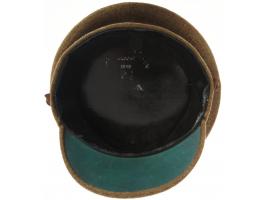
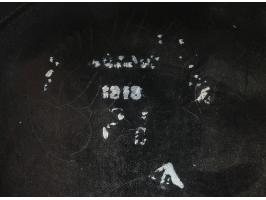
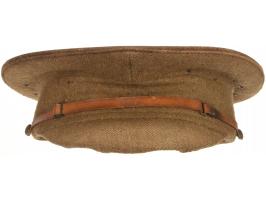
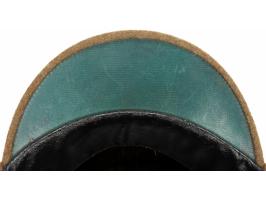
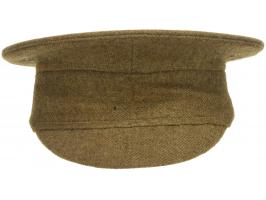
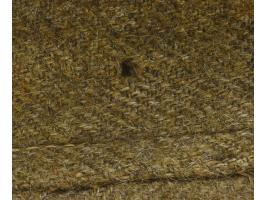
Three examples. First is in very nice overall condition has East Lancashire Regiment side buttons, a nice brown leather chinstrap, and an issue stamp in the crown that appears to date 1918. No mothing, and no sign that a badge was ever applied. Second in good overall condition has just a few moth bites and faint markings on the black crown lining, lacks chinstrap and side buttons. The third is a bit rougher with scattered light mothing, shows evidence of a badge that is no longer there, and has some damage to the leather underside of the cloth-covered visor. Chinstrap has Canadian side buttons; interior has a nice clear 1916 dated issue stamp, and the interior of the sweatband has a soldier's initials and service number. $250-$350
When will this lot be auctioned?
Memorabilia
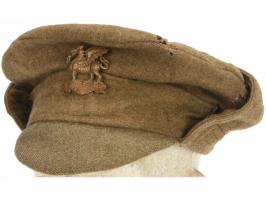
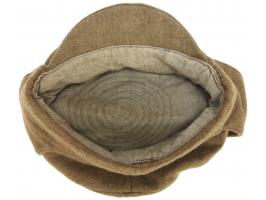
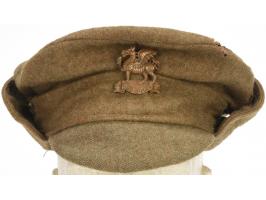
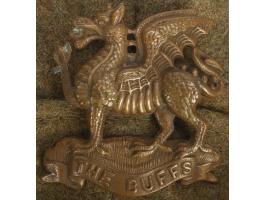
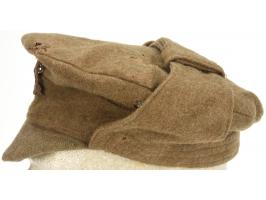
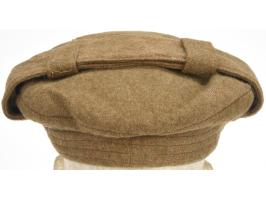
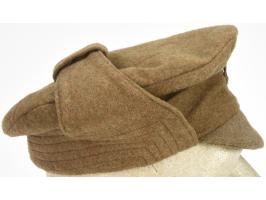
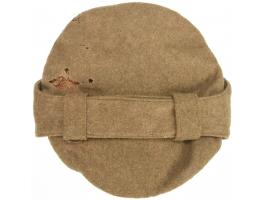
Opening: $1,000
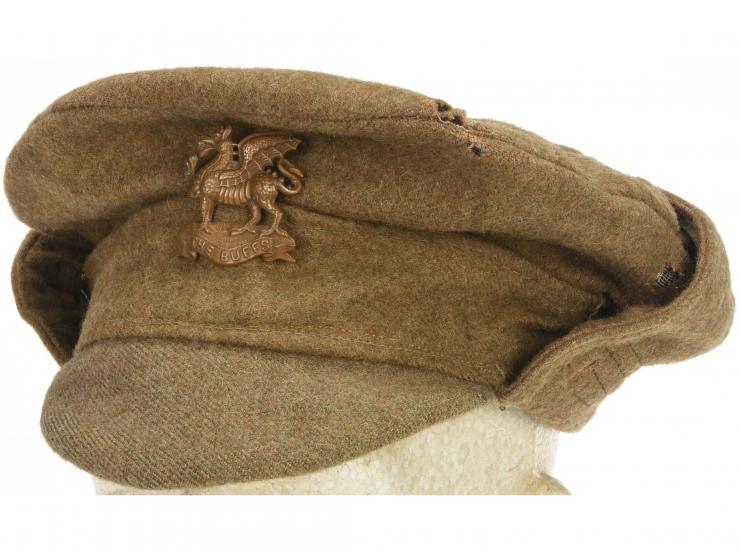
Although officially referred to as the "Cap, Winter, SD", this cap was universally known as the "Gor Blimey" by the soldiers who wore it. Made of khaki wool serge with a soft cloth covered visor, the cap has a distinct folding neck cape with multiple rows of stitched reinforcement. An integral adjustable strap with 1" standing loops crosses over the top of the cap and allows the cape to be secured upright, or it can be let down and used as a chinstrap when the cape covers the ears and neck. There are two japanned iron hooks on the sides of the band. One theory claims that a chin strap was intended to be attached to these but that opinion is not documented and their true purpose remains speculative. Obverse has Royal East Kent Regiment badge. Lined in blue-gray shirting flannel, the crown is padded and quilted in a spiraling pattern. No markings are visible. There is some moderate moth damage on the crown. Issue of the Gor Blimey began in the winter of 1914 and continued until the fall of 1916 when it was abolished to make way for the general issue of the steel helmet. During its service life it was only issued to front line troops making this, truly, a fighting man's cap. Arguably the most sought-after item of WWI Commonwealth headgear. $2000 - $2500
When will this lot be auctioned?
Memorabilia
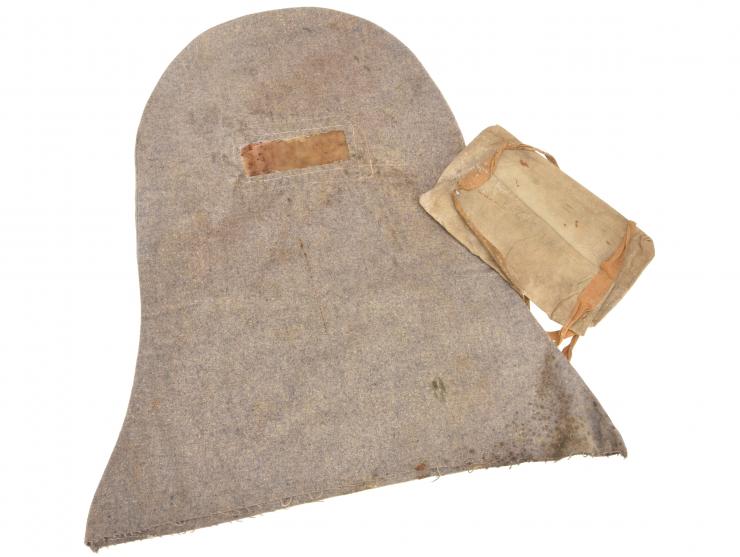
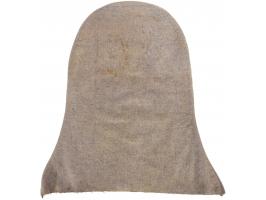
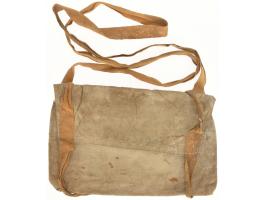
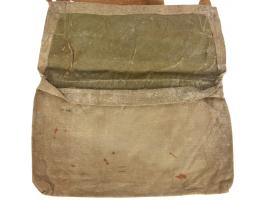
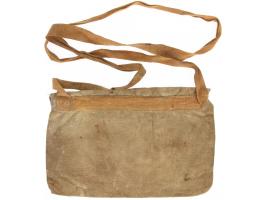
Opening: $1,000
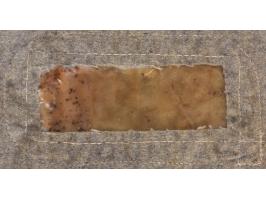
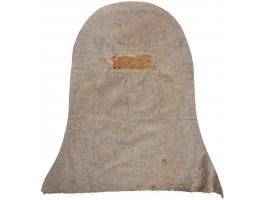
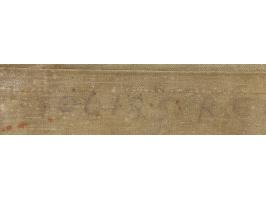
Gray shirt flannel gas hood has a single rectangular window with an amber isinglass lens. Example is complete with the correct original rubberized fabric carrying satchel, which is faintly inscribed with a service number. No markings are observed on the smoke helmet. The helmet, isinglass, and carrier have some spots of discoloration but overall remain in excellent condition.
The idea for the hypo helmet was (according to legend) suggested by a Canadian NCO. Communicated to England on May 10, 1915, a prototype was produced that same day. Being relatively quick and easy to produce, these were officially introduced for issue to the BEF in June 1915. The helmet was impregnated with Hyposulphite chemicals and moistened, which neutralized the chemical agents in use at the time, and allowed the soldier wearing it to breath with relative ease. The primary shortcoming of the early Hypo helmet was the fragile nature of the isinglass (mica) window which had to always be carefully considered when folding and handling the helmet. $2000 - $2500
When will this lot be auctioned?
Memorabilia
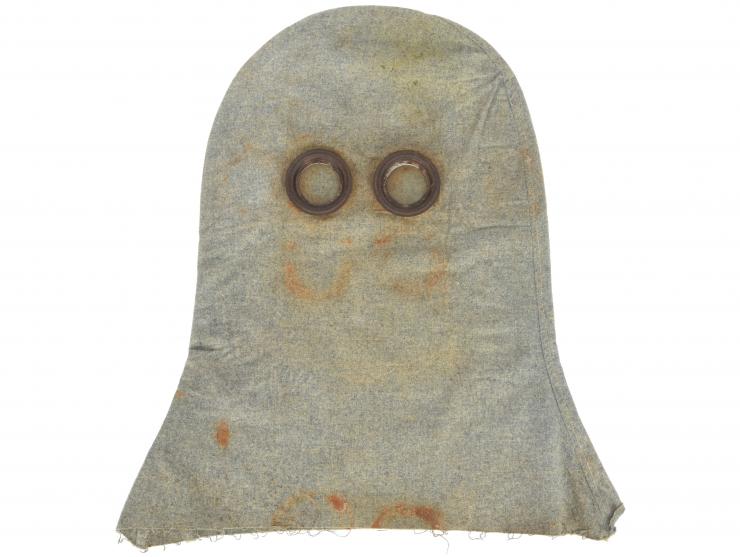
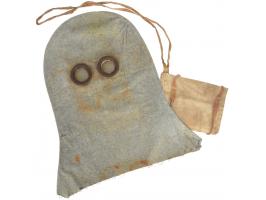
Opening: $1,000
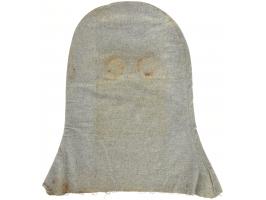
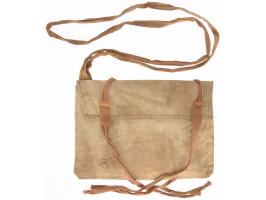
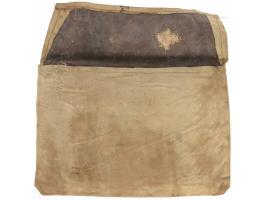
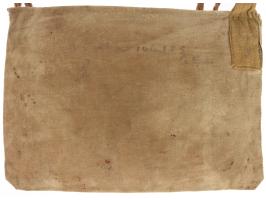
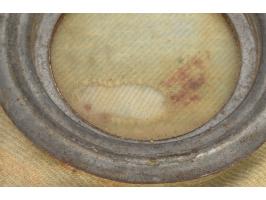
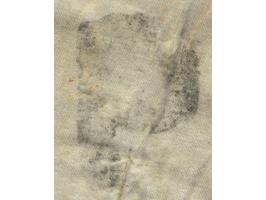
Gray shirt flannel gas hood has a pair of screw-in metal bezel eye pieces with glass lenses. Example is complete with the correct original rubberized fabric carrying satchel, which is faintly inscribed with a service number on the reverse. No markings are observed on the helmet. The helmet and carrier have some spots of discoloration, the eye bezels have a dark oxidized patina, and there are rust stain outlines of the eye lens bezels where it was once stored folded and the oxidation from the bezels has stained the fabric around them.
The idea for the hypo helmet was (according to legend) suggested by a Canadian NCO. Communicated to England on May 10, 1915, a prototype was produced that same day. Being relatively quick and easy to produce, these were officially introduced for issue to the BEF in June 1915. The helmet was impregnated with Hyposulphite chemicals and moistened, which neutralized the chemical agents in use at the time, and allowed the soldier wearing it to breath with relative ease. The primary shortcoming of the early Hypo helmet was the fragile nature of the isinglass (mica) window which had to always be carefully considered when folding and handling the helmet. This final pattern was a significant improvement, which remained the primary issue gas defense until the new P helmets were introduced in September 1915, and then as a backup until sufficient quantities of the P helmets made it to the front lines. $2000 - $2500
When will this lot be auctioned?
Memorabilia
Opening: $1,000
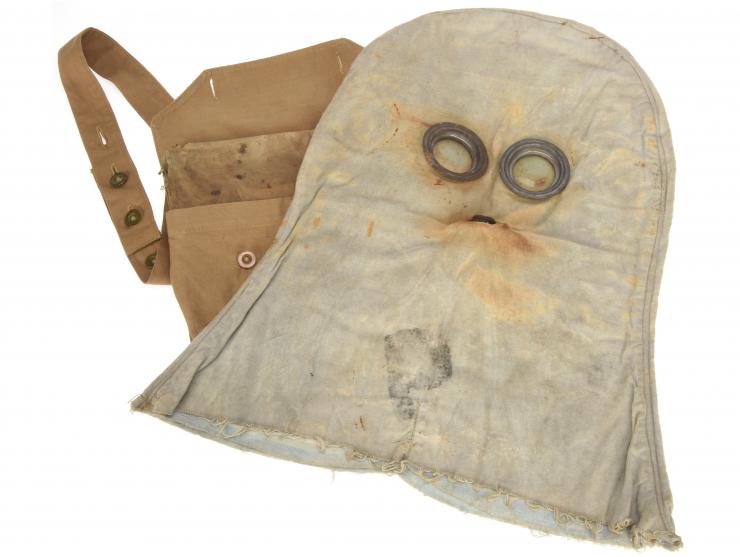
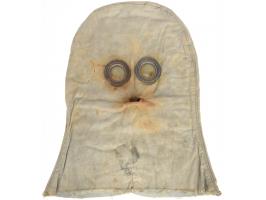
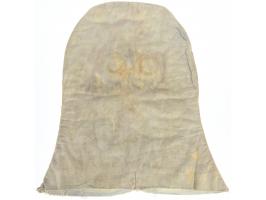
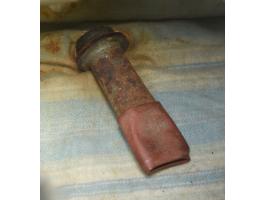
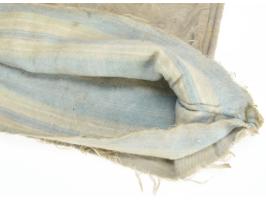
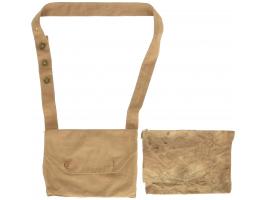
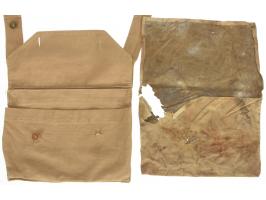
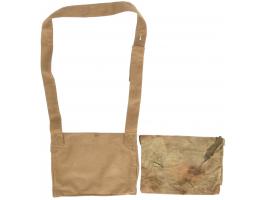
The P or Tube helmet is of gray flannelette with a blue and white striped flannel pajama material interior lining, fitted with screw-in metal bezel and glass eye pieces as was used for the second pattern Hypo helmet. A metal tube exhalation valve is attached with a rubber tube valve on the interior of the helmet, and the helmet is stenciled at the base "P". The tube valve fitting has oxidized and partially separated from the flannel along a portion of its circumference but remains securely in place. Lacks the rubber exhalation valve; the rubber portion on the interior is surprisingly good. Exterior has stains and discolorations but remains in very good overall condition. Includes the correct carrying satchel and liner. Satchel lacks one closure button.
The P or Tube helmets were introduced in September 1915, and featured improvements on the earlier Hypo helmets. The two layers of flannelette exhibited an increased absorption of the chemicals used to neutralize the gas agents. The P designation denotes the use of sodium phenolate and glycerin which neutralized the chlorine gas then in use, as well as phosgene that the British (correctly) anticipated was soon to be added to the German gas arsenal. $2000 - $3000
When will this lot be auctioned?
Memorabilia
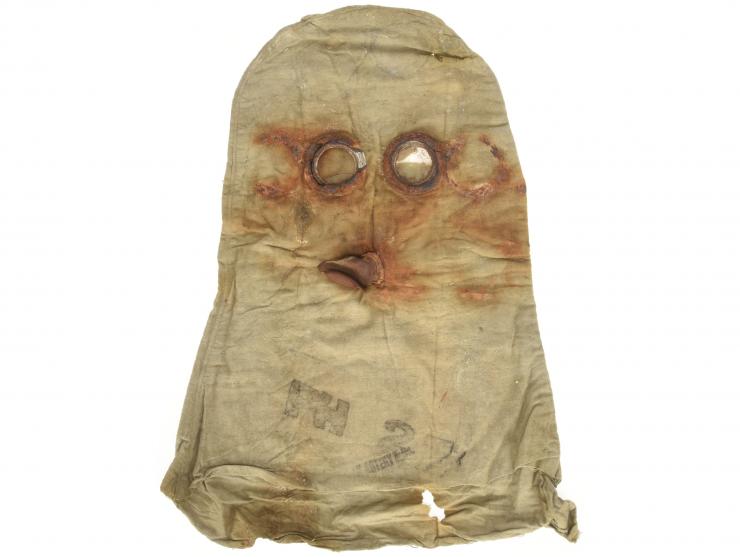
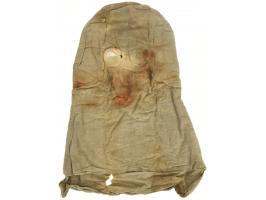
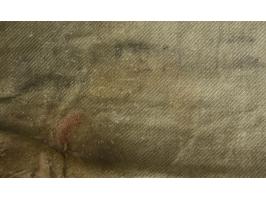
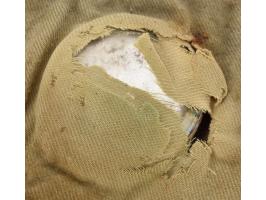
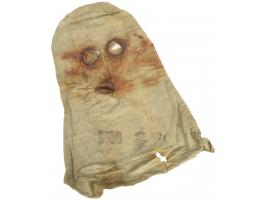
Opening: $750
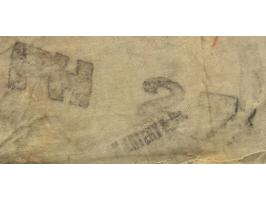
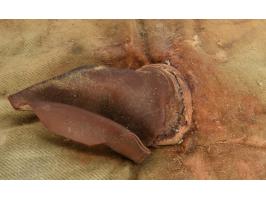
The PH helmet is of gray flannelette with gray flannel interior lining, fitted with screw-in metal bezel and glass eye pieces as was used for the second pattern Hypo helmet. A metal tube exhalation valve is attached with a rubber tube valve on the interior of the helmet, and the helmet is stenciled at the base "PH 27" and marked in several places with a maker stamp "L.LOTTERY & CO." The tube valve fitting has the rubber exhalation valve, though it is rigid and fragile; lacks the rubber portion on the interior. Exterior has stains and discolorations. The eye pieces have rusted and suffered significant material loss from that oxidation, and the surrounding fabric is heavily stained here it wasfolded over the rusting eye pieces. Lacks satchel.
The PH helmet is outwardly similar to the P helmet, but with the addition of hexamine to the phenolate and glycerin solution, yielding greater resistance to phosgene gas and some limited protection against hydrocyanic acid. The PH superseded the P helmet in early 1916 and remained in use until replaced by the small box respirator later that same year. $1500 - $2000